Digital Content: Strategy, Formats & Monetization

Digital content is any media created and distributed in electronic format, including text, images, video, and audio, designed to engage online audiences and drive measurable business outcomes. As of 2026, it sits at the center of every serious marketing, education, and entertainment operation.
Key Takeaways
- Digital content spans text, video, audio, and interactive formats, each serving distinct audience needs.
- More than half of content marketers now use AI to accelerate creation, but human storytelling stays irreplaceable.
- Six global media conglomerates control 51% of all content spending, yet independent creators thrive by niching down.
- Effective strategies blend creativity, data, and continuous optimization to generate measurable ROI.
- Short-form video, interactive experiences, and AI personalization are redefining how audiences discover and consume media in 2026.
What Is Digital Content?
The Evolution of Digital Content
Digital content emerged with the Digital Revolution, but mass distribution only took off in the late 1990s as household internet access exploded. Today, it covers everything from a 15-second TikTok clip to a multi-million-dollar streaming series. Global consumer spending on this category reached $57 billion in 2013, a 30% increase from the prior year, according to Wikipedia citing IHS Inc. By 2024, total global content spending was projected at $126 billion, with a small group of conglomerates commanding over half that market.
South Korea now leads the world in per-capita digital spend, surpassing even the United States. That shift tells you something important: this is no longer a niche digital luxury. It’s a universal consumer need.
Core Characteristics of Digital Content
What separates digital media from physical is immediate accessibility, interactivity, and ease of replication. Unlike a printed magazine, it can be updated in real time and delivered across smartphones, laptops, smart TVs, and game consoles. These traits have forced brands to rethink customer experience entirely, moving from one-way broadcasting to two-way conversations. A product demo video on YouTube can generate thousands of comments, turning passive viewers into active participants.
The Strategic Importance of Digital Content

Driving Marketing and Lead Generation
Digital content is the fuel for modern inbound marketing. Content marketing generates roughly three times as many leads as traditional outbound methods while costing significantly less, according to Optimizely’s research. That efficiency makes it indispensable for startups and enterprises alike. I’ve seen early-stage companies outrank established players simply by publishing more useful material, consistently.
“Content marketing costs significantly less than outbound marketing and generates considerably more leads. For resource-constrained teams, that math is hard to argue with.” – Optimizely Optimization Glossary
Building Brand Authority and Trust
Helpful, transparent material, whether a how-to guide, an in-depth case study, or a behind-the-scenes video, positions a brand as an industry leader. Audiences gravitate toward organizations that share knowledge freely. By 2012, 39% of readers were already learning about news primarily from online formats, per published research, and that number has only grown since. Consistent publishing on platforms like LinkedIn and YouTube can shorten the sales cycle by months.
Enabling Data-Driven Decision Making
Every piece of digital content generates measurable data: views, click-through rates, time on page, and conversions. This feedback loop lets marketers refine messaging and channel mix in real time. With tools like Optimizely’s experimentation suite or Google Analytics 4, teams can A/B test headlines, video lengths, and calls-to-action without guesswork. That’s a structural advantage over any traditional media buy.
Pros and Cons

Pros
- Low distribution cost: Once created, digital assets reach global audiences at near-zero marginal cost.
- Measurable ROI: Every format generates trackable data, from page views to conversion rates, enabling continuous improvement.
- Scalable monetization: A single course or newsletter can generate recurring revenue for years with no inventory overhead.
- Real-time iteration: Unlike print, you can update, reformat, or repurpose assets the moment performance data signals a problem.
- Audience compounding: Well-optimized content builds search authority over time, generating traffic long after publication.
Cons
- Attention competition is brutal: You’re competing with every platform, creator, and brand simultaneously for finite audience attention.
- Algorithm dependency: Organic reach on platforms like Instagram or YouTube can shift overnight based on algorithm changes outside your control.
- Quality bar keeps rising: Audiences expect production quality and depth that took professional studios to achieve five years ago.
- AI noise: Generative AI has flooded search results with low-quality material, making it harder for genuine expertise to stand out.
Top Formats and Platforms for Engaging Audiences
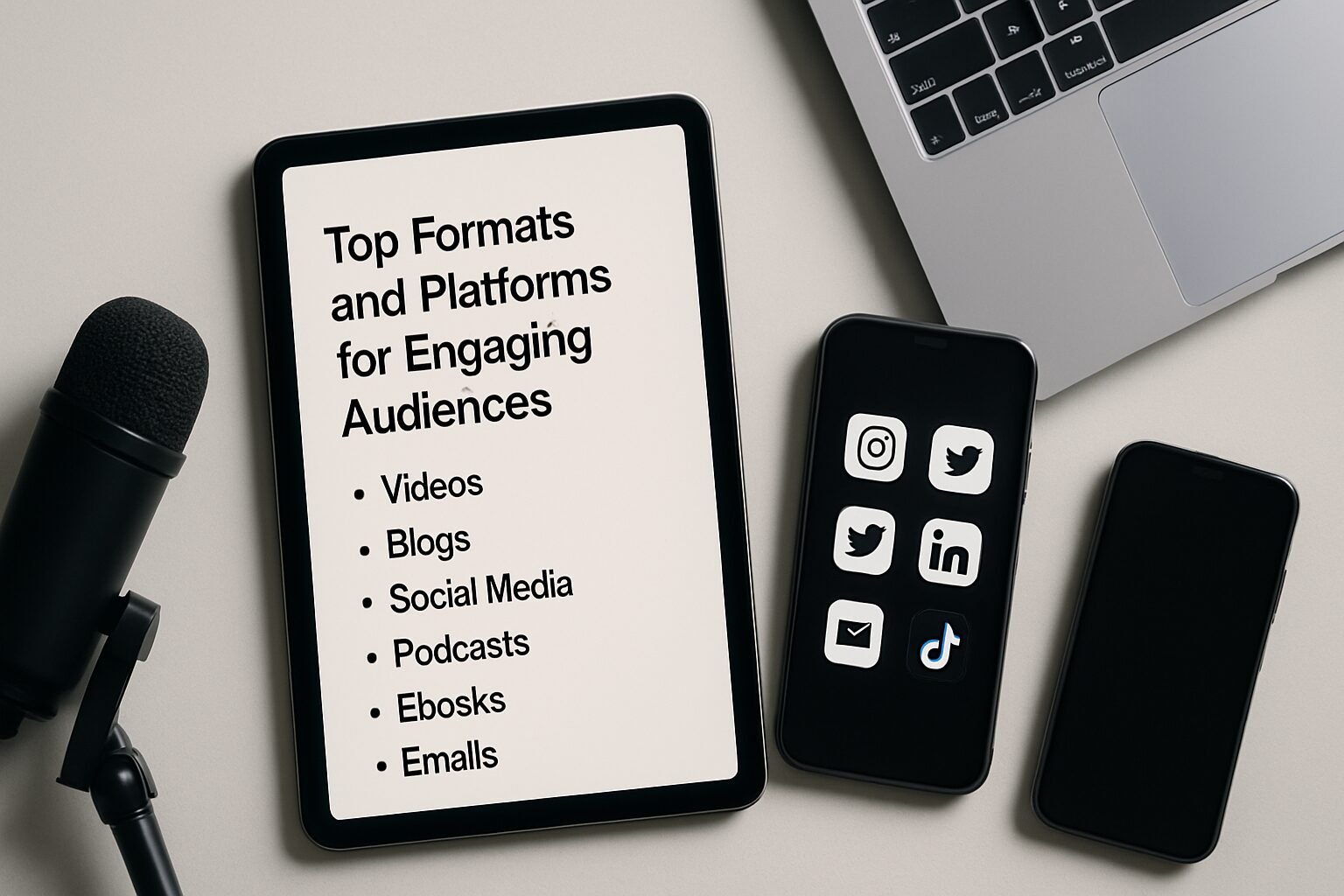
Video Content: The Engagement Powerhouse
Video remains the dominant format, driving the majority of consumer internet traffic globally. Short-form clips on TikTok, Instagram Reels, and YouTube Shorts capture attention in seconds, while long-form webinars and tutorials build deep expertise. A single 10-minute talk can be repurposed into six short clips, a blog post, and a podcast episode. Live streaming adds urgency and authenticity, making it a favorite for product launches and Q&A sessions.
Written and Visual Content: Blogs, Infographics, and More
Blog posts remain critical for SEO, ranking for thousands of long-tail keywords over time. Infographics distill complex data into shareable visuals, with Pinterest still a top platform for that format. E-books, whitepapers, and case studies generate qualified leads when gated behind forms. Visual storytelling through Instagram carousels and LinkedIn document posts has proven highly effective for B2B brands, often outperforming standard link posts by 2-3x on reach.
Interactive Content and Emerging Formats
Quizzes, calculators, polls, and augmented reality (AR) filters create two-way engagement, increasing dwell time and lead capture. A mortgage calculator on a bank’s website can convert browsers into applicants. Voice-activated content for smart speakers and shoppable videos are emerging as powerful channels. According to Jimdo’s 2026 report, interactive tools and user-generated content drive the highest conversion rates among all content types.
Comparing Digital Content Formats for Maximum Impact
| Content Format | Examples | Best Platforms | Primary Benefit | Typical Engagement |
|---|---|---|---|---|
| Blog Posts | How-to guides, listicles | Company blog, Medium | SEO, authority building | Medium |
| Short-Form Video | TikTok, Reels, Shorts | TikTok, Instagram, YouTube | High virality, awareness | Very High |
| Podcasts | Interviews, storytelling | Spotify, Apple Podcasts | Deep audience connection | High |
| Infographics | Data visualizations | Pinterest, LinkedIn | Shareability, clarity | High |
| Interactive Content | Quizzes, calculators | Website, email | Personalization, lead capture | High |
| Live Streams | Webinars, Q&As | LinkedIn Live, YouTube | Real-time engagement | Very High |
Building a Robust Content Strategy
Setting Goals and Understanding Your Audience
A winning strategy starts with SMART goals: increase organic traffic by 30% in six months, generate 200 qualified leads per month, or boost brand awareness by 20% on social media. Audience research through surveys, social listening, and web analytics uncovers pain points and format preferences. Material that directly addresses those needs consistently outperforms generic content by a wide margin.
Ideation, Creation, and Workflow Optimization
Once goals are set, follow this six-step process:
Step 1: Define measurable objectives.
Step 2: Research your target audience using analytics and competitor analysis.
Step 3: Choose formats that align with platform strengths and audience habits.
Step 4: Create high-quality, original material with a focus on storytelling and SEO.
Step 5: Plan distribution via owned, earned, and paid channels, tailoring each asset to its destination.
Step 6: Schedule publishing in a content calendar and maintain a consistent cadence.
Tools like Canva for graphics, CapCut for video editing, and Jimdo for website building simplify execution for non-technical creators. More than half of content marketers have adopted AI writing assistants to speed up research and first drafts, freeing time for the creative refinement that actually differentiates a brand.
Distribution and Multichannel Promotion
Posting on your own blog is not enough. Syndicate articles to Medium and LinkedIn, share video teasers on X (formerly Twitter), and adapt infographics for Instagram Stories. Paid social ads can amplify top performers to cold audiences quickly. According to a Coursera career guide citing the IAB, 44% of advertisers planned to increase investment in creator-led content in 2024, underscoring the value of authentic, third-party promotion.
Key Monetization Models for Content Creators
Subscription and Membership Revenue
Recurring revenue from digital publishing is growing fast. Platforms like Substack, Patreon, and YouTube Memberships let creators charge monthly fees for exclusive posts, videos, or community access. Media giants like Netflix and Disney+ built empires on this model. Disney alone invested approximately $35.8 billion in content, representing roughly 14% of total global spend. Even solo creators can earn a full-time income by niching down and serving a specific audience exceptionally well.
Advertising and Sponsorships
Display ads, pre-roll video ads, and sponsored partnerships remain staples. Brands pay top dollar for product placements in high-engagement material. Affiliate marketing, promoting third-party products in exchange for commission, generates passive income for bloggers and YouTubers alike. In 2026, programmatic ad platforms use AI to match content with hyper-relevant offers, boosting CPMs for quality publishers.
Selling Digital Products and Courses
E-books, templates, stock photos, and online courses convert expertise into scalable income. Platforms like Teachable and Gumroad handle payments and delivery, letting creators focus on what they do best. A single successful course can generate six figures annually with no inventory costs. That’s the appeal of digital products: the economics are fundamentally different from physical goods.
Measuring Performance and Optimizing Results
Critical KPIs: Traffic, Engagement, and Conversion
Effectiveness is measured by clear metrics: page views, unique visitors, bounce rate, average session duration, social shares, and conversion rate. For B2B, lead quality and cost-per-lead are paramount. For e-commerce, add-to-cart rate and revenue per visit matter most. Setting baseline benchmarks before you publish anything allows for meaningful improvement tracking over time.
Leveraging Analytics for Continuous Improvement
Google Analytics 4, Hotjar, and CRM dashboards reveal user behavior at a granular level. If a blog post has high traffic but low conversion, a stronger call-to-action may be the fix. If a video shows a steep drop-off at 20 seconds, the intro needs reworking. Monthly content audits ensure outdated pieces get updated or archived. This iterative process turns a good piece of digital content into a long-term strategic asset.
“The brands winning with content in 2026 aren’t the ones publishing the most. They’re the ones measuring the most rigorously and iterating the fastest.” – Based on patterns observed across Y Combinator portfolio companies and Semrush’s annual content benchmarking reports
The Future of Digital Content
AI and Hyper-Personalization
AI engines now tailor recommendations to individual user behavior at scale. Netflix’s algorithm famously drives roughly 80% of viewer activity on the platform. Generative AI will soon create custom blog posts, video scripts, and product walkthroughs on the fly, adapting tone and format to the user’s context. The real challenge will be preserving brand identity and genuine expertise amid that automation wave.
Short-Form Video Dominance
Attention spans continue to compress, cementing short-form video as the primary discovery format. TikTok, Reels, and Shorts will evolve with interactive features like polls, product tags, and live shopping integrations. Brands that master snackable content will capture the mobile-first generation before competitors even finish their content calendars.
Immersive AR/VR Experiences
Apple’s Vision Pro and Meta Quest 3 are pushing digital media into three-dimensional, interactive spaces. Real estate firms offer virtual tours, museums create digital exhibitions, and retailers deploy virtual try-ons. As hardware becomes more mainstream, the line between digital and physical experiences will blur, opening new monetization avenues that don’t exist yet.
Government Support and Educational Pathways
It’s worth knowing that government programs in markets like the UK, Canada, and Australia actively fund digital content creation through arts councils and innovation grants, particularly for creators in education, culture, and journalism. On the education side, platforms like Coursera, LinkedIn Learning, and university certificate programs now offer structured paths into digital content careers. These range from 3-month bootcamps to full degree programs in digital media. If you’re building a team or starting out yourself, formal training has become genuinely competitive with learning on the job.
Digital content remains the single most versatile asset in a brand’s arsenal. Whether it’s a 500-word article, a 60-second reel, or an immersive VR walkthrough, its power lies in connecting human stories with data-driven precision. The future belongs to those who marry creative authenticity with technological agility.
Frequently Asked Questions
What are examples of digital content?
Examples include blog posts, social media updates, videos (TikTok, YouTube, Reels), podcasts, infographics, e-books, webinars, and interactive tools like quizzes or calculators. Essentially, any media consumed on a screen qualifies as digital content.
How do I start creating digital content?
Start by defining your niche and target audience. Choose one primary format, such as short-form video or blogging, and one platform. Use free tools like Canva for design and a smartphone camera, then publish consistently while learning from analytics.
What is the best type of digital content for small businesses?
For local visibility, Google Business Profile posts and customer review videos work best. Nationally, blogging for SEO and educational YouTube videos build authority over time. The ideal format depends on where your specific audience spends time online.
How can I monetize my digital content?
Monetization paths include subscription newsletters via Substack, ad revenue through the YouTube Partner Program, sponsored posts, affiliate marketing, selling digital products like courses and templates, or membership platforms like Patreon.
What role does AI play in digital content creation?
AI accelerates research, generates first drafts, edits video, and personalizes recommendations. Tools like ChatGPT and Jasper help writers, while RunwayML assists video creators. Human oversight remains essential for quality, tone, and brand alignment.
How do I measure the success of my digital content?
Track metrics tied to your goals: organic traffic for SEO, engagement rate for social media, conversion rate for lead magnets, and subscriber growth for newsletters. Use Google Analytics 4, platform insights, and heatmaps to identify top performers and underperformers.
Enjoyed this article?
Connect with me for collaboration, ventures, or just a good conversation about building things.
Get in Touch