Digital Media: Types, Uses, and What’s Next
Digital media is any content, text, graphics, audio, or video, created, stored, and shared through digital devices and networks. Unlike printed books or DVDs, digital media enables instant global distribution and interactive experiences at near-zero marginal cost.
Key Takeaways
- Digital media spans websites, social platforms, streaming services, podcasts, mobile apps, and beyond.
- The global market is projected to hit $1.9 trillion by 2030, powered by mobile expansion and AI.
- Over 200 million individuals now earn as content creators, reshaping production and business models.
- Career tracks include content creation, digital marketing, data analytics, and strategic management.
- Emerging trends like agentic advertising and the zero-click ecosystem are redefining distribution.
What Is Digital Media?
The Evolution from Analog to Digital
For most of the 20th century, media was tangible: newspapers, vinyl records, film reels, and broadcast television. Digital media disrupted this by encoding information into binary code, allowing perfect copies, instant transmission, and on-demand playback. By 2025, even historically print-oriented brands like The Economist now generate the majority of their revenue from digital subscriptions. Streaming platforms such as Netflix and Spotify have become household staples, while physical DVD and CD sales continue to fall. Statista tracks this shift closely, reporting that digital video rental and sales soared in 2023 as physical copy sales declined.
Key Characteristics of Digital Media
Digital media is defined by three core attributes. First, digitization: every piece of content, a tweet, a podcast, an image, is stored as bits. Second, connectivity: broadband networks, 5G mobile, and Wi-Fi deliver this content globally in milliseconds. Third, interactivity: users can comment, share, remix, and even co-create media, transforming passive audiences into active participants. According to the International Telecommunication Union, nearly three-quarters of the world’s population now uses the internet, making this the dominant communication model of our era.
How Digital Media Differs from Traditional Media
Traditional media, newspapers, radio, television, operates on a one-to-many model with limited feedback. Digital media enables many-to-many communication, where anyone can publish and reach a global audience at minimal cost. It also provides measurable analytics: a marketer can see exactly how many views, clicks, and conversions a campaign generates, a stark contrast to the guesswork of billboard advertising. This accountability is why global digital ad spend exceeded $600 billion in 2024, surpassing traditional ad spend for the first time.
Types of Digital Media

Text and Image-Based Media
From online news articles and e-books to infographics and memes, text and images remain foundational formats. Wikipedia, a crowdsourced encyclopedia available in over 300 languages, exemplifies how digital media democratizes knowledge. E-commerce giants like Amazon and Alibaba rely heavily on product descriptions and high-resolution images. In 2024, online shopping accounted for 20.1% of global retail sales, with 2.71 billion digital buyers, per data cited by SellersCommerce.
Audio and Video Media
Streaming has become the default mode of consumption. YouTube logged roughly 27.9 billion hours of content watched in 2020, and the platform now reaches over 2.5 billion monthly logged-in users. Roughly 83% of Americans consume content from YouTube, and close to half use Instagram, according to competitor research. Audio is equally transformed: podcasting has exploded, with Spotify investing over $1 billion in podcast content and technology. Audiobook sales in the U.S. surpassed 2 billion units in 2024, a 9% year-over-year increase, according to Publishers Weekly.
Interactive and Immersive Media
Video games represent one of the largest segments of digital media, with revenues projected to exceed $300 billion by 2027. Platforms like Steam and Epic Games Store distribute titles digitally, while cloud gaming services from Xbox and NVIDIA stream games directly to devices. Virtual reality and augmented reality are gaining traction. Apple’s Vision Pro and Meta Quest headsets introduce spatial computing, merging digital content with physical environments. These technologies power virtual training simulators for surgeons and immersive design tools for architects, not just entertainment.
Digital Media in Art and Creative Expression
Artists and designers have adopted digital tools at a pace that would have seemed impossible two decades ago. Digital illustration software like Adobe Creative Suite and Procreate has replaced physical canvases for millions of professionals. Generative AI tools, including Midjourney and DALL-E, now allow artists to produce commercial-quality visuals in minutes. The NFT market, while volatile, demonstrated that digital art can command prices rivaling physical works, with some pieces selling for millions. This creative shift raises real questions about authorship, originality, and the copyright frameworks built for an analog world.
Why Digital Media Matters
Shrinking the World
Digital media erases geographic barriers. A fashion brand in Milan can sell to customers in Tokyo via Instagram Shopping. Remote workers collaborate across time zones using Slack and Zoom. Educational platforms like Coursera and edX provide Ivy League courses to anyone with an internet connection. The ITU notes that 2.6 billion people remain offline, primarily in sub-Saharan Africa and South Asia, highlighting a persistent digital divide that the industry has not yet solved.
Economic Engine
“The global digital media market is projected to reach approximately $1.9 trillion by 2030, reflecting sustained demand for digital content, platforms, and services.” Grand View Research
This growth is fueled by mobile connectivity. The GSMA forecasts 6.5 billion mobile subscribers by 2030, up from 5.4 billion in 2023. Social commerce is a key driver. TikTok Shop saw U.S. small business sales jump 66% in 2025, per Digiday. The creator economy alone is expected to surpass $500 billion by 2027, with platforms like YouTube and TikTok sharing billions in ad revenue with content producers.
Empowering Individuals
“More than 200 million people worldwide now identify as content creators.” Goldman Sachs
Digital media has lowered the barriers to entry for publishing, broadcasting, and entrepreneurship. A teenager with a smartphone can build a following of millions on TikTok or launch a newsletter that generates six-figure income. I’ve watched this play out firsthand across multiple ventures: the cost to reach a targeted audience has dropped by orders of magnitude compared to even ten years ago. This democratization is reshaping labor markets and redefining what a “media job” actually looks like.
Pros and Cons
Pros
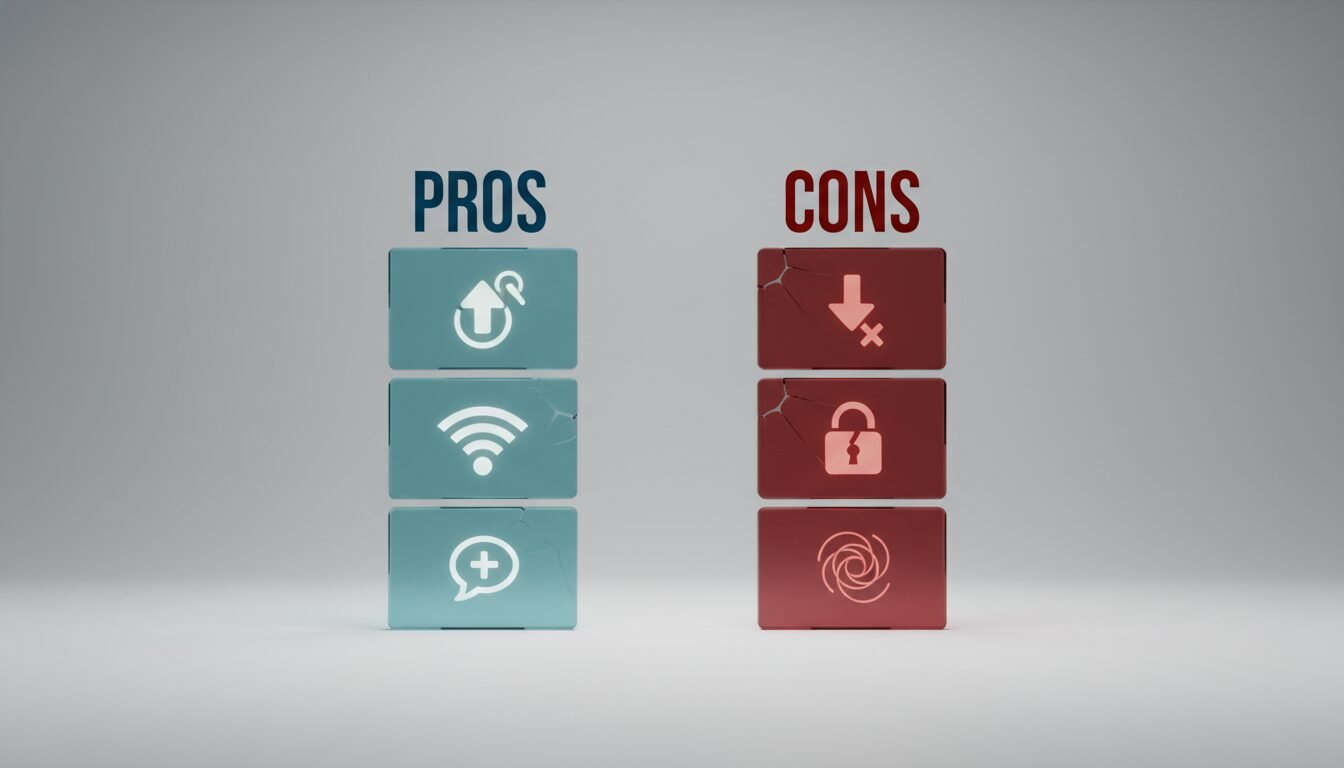
- Global reach at low cost: A single piece of digital content can reach billions without printing or distribution overhead.
- Measurable performance: Every campaign generates trackable data, clicks, conversions, watch time, enabling real optimization.
- Democratized publishing: Anyone can create and distribute content, removing traditional gatekeepers like publishers and broadcasters.
- Interactivity and personalization: Algorithms and user data allow platforms to serve highly relevant content, improving engagement.
- Speed: Breaking news, product launches, and crisis communications can reach audiences in seconds.
Cons
- Misinformation risk: The same low barriers that empower creators also enable the rapid spread of false or misleading content.
- Privacy concerns: Data collection at scale raises serious questions about surveillance, consent, and user rights.
- Platform dependency: Creators and businesses that build on rented platforms, Instagram, TikTok, YouTube, are one algorithm change away from losing their audience.
- Environmental cost: Data centers powering digital media infrastructure account for an estimated 2-4% of global greenhouse gas emissions, comparable to aviation.
- Digital divide: With 2.6 billion people still offline, the benefits of digital media remain unevenly distributed.
The Three-Part Business Framework
Professionals in this field categorize digital media into three distinct channels based on who controls the content and the distribution. This framework, owned, paid, and earned, helps companies allocate resources and measure ROI with precision.
Owned Media: Your Digital Real Estate
Owned media includes a company’s website, blog, mobile app, email list, and social media profiles. Because the brand dictates everything from design to messaging, owned media is ideal for building brand identity and collecting first-party data. Nike‘s website and training apps are fully controlled environments that collect user preferences to personalize content. This is where I always tell founders to invest first: you own the relationship, and no platform can take it away.
Paid Media: Buying Attention
Paid media is any promotion you pay for: search engine ads via Google Ads, social media ads on Facebook and Instagram, sponsored content, influencer partnerships, and programmatic display. It’s the fastest way to scale visibility but can be costly. A typical small business might spend $500 to $5,000 per month on paid social, while large enterprises invest millions. The moment you stop paying, the traffic usually vanishes, making it a tactical tool rather than a long-term strategic asset.
Earned Media: The Power of Trust
Earned media is free exposure generated by customers, journalists, or influencers talking about your brand. This includes social shares, mentions, reviews, and press coverage. Because it comes from third parties, it carries real credibility. A single viral TikTok video can drive more sales than a billboard campaign. You can’t buy it directly. It has to be earned through outstanding products or storytelling, which is exactly why it’s so valuable when it happens.
| Media Type | Who Controls It | Primary Purpose | Examples |
|---|---|---|---|
| Owned Media | Brand or individual | Build relationships, collect data | Website, blog, branded app |
| Paid Media | Platform or publisher (via payment) | Drive immediate traffic and awareness | Google Ads, sponsored posts, influencer deals |
| Earned Media | Consumers and third parties | Credibility and organic growth | Social shares, reviews, press mentions |
Industry Applications and Use Cases
Healthcare
Telehealth platforms like Teladoc and Amwell use video conferencing and digital patient records to deliver care remotely. Wearable devices from Apple and Fitbit generate continuous health data, integrating with digital medical records. During the COVID-19 pandemic, government agencies relied on SMS alerts and interactive dashboards to communicate safety protocols, demonstrating how digital media infrastructure can be genuinely lifesaving at scale.
Education
Digital media has made learning borderless. Harvard and MIT‘s open courseware reaches millions of students who could never afford tuition. Language apps like Duolingo gamify learning for over 500 million users. Interactive simulations and VR field trips bring subjects to life in ways textbooks never could. The global ed-tech market exceeded $300 billion in 2024, with digital content comprising the largest share of that spend.
Entertainment and Gaming
Music, film, and gaming are now almost entirely digital. Spotify and Apple Music account for the vast majority of recorded music consumption. Netflix and Disney+ serve over 1.5 billion hours of content weekly. In gaming, titles like Fortnite have become platforms in themselves, hosting virtual concerts and brand collaborations. Esports events draw audiences of 100 million viewers, rivaling traditional sports in reach.
Government and Public Services
Governments worldwide use digital media for emergency alerts, e-governance, and public engagement. Estonia offers nearly all public services online, a model other nations are actively studying. India’s DigiLocker platform stores 10 billion digital documents for citizens. Social media channels have become official government communication tools, from city mayor announcements to national health advisories during crises.
Copyright, Ownership, and the Open Content Movement
Copyright in digital media is one of the most contested areas in tech law right now. Traditional copyright frameworks were built for physical goods: books, records, film reels. Digital media broke those assumptions by making perfect copies trivially easy and distribution essentially free. Platforms like YouTube built Content ID systems to manage this at scale, but the tension between rights holders and creators remains unresolved.
The open content movement, represented by Creative Commons licenses and projects like Wikipedia and the Internet Archive, argues that knowledge should be freely shareable. This philosophy has produced enormous public value. At the same time, AI training on copyrighted digital content has opened a new legal front, with ongoing litigation involving major publishers, record labels, and visual artists challenging how AI companies use their work. As of 2026, no clear legal standard has emerged in the U.S., making this one of the most important unresolved questions in digital media.
Building a Career in Digital Media
Job Roles and Responsibilities
The digital media field offers varied career paths: Digital Media Strategist, Content Creator, Social Media Manager, SEO Specialist, Data Analyst, and UX/UI Designer. According to the U.S. Bureau of Labor Statistics, media and communication occupations are expected to grow 4% from 2023 to 2033, adding approximately 115,000 new jobs. Many of these roles are remote-friendly and freelance-based, offering flexibility and global opportunity that traditional media careers rarely provided.
Essential Skills You Need
Core competencies include content production (writing, video editing, graphic design), data analytics using tools like Google Analytics and Tableau, and platform expertise across Facebook, Instagram, and TikTok. Soft skills like storytelling, creativity, and adaptability are equally valued. Increasingly, AI literacy, knowing how to use tools like Midjourney or ChatGPT for content creation and analysis, is becoming a baseline requirement rather than a differentiator.
Education Pathways and Certifications
A bachelor’s degree in marketing, communications, or digital media is a common starting point, but many successful professionals are entirely self-taught. Certifications from Google (Digital Marketing), HubSpot (Content Marketing), and the USC Annenberg School (Digital Media Management) can signal real expertise to employers. Portfolio-based hiring is widespread. A strong YouTube channel, campaign case study, or GitHub profile often outweighs formal credentials in practice.
Looking Ahead to 2030: AI and the Creator Economy
The Rise of Agentic Advertising
Artificial intelligence is moving beyond content recommendations to autonomous media buying. Google and Meta have introduced AI agents that can negotiate ad placements, optimize budgets in real time, and generate creative variations. Digiday calls this “agentic advertising,” a model where AI handles execution and frees humans for strategy. WPP, the world’s largest advertising holding company, has publicly described this shift as one that will fundamentally change how agencies operate over the next five years.
The Zero-Click Content Challenge
As search engines like Google and Bing integrate generative AI, users increasingly get answers without clicking through to websites. This zero-click ecosystem is reshaping digital media monetization in ways that are genuinely painful for publishers. The smart response I’m seeing from operators is building direct-audience relationships through newsletters, podcasts, and subscription products, reducing dependence on search traffic that may never return to previous levels.
Sustainability in Digital Infrastructure
Digital media reduces physical waste, but its server farms and data centers are energy-hungry. The information and communications technology sector accounts for an estimated 2-4% of global greenhouse gas emissions, comparable to aviation. Microsoft has pledged to be carbon negative by 2030, and Google aims to run on carbon-free energy 24/7. The push for sustainable digital infrastructure will accelerate as regulations tighten and enterprise customers start demanding green credentials from their vendors.
The Creator Economy Matures
With over 200 million creators and counting, the market is becoming saturated. Success will depend on niche expertise, community building, and cross-platform presence. Blockchain-based platforms like Lens Protocol and Audius are experimenting with decentralized content ownership, allowing creators to retain more revenue. By 2030, we may see a genuine creator middle class emerge, supported by subscriptions, tips, and tokenized memberships rather than ad share alone.
Frequently Asked Questions
What is digital media?
Digital media is content, text, audio, video, and graphics, encoded in machine-readable formats and distributed via the internet or electronic devices. It differs from traditional media by enabling two-way interaction, precise targeting, and measurable performance analytics.
What are some common examples of digital media?
Common examples include social media posts, streaming videos, podcasts, e-books, mobile apps, websites, and video games. Essentially, any content you consume on a screen or through a connected device qualifies as digital media.
How does digital media differ from traditional media?
Unlike traditional one-way formats like TV or newspapers, digital media enables instant two-way interaction, precise audience targeting, and measurable analytics. It also allows anyone to publish and distribute content globally at near-zero cost, removing the gatekeepers that controlled traditional media.
What types of digital media exist?
Professionals group digital media into owned, paid, and earned channels based on control and payment structure. By content type, the main categories are text, audio, video, and interactive or immersive media including games and VR experiences.
What skills are needed for a career in digital media?
Key skills include content production, data analysis, social media strategy, and familiarity with AI tools like ChatGPT and Midjourney. Soft skills like creativity and adaptability matter just as much as technical proficiency, and portfolio work often speaks louder than degrees.
How is AI changing the digital media landscape?
AI automates content creation, powers recommendation algorithms, enables agentic ad buying, and is driving the shift toward zero-click content experiences. As of 2026, AI literacy is becoming a baseline requirement for most digital media roles rather than a specialty skill.
Enjoyed this article?
Connect with me for collaboration, ventures, or just a good conversation about building things.
Get in Touch