What Is a Filmmaker? Career, Gear & AI Trends
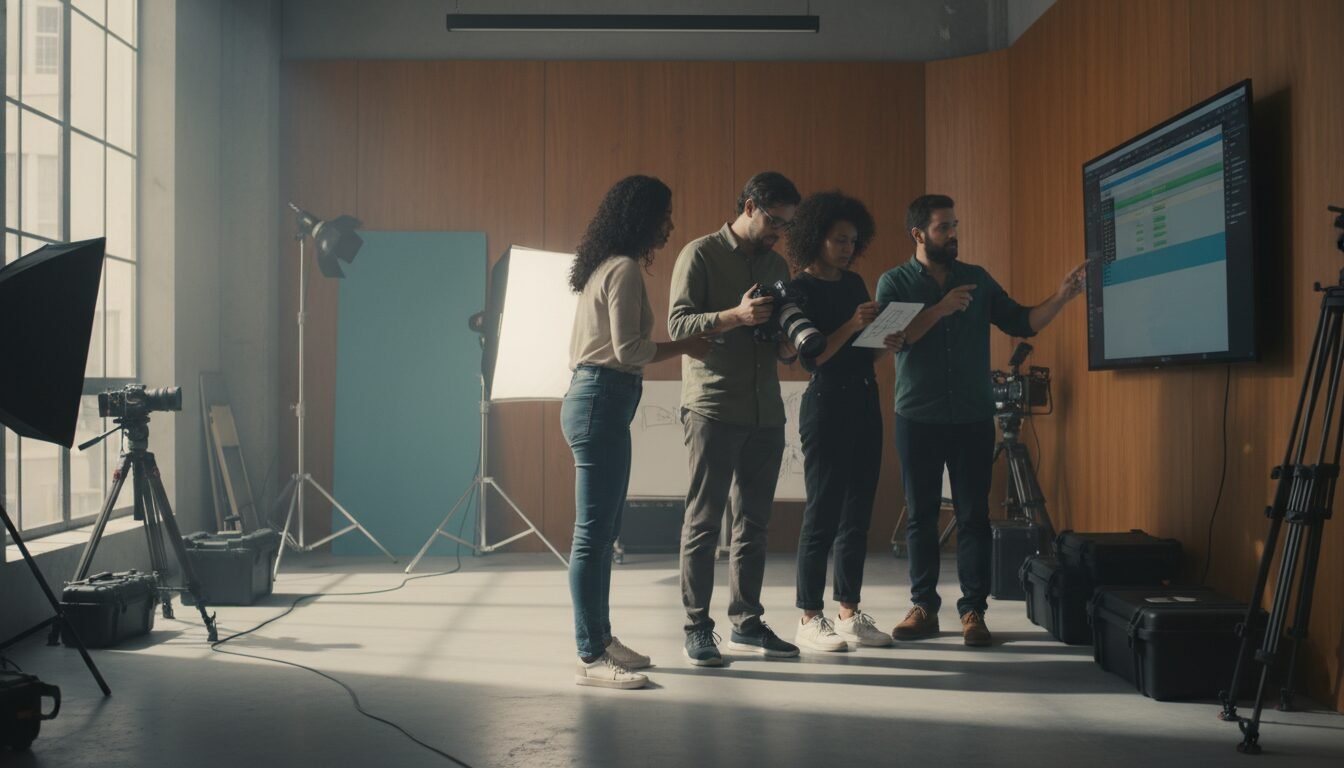
Filmmaker is a creative professional who conceives, plans, and executes motion pictures, often combining the roles of director, producer, screenwriter, and editor to bring a story to life on screen.
Key Takeaways
- A filmmaker is a multi-hyphenate creative who guides a film project from concept to distribution.
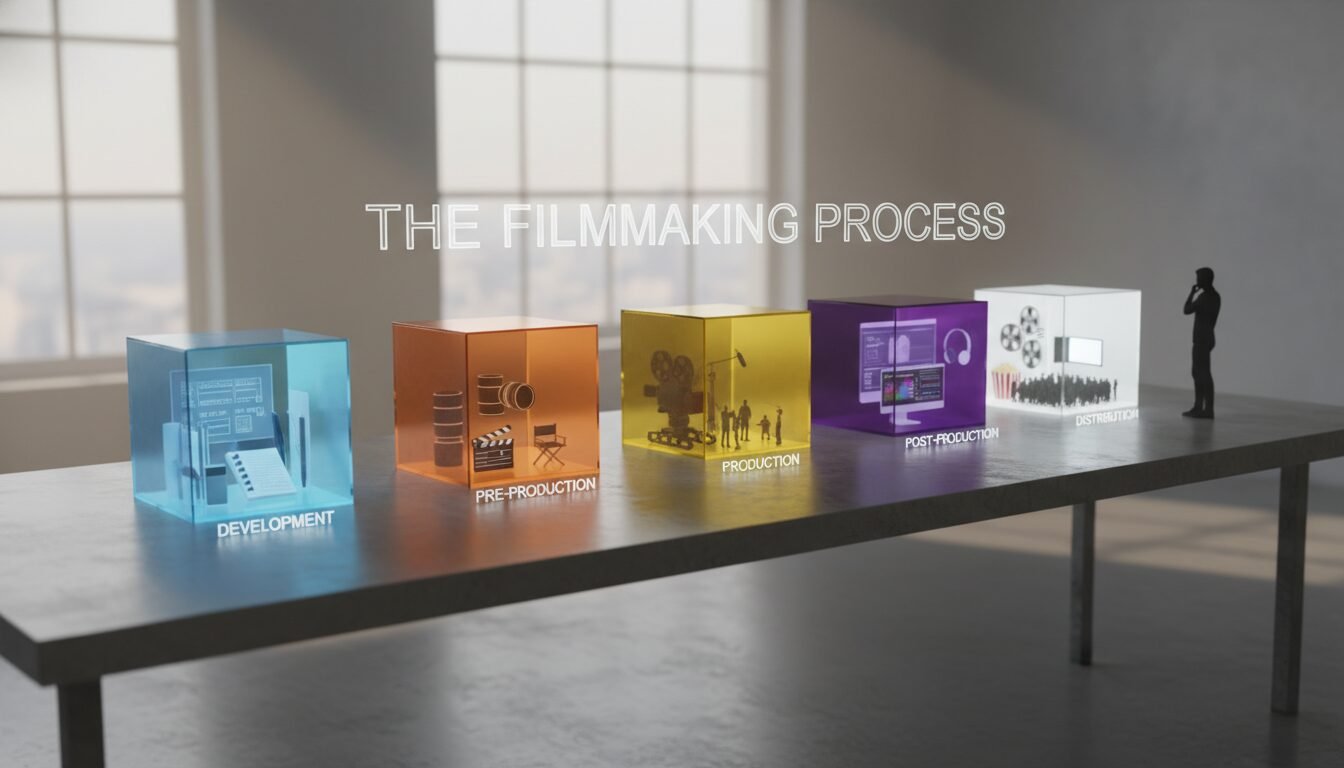
- The filmmaking process has five core stages: development, pre-production, production, post-production, and distribution.
- Modern film creators increasingly function as entrepreneurs, raising funds and marketing their projects like startups.
- AI tools are reshaping casting, editing, and post-production, with new ICDA guidelines setting ethical standards as of 2026.
- Career paths range from formal film school to online education, with platforms like Full Time Filmmaker offering 700+ tutorials and a 30,000-member community.
- Storytelling skill beats gear every time, but understanding your tools helps maximize production value on any budget.
What Is a Filmmaker? Definition and Core Responsibilities
The Dictionary Definition
According to Merriam-Webster, a filmmaker is “one who makes movies,” a term first recorded in 1908 when cinema was still in its infancy. That bare-bones definition hides the real depth of the work. The person behind the camera is a storyteller, yes, but also a project manager, a technical expert, and often a business owner rolled into one. In the indie world, one person might write the script, direct the actors, operate the camera, and cut the final edit. On bigger sets, those tasks get delegated, but the creative vision still flows from a single source.
The Modern Multi-Role Creator
By 2026, the lines between traditional film roles have blurred almost completely. Someone working in this field today might shoot a corporate training video in the morning, edit a music video in the afternoon, and pitch a docuseries to a streaming platform in the evening. This versatility is driven by the accessibility of professional-grade tools and the collapse of barriers to distribution.
When I started building my first production company, I learned fast that this career meant being a jack-of-all-trades. I wrote budget proposals, scouted locations, negotiated contracts, and still found time to direct. It’s less a single title and more a mindset: someone willing to own every part of the process, from script to screen.
The Filmmaking Process: A Five-Stage Journey
Development and Pre-Production
Every film starts with an idea, and the development stage is where that idea gets structure: acquiring IP rights, writing the screenplay, and securing financing. This phase can stretch from a few months to several years. Once the money is in place, pre-production begins. The core team gets hired, locations get scouted, actors get cast, and the schedule gets built. Per Wikipedia’s filmmaking overview, the process is typically divided into five major stages, a structure that holds whether you’re making a $50,000 short or a $200 million blockbuster. Pre-production alone can take 2 to 8 weeks on an indie project.
Production: Lights, Camera, Action
Production is the phase most people picture: cameras rolling, actors hitting their marks, the director calling “cut.” Also known as principal photography, this stage lasts anywhere from 12 days for a micro-budget feature to 90 days or more for a studio tentpole. Every day on set costs money, so efficiency is everything. The director must manage the crew, keep morale high, and solve problems on the fly.
On one of my early shoots, a location fell through at 6 a.m. on day one. We rewrote the scene in 30 minutes and shot it in a coffee shop. That kind of adaptability is the hallmark of a seasoned professional.
Post-Production and Distribution in the Streaming Era
Once the footage is in the can, post-production begins: editing, sound design, color grading, and visual effects can consume 2 to 6 months, sometimes longer. The final step is distribution. With the rise of Netflix, Amazon Prime, and Apple TV+, the distribution landscape has shifted dramatically. Independent creators now have direct access to global audiences without relying on traditional theatrical releases. The competition for attention is fiercer than ever, though, making marketing a core part of the modern skill set.
Essential Gear for Independent Film Production
The Right Tool for the Right Budget
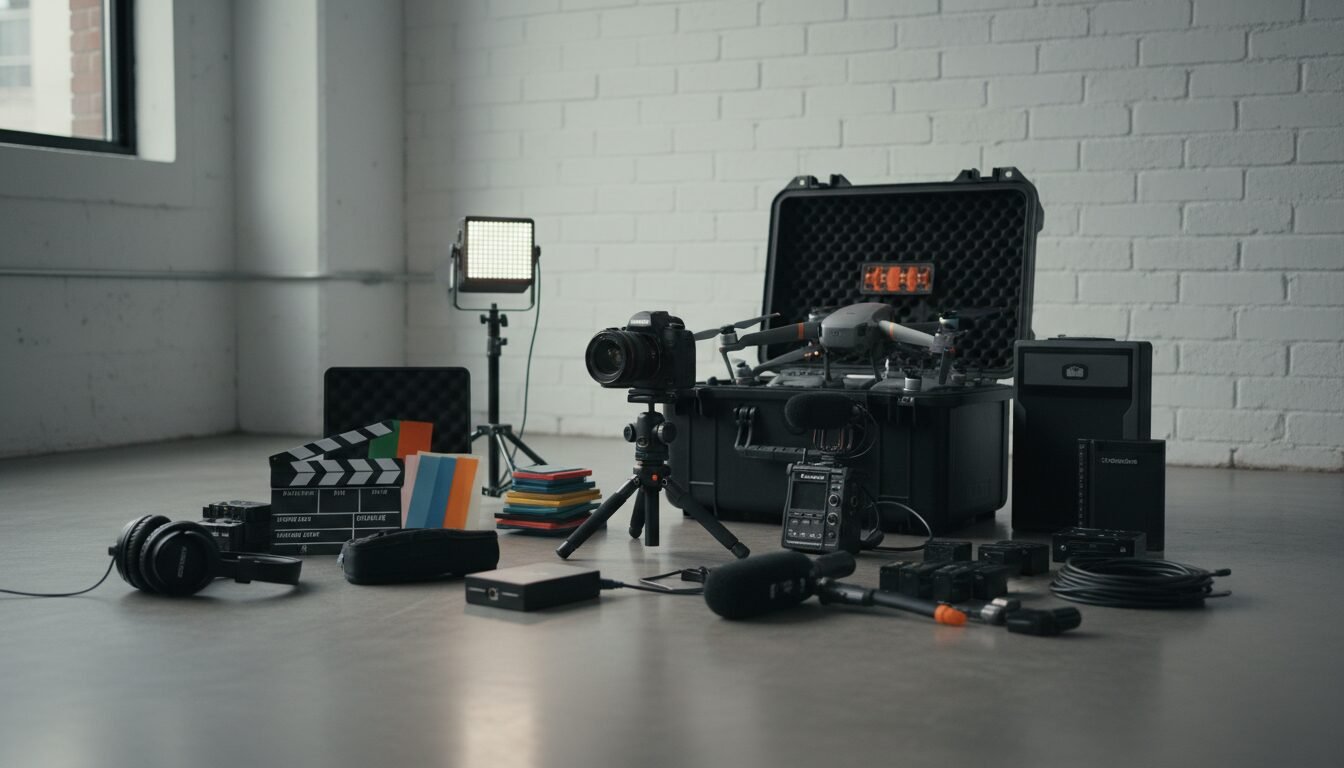
Gear obsession is a trap many new creators fall into. I’ve funded projects on $600 DSLRs and shot on $30,000 RED cinema cameras. Here’s what I learned: your equipment matters far less than your ability to tell a compelling story. A classic Full Time Filmmaker experiment pitted a beginner with a $30,000 RED camera against a pro with a $600 DSLR, and the pro won convincingly. Another test compared a $100,000 professional film gear package against a $1,000 mirrorless setup, with similar results. The difference was skill, lighting, and composition.
| Budget Level | Example Setup | Approx. Cost | Resolution | Best For |
|---|---|---|---|---|
| Entry | Canon EOS Rebel T7 + kit lens | $600 | 1080p HD | Learning, YouTube |
| Prosumer | Sony A7 III + 24-70mm lens | $2,500 | 4K | Indie films, client work |
| Professional | RED Komodo 6K + basic accessories | $10,000 | 6K | Commercials, high-end content |
| Cinema | ARRI Alexa Mini LF + lens kit | $50,000+ | 4.5K | Feature films, studio projects |
Lighting, Sound, and Support Gear
Cameras get all the glory, but lighting and audio are the silent killers of amateur footage. A decent LED panel kit starts at around $200, while a professional shotgun microphone runs about $500. Don’t skip these. I once shot an entire documentary short using only natural light and a $300 lavalier mic, and the result was clean and intimate. Tripods, gimbals, and sliders stabilize your shots; a $100 fluid head tripod can elevate your production value instantly. Master the gear you have before upgrading.
Post-Production Software: Adobe Premiere vs. DaVinci Resolve
Choosing Your Editing Platform
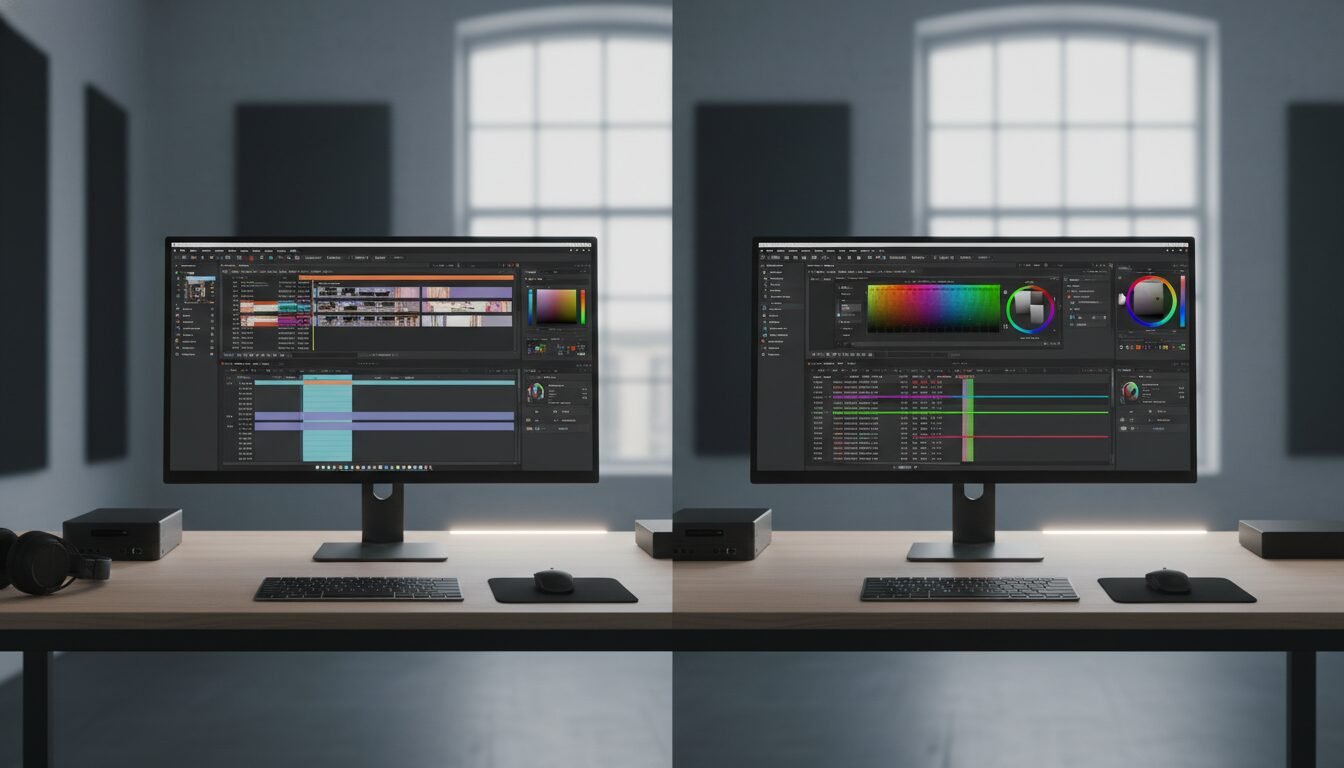
The two dominant editing platforms for independent productions are Adobe Premiere Pro and DaVinci Resolve. Premiere Pro runs on a subscription model starting at roughly $55 per month and integrates tightly with the rest of Adobe’s Creative Cloud suite, making it a natural choice for creators already using Photoshop or After Effects. DaVinci Resolve, made by Blackmagic Design, offers a free version with professional-grade color grading tools that rival anything in Hollywood. Many editors start on Premiere for its familiar timeline and switch to Resolve for color work, running both in the same pipeline.
For a first-time creator on a tight budget, DaVinci Resolve’s free tier is hard to beat. For anyone doing heavy motion graphics or working inside a larger creative agency, Premiere’s ecosystem wins. I’ve used both on commercial projects and the honest answer is: learn the fundamentals in one, then pick up the other. The concepts transfer in a week or two.
Pros and Cons of a Filmmaker Career
Pros
- Creative ownership: You control the story, the vision, and the final product, especially on independent projects.
- Diverse income streams: Client work, festivals, streaming deals, teaching, and commercial production all feed the same skill set.
- Accessible entry point: A modern smartphone and free editing software are enough to start building a portfolio today.
- Growing demand: Streaming platforms, brands, and social media channels need more video content than ever, creating steady freelance opportunities.
- AI-assisted efficiency: New tools cut post-production time significantly, letting one person do the work that used to require a team.
Cons
- Inconsistent income: Freelance work can dry up between projects, and feature films may take years to generate returns.
- High upfront costs: Professional gear, software subscriptions, and festival entry fees add up fast.
- Brutal competition: Lower barriers to entry mean more creators competing for the same budgets and distribution slots.
- Physical and mental demands: Long production days, tight deadlines, and the pressure of creative ownership take a real toll.
- Gatekeeping persists at the top: Despite democratized tools, major studio deals and top festival slots still favor established networks.
The Entrepreneurial Side of Film
Film Financing: From Bootstrapping to Investor Rounds
Making a film is like launching a startup. You need a vision, a team, and capital. When I raised my first round of funding for a tech venture, the parallels to indie film producing were striking. Independent creators often bootstrap their first projects, maxing out credit cards or running Kickstarter campaigns that bring in $5,000 to $20,000. Larger projects seek gap financing, tax incentives, or equity investors. In 2026, blockchain-based crowdfunding and NFT film sales are also emerging as new funding avenues. Understanding cash flows, investor expectations, and recoupment waterfalls is now as crucial as knowing how to light a scene.
Film Festivals as a Distribution Strategy
Festivals like Sundance and SXSW remain the most powerful launchpads for independent work. A Sundance premiere can generate distribution offers within 48 hours of a screening. SXSW, held annually in Austin, has become a key venue for genre films and documentary work, with acquisitions by major streamers happening on the festival floor. Entry fees typically run $50 to $100 per submission, and the top festivals receive thousands of submissions annually, making the selection process intensely competitive. Even a regional festival win, though, can open doors to agents, distributors, and co-production partners that cold outreach never would.
Marketing and Distribution: Building an Audience First
Today’s creator is also a marketer. Before a single frame is shot, smart producers build an online community through social media, email newsletters, and festival circuits. This audience-first approach mirrors the “lean startup” methodology: release a minimum viable product, gather feedback, and iterate. I’ve seen short films rack up hundreds of thousands of views on Vimeo and then land distribution deals with major streamers. The old gatekeepers are fading; the creator now owns the relationship with the audience directly.
AI and Technology in Modern Film Production
The ICDA Guidelines at Cannes 2026
In May 2026, the International Casting Directors Association (ICDA) launched new guidelines on the use of AI in casting at the Festival de Cannes. This marked a turning point for the industry.
“AI in casting must be shaped by the associations driving our industry. We support actors, agents, CDs and producers in this discussion.” — ICDA, Cannes 2026, as reported by Variety
The guidelines emphasize transparency and consent when using AI tools for role matching or performance analysis. For independent creators, this means platforms like Filmmakers.eu now integrate ethical AI features, including consent-based talent databases and bias-free filtering across their 11 European regions.
AI Tools for the Independent Creator
Beyond casting, AI is reshaping many parts of the production workflow. Script breakdown software that used to take days now runs in minutes through natural language processing. AI-powered editing assistants can rough-cut a 90-minute film in under an hour. I’ve personally used AI tools to generate storyboards and assist with color grading, cutting my post-production time by roughly 30% on recent projects. This isn’t about replacing human creativity. It’s about removing drudgery so the creator can focus on story and emotion.
“The filmmakers who will thrive are those who treat AI as a collaborator, not a threat. The craft is still human. The pipeline is just getting faster.” — Based on observations from the a16z media and entertainment practice, 2025
Launching a Career in Film
Formal Education vs. Online Film Schools
A degree from a top film program can cost over $50,000 per year in tuition alone. For many, that’s simply out of reach. Online platforms have stepped in to fill the gap. Full Time Filmmaker offers 700+ video tutorials and a 30,000-member community for a fraction of traditional tuition. I’ve hired editors and camera operators who learned entirely through YouTube and online courses, and their work rivals graduates from prestigious institutions. What matters is your portfolio, not your diploma.
Networking and Casting Platforms
In film, who you know is often as important as what you know. Digital casting platforms have changed networking at scale. Filmmakers.eu serves 11 European regions, from the Baltic to Iberia, connecting actors, agents, and casting directors in one cloud-based ecosystem. Whether you’re based in Helsinki or Barcelona, you can find talent for your next shoot without endless in-person auditions. According to CareerExplorer, their career assessment shows an 80% match for individuals who combine creativity with technical aptitude, the very profile of a successful working professional in this field.
Filmmaker vs. Director vs. Producer: Key Differences
The Generalist Advantage
In the independent world, “filmmaker” is often an umbrella term. One person might write, direct, produce, and edit their own work. I’ve done all four on shorts and commercials; it keeps budgets low and creative control high. On a feature, however, these roles typically split into distinct positions. Knowing the differences is essential for collaboration.
| Role | Primary Responsibilities | Key Skill |
|---|---|---|
| Filmmaker | Oversees all creative and production tasks, often on smaller projects | Multitasking, vision |
| Film Director | Guides actors and crew to realize the creative vision | Leadership, communication |
| Film Producer | Manages budget, schedule, and logistics; secures financing | Business acumen, negotiation |
When to Specialize
As budgets grow, specialization becomes necessary. A $200 million studio film will have a separate director, producer, and cinematographer, each a master of their craft. Even in the indie space, knowing when to delegate is critical. The best creative leader isn’t the one who does everything. It’s the one who builds the right team and trusts them to execute.
Future Trends: What’s Next for Film Creators
Virtual Production and Real-Time Engines
LED volumes and game engines like Unreal Engine are collapsing the distance between pre- and post-production. Directors can now see fully rendered 3D environments in real time on set, adjusting lighting and camera angles on the fly. This technology, popularized by productions like The Mandalorian, is filtering down to indie budgets. Soon, a creator will be able to shoot an entire science-fiction film in a 500-square-foot studio and make it look like a planet-hopping adventure.
The Rise of Short-Form and AI-Generated Content
Audiences increasingly consume film on their phones through TikTok, Instagram Reels, and YouTube Shorts. A skilled creator now needs to craft stories that work in vertical 60-second clips as well as on the big screen. Meanwhile, generative AI can already produce short video clips from text prompts. The creative soul of filmmaking remains human, but the tools are evolving faster than at any point in cinema history. Those who embrace these changes while maintaining a strong storytelling core will thrive.
The Filmmaker’s Mindset: A Final Word
Becoming a filmmaker is about more than learning to operate a camera or write a script. It’s about cultivating relentless curiosity, resourcefulness, and a commitment to story. As the 98th Academy Awards proved with its 12 shortlisted categories, cinema remains a vibrant, evolving art form. Whether you’re shooting on a $600 DSLR or a $100,000 cinema rig, the principles are the same: know your story, collaborate passionately, and never stop creating. The future belongs to those who can fuse artistry with entrepreneurship, and I’m genuinely excited to see what gets built next.
If you’re thinking through AI strategy for your next production or creative venture, connect with me at aminferdowsi.com. I’m always up for a real conversation about where film and technology intersect.
Frequently Asked Questions
What is the difference between a filmmaker and a film director?
A filmmaker is a broad term for anyone who creates movies, often wearing multiple hats like director, producer, and editor. A film director specifically guides the actors and crew to realize the creative vision on set. In independent film, the lines often blur, with one person filling both roles simultaneously.
How do I become a filmmaker?
Start by making short films with whatever gear you have, even a smartphone. Learn the fundamentals of storytelling, camera work, lighting, and editing through online resources or formal film school. Build a portfolio, network with other creatives, and seek feedback constantly.
What gear does a beginner filmmaker need?
A beginner needs a camera (even a modern smartphone), a basic tripod, and a microphone. As you grow, invest in lighting and lenses. Skill beats gear every time: a $600 DSLR in the hands of a skilled storyteller can produce stunning results.
How much do filmmakers earn?
Income varies widely. A freelance creator might earn $30,000 to $80,000 annually from client work, while top directors and producers can make millions per project. Many supplement income through teaching, royalties, or commercial production work.
Is film school necessary to become a filmmaker?
No. While film school provides structure and networking, many successful creators are entirely self-taught. Online platforms like Full Time Filmmaker offer affordable, comprehensive training with 700+ tutorials. Your reel and reputation matter more than your degree.
What role does AI play in filmmaking today?
AI is used for script analysis, casting recommendations, editing automation, and visual effects work. In 2026, the ICDA issued ethical guidelines for AI in casting to ensure transparency and consent. AI tools can save significant time in post-production, but creative decisions remain firmly human.
Enjoyed this article?
Connect with me for collaboration, ventures, or just a good conversation about building things.
Get in Touch