Best Personal Finance Management Software 2026

Key Takeaways
- Modern personal finance management software uses AI to categorize transactions, cutting manual work dramatically.
- Top picks like Simplifi ($2.99/mo first year) and YNAB ($14.99/mo) fit different budgeting styles. Free tools like NerdWallet cover the basics.
- Privacy-conscious users should consider offline apps like Moneyspire or open-source GnuCash for full data control.
- Bank-grade encryption and read-only data access are standard, but always enable two-factor authentication.
- 2026 trends point toward real-time financial guidance and open banking regulations that strengthen security.
- Envelope budgeting (Goodbudget) and zero-based budgeting (YNAB) serve fundamentally different financial personalities.
Personal finance management software is a digital tool that consolidates your financial accounts into one dashboard, automating tracking, budgeting, and forecasting. Leading options like Quicken Simplifi, YNAB, and PocketSmith now integrate AI to deliver real-time insights and future projections.
“Having bootstrapped two fintech ventures, I’ve seen firsthand how the right management software can reduce budgeting time by 20 hours a month and reveal spending patterns you’d never catch manually. The shift toward AI-driven categorization and privacy-focused desktop tools is reshaping the industry.” – Amin Ferdowsi
What Is Personal Finance Management Software?
From Spreadsheets to Intelligent Automation
this type of software replaces manual spreadsheets with automated transaction imports, categorization, and analytics across every account you hold: checking, savings, credit cards, loans, and investments. All of it lands in a single dashboard. According to PCMag, the top apps now incorporate artificial intelligence to detect spending patterns and forecast future balances with increasing accuracy.
Why You Need More Than a Bank’s App
Bank apps are limited to a single institution. Real financial clarity demands a tool that aggregates all sources, giving you a complete net worth snapshot at a glance. A quality tool tracks goals, alerts you to unusual charges, and helps you budget across every spending category. Notably, Mint, which once connected to over 17,000 financial institutions, closed in 2024. Credit Karma absorbed its transaction-tracking features for users who made the switch.
Top Features That Separate Great Personal Finance Management Software

Automatic Transaction Categorization with AI
Leading apps like Simplifi and Monarch use machine learning to sort transactions with high accuracy, learning from your corrections over time. This eliminates the tedious cleanup that once consumed hours each week. The result is a living budget that updates in real time without you touching it.
Multi-Account Aggregation and Net Worth Tracking
By linking to thousands of financial institutions (Mint’s network spanned 17,000+ before its closure), a centralized dashboard gives you real-time net worth updates and a unified expense view. Monarch and Quicken Classic excel here, offering detailed breakdowns of assets and liabilities that most bank apps simply cannot provide.
Forecasting and “What-If” Scenarios
Some tools go well beyond snapshots. PocketSmith lets users project daily account balances up to 30 years into the future, modeling everything from salary changes to major purchases. That turns budgeting from a rear-view mirror into a forward-looking map for your money.
The Best Personal Finance Management Software of 2026: Head-to-Head
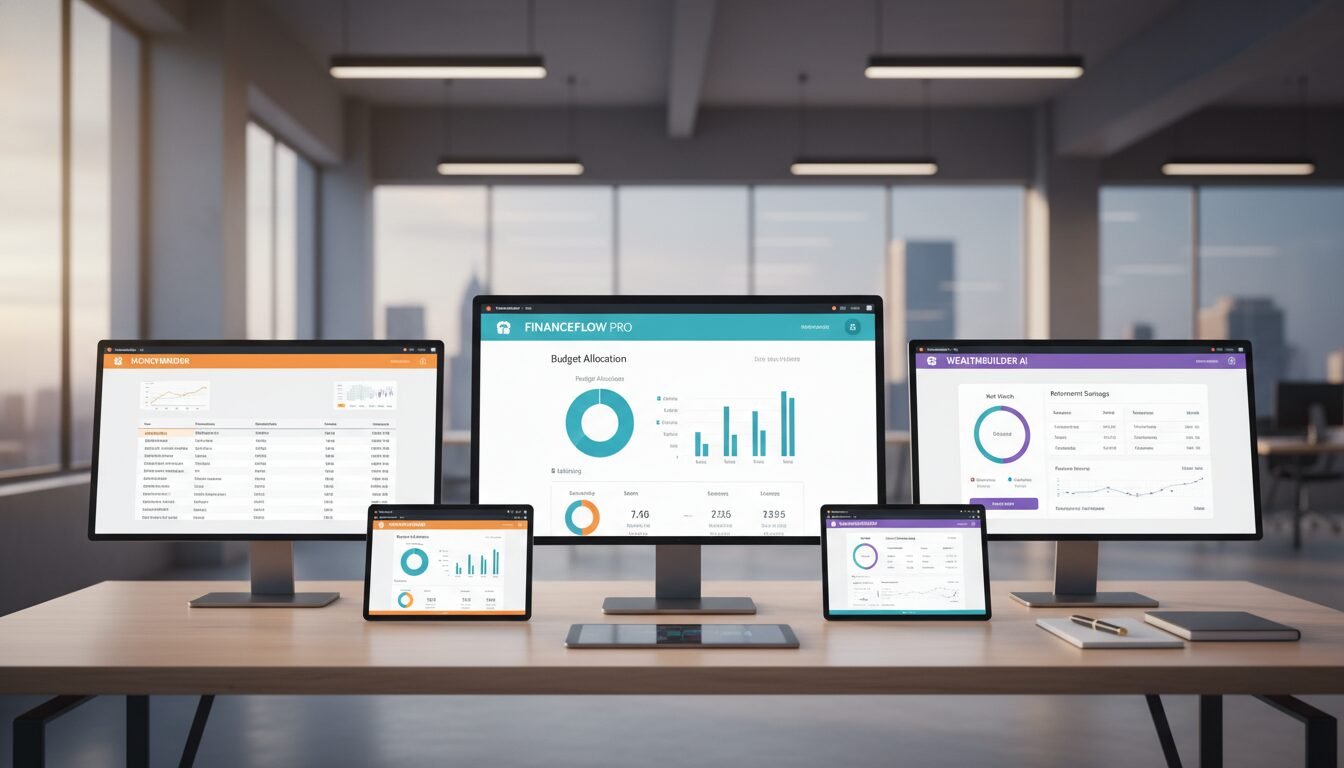
| Software | Price | Best For | Key Strength | Offline Use |
|---|---|---|---|---|
| Quicken Simplifi | $2.99/mo (first year) | Overall ease of use | AI-powered customizable spending plan | No |
| YNAB | $14.99/mo | Zero-based budgeting | Real-time envelope method that adapts to income | No |
| PocketSmith | Free (paid plans available) | Future forecasting | Calendar-based 30-year cash flow projection | No |
| Quicken Classic | $2.99/mo | Detailed investments and tax | Portfolio tracking and tax reporting | Yes |
| PocketGuard | $74.99/yr | Overspending prevention | “IN MY POCKET” safe-to-spend figure | No |
| Goodbudget | Free (Plus plan available) | Envelope budgeting | Digital envelope method across devices | No |
Simplifi vs. YNAB: Two Budgeting Philosophies
Simplifi wins on clean interface and a guided spending plan, making it ideal for first-time budgeters. YNAB’s $14.99/month price reflects its proactive, zero-based methodology that forces every dollar into a job. That structure is perfect for anyone serious about debt reduction. PCMag named both Editors’ Choice picks for 2026.
PocketSmith for Long-Term Planners
With over 375,000 users and recognition as a FinTech Australia Finnies Finalist in 2025, PocketSmith’s forecasting engine stands apart. Its free plan covers basic tracking, while premium tiers unlock collaborative dashboards and scenario simulations. If you’re planning a major life event 5 to 10 years out, nothing else comes close.
Desktop Guardians: Quicken Classic and Moneyspire
For users who want data stored locally, Quicken Classic’s desktop version and Moneyspire both offer offline operation. Moneyspire lets you import Quicken or MS Money files and run on Mac, Windows, or Linux with no forced cloud connection. That’s a rare feature in 2026’s market, and it matters if you’ve ever lost sleep over a data breach headline.
Envelope Budgeting: The Method Behind Goodbudget

Envelope budgeting is a cash-allocation method where you assign every dollar to a spending category before the month begins. Goodbudget digitizes this approach, letting you create virtual envelopes for rent, groceries, entertainment, and savings across multiple devices. Unlike YNAB’s zero-based model, Goodbudget doesn’t require bank account linking, which makes it a strong pick for privacy-minded users who still want structure. The free tier supports up to 20 envelopes, while the Plus plan removes that cap.
Free Budgeting and Money Tools: What Actually Works
NerdWallet and Credit Karma: Zero-Cost Aggregation
NerdWallet aggregates accounts and provides a free daily credit score, while Credit Karma, which absorbed Mint’s transaction-tracking features, offers net worth monitoring at $0. Both monetize through targeted financial product recommendations, but the core money-management tools are genuinely useful. If you’re starting out and not ready to pay for software, either of these gets you further than a spreadsheet.
Open-Source Options: GnuCash and HomeBank
Open-source this kind of management software reduces privacy risks because the code is publicly auditable. No hidden data pipelines, no monetization incentives. GnuCash (v5.11, released March 30, 2025) offers double-entry accounting, investment tracking, and small-business features. HomeBank (v5.9.4, released July 10, 2025) provides a simpler alternative with powerful categorization. Both are free and fully offline-capable. For developers comfortable with the command line, Ledger is another open-source option that treats your finances as plain-text files, giving you complete version-controlled history.
Offline vs. Cloud: How Personal Privacy Shapes Your Choice
Why a Desktop Install Still Wins for Data Control
Moneyspire exemplifies the offline approach: your data lives on your hard drive, not on a company’s servers. You can import legacy data from Quicken or Microsoft Money, set bill reminders, and generate reports without an internet connection. This eliminates the risk of a service shutdown or a breach exposing your entire financial history. I’ve recommended this path to founders who handle sensitive business finances alongside personal accounts.
Risks of Cloud-Only Solutions
Storing financial data online means trusting the provider’s security posture indefinitely. While most services use bank-grade encryption, a single vulnerability can expose linked accounts. Offline personal finance management software gives you full control over that risk. The tradeoff is manual updates and no mobile sync, but for some users, that’s a worthwhile exchange.
Pros and Cons of Personal Finance Management Software
Pros
- Automated tracking: AI categorization saves hours of manual data entry each month.
- Complete financial picture: Aggregating all accounts reveals net worth and spending patterns you’d otherwise miss.
- Goal accountability: Built-in goal tracking and alerts keep you honest about progress.
- Forecasting: Tools like PocketSmith project cash flow up to 30 years out, enabling real long-term planning.
- Free options exist: GnuCash, NerdWallet, and PocketSmith’s free tier mean you can start at $0.
Cons
- Privacy tradeoffs: Cloud-based tools require sharing banking credentials with third-party aggregators.
- Learning curve: Zero-based budgeting tools like YNAB take 2 to 4 weeks to feel natural.
- Subscription costs add up: YNAB at $14.99/month is $180/year, which stings if you don’t use it consistently.
- Service risk: Mint’s 2024 shutdown proved that even major platforms can disappear, taking your data history with them.
Step-by-Step: How to Pick Your Finance Toolkit in 2026
Step 1: Audit Your Financial Complexity
List every account you hold: checking, savings, credit cards, investments, loans. If you have more than 10 active accounts, a robust aggregator like Simplifi or Quicken Classic is essential. Fewer than five? A simpler tool like PocketGuard or Goodbudget may be all you need.
Step 2: Decide on Your Privacy Tolerance
If you’re uncomfortable with third-party servers storing your transaction history, choose offline-first software. Moneyspire and GnuCash never upload data. Cloud services, while convenient, rely on trusting the provider’s security and data-handling policies indefinitely.
Step 3: Match the Budgeting Method to Your Personality
Zero-based budgeting (YNAB) works best for people who want strict control and are willing to spend 15 to 30 minutes per week maintaining their budget. Envelope budgeting (Goodbudget) suits those who think in categories. Automated tracking (Simplifi, Monarch) fits people who want visibility without active management. Pick the method first, then the tool.
Step 4: Test Drive with Free Trials
Every recommended app offers a trial or free tier. YNAB gives 34 days free. Simplifi offers a 30-day money-back guarantee. PocketSmith’s free plan has no time limit. Use these to import your accounts and see which dashboard matches how you actually think about money.
Mobile App Considerations: iOS vs. Android
Most top tools offer both iOS and Android apps, but feature parity varies. YNAB’s mobile app is widely regarded as one of the most polished in the category, with full budgeting functionality on both platforms. Simplifi’s mobile experience mirrors its web dashboard closely. PocketGuard’s app is particularly strong on Android, with widget support for quick safe-to-spend checks. Quicken Classic’s mobile companion is more limited than its desktop counterpart, so if mobile is your primary interface, factor that into your decision. GnuCash has a separate Android app (GnuCash for Android) that syncs via file transfer rather than cloud, preserving the offline-first model.
Future Trends: AI, Real-Time Payments, and the End of Manual Entry
AI-Driven Insights Are No Longer a Gimmick
As of 2026, AI in personal finance management software has matured well beyond simple categorization. Apps now detect anomalies like a subscription you forgot, predict cash-flow shortfalls weeks in advance, and suggest budget adjustments based on anonymized peer data. Per PCMag, “incorporating AI tools wisely” is a key differentiator among top services this year.
Open Banking and Smarter Consumer Protections
Regulations like the EU’s PSD2 and evolving U.S. Consumer Financial Protection Bureau guidance push banks to offer secure APIs, reducing reliance on screen scraping. This makes account connections faster, more reliable, and less risky for every user. Industry analysts expect real-time transaction sync to become standard by 2027, which will close the gap between cloud and offline tools considerably.
“Open banking is the infrastructure shift that makes personal finance software genuinely trustworthy. When banks offer read-only API access instead of requiring your full login credentials, the security model changes completely.” – Amin Ferdowsi, reflecting on fintech infrastructure trends
Choosing the Right Tool: My Honest Take
I’ve tested most of these tools while managing finances across multiple ventures. YNAB changed how I think about cash flow, not just how I track it. The discipline of assigning every dollar a job before the month starts is uncomfortable at first, and then it becomes automatic. Simplifi is what I’d hand to someone who just wants the chaos to stop without a steep learning curve. And if you’re a developer or someone who genuinely doesn’t trust third-party servers, GnuCash paired with a local backup routine is a serious, free solution.
The tools that fail people aren’t the wrong apps. They’re the right apps used inconsistently. Pick one, commit for 60 days, and adjust from there.
Frequently Asked Questions
What is the best free personal finance management software?
PocketSmith’s free plan and open-source GnuCash are top choices for users who want no-cost options with real depth. NerdWallet and Credit Karma also offer free aggregation and credit monitoring, supported by product recommendation revenue.
Is offline personal finance software still safe in 2026?
Yes. Offline tools like Moneyspire store data locally, eliminating cloud-breach risks entirely. The key is maintaining strong device passwords and a regular local backup routine so you don’t lose your financial history.
How does AI improve personal finance management?
AI automates transaction categorization, spots unusual spending trends, and forecasts future balances. It can surface patterns like recurring subscriptions or seasonal spending spikes that would take hours to find manually.
Can I switch from Quicken to another app easily?
Most apps, including Moneyspire and PocketSmith, support importing QIF and CSV files exported from Quicken, making migration straightforward. Expect to spend an hour or two cleaning up category mappings after the import.
Do I need to link my bank accounts to use these tools?
No. Many tools allow manual transaction entry. Offline and open-source options like GnuCash and Goodbudget often prefer manual input for maximum privacy, and they work just as well without a live bank connection.
Is personal finance management software worth paying for?
If you have complex finances or a history of overspending, paid tools like YNAB deliver proven frameworks that typically save far more than their subscription cost. The $14.99/month price is easy to justify if it prevents even one overdraft fee or impulse purchase per month.
Enjoyed this article?
Connect with me for collaboration, ventures, or just a good conversation about building things.
Get in Touch