What Intelligence Really Means in 2026: Beyond IQ Tests
I used to think intelligence was about solving complex algorithms faster than the next person. Then I hired someone with a 140 IQ who couldn’t figure out why customers weren’t buying our product. Meanwhile, our sales lead , who barely graduated high school , was closing deals by reading people like open books.
That’s when I realized we’ve been measuring the wrong things entirely.
The Traditional View of Intelligence Is Broken
For over a century, we’ve reduced human cognitive ability to a single number: the IQ score. It’s clean, measurable, and completely misses the point.
Why IQ Tests Fall Short
IQ tests measure pattern recognition and logical reasoning under artificial conditions. They’re like judging a chef’s ability based solely on how fast they can dice onions. Sure, knife skills matter, but can they create a meal that makes people come back?
I’ve worked with brilliant engineers who could optimize code for hours but couldn’t explain their solution to a non-technical stakeholder. I’ve also met founders who struggled with basic math but built multi-million dollar companies by understanding human psychology.
The Cultural Bias Problem
Most intelligence tests were designed by and for specific cultural groups. They assume certain types of knowledge and problem-solving approaches are universal. They’re not.
When I was building our AI training datasets, we discovered that what looked like “obvious” logical connections to our Western team made no sense to our partners in Southeast Asia. Different cultures prioritize different cognitive skills.
Static vs. Dynamic Thinking
Traditional tests measure what you know right now, not how quickly you can learn something new. In our rapidly changing world, the ability to adapt and acquire new skills matters more than your current knowledge base.
The smartest people I know aren’t walking encyclopedias. They’re learning machines who can quickly grasp new concepts and apply them in novel situations.
Multiple Forms of Human Intelligence
Howard Gardner’s theory of multiple intelligences changed how I think about hiring and team building. Instead of looking for the highest IQ, I now map different types of cognitive strengths to specific roles.
Analytical Intelligence: The Problem Solver
This is closest to traditional IQ , the ability to break down complex problems, identify patterns, and apply logical reasoning. Our lead data scientist has this in spades. She can spot anomalies in datasets that would take me hours to find.
But analytical intelligence alone doesn’t guarantee success. I’ve seen brilliant analysts create technically perfect solutions that nobody wanted to use.
Creative Intelligence: The Innovator
Creative intelligence involves generating novel ideas and approaching problems from unexpected angles. Our product designer thinks in ways that constantly surprise me. Where I see constraints, she sees opportunities.
This type of intelligence is harder to measure but incredibly valuable. It’s the difference between building another productivity app and creating something that fundamentally changes how people work.
Practical Intelligence: The Executor
Some people just know how to get things done in the real world. They understand systems, navigate bureaucracy, and turn ideas into reality. Our operations manager has this gift , she can make anything happen, even when the path isn’t obvious.
Practical intelligence often gets overlooked in academic settings, but it’s essential for entrepreneurship. You can have the best idea in the world, but without practical intelligence, it stays an idea.
Emotional Intelligence in Leadership

The biggest lesson from building multiple companies: technical skills get you in the door, but emotional intelligence determines how far you go.
Self-Awareness and Regulation
I learned this the hard way during our Series A fundraising. I was so focused on the technical details of our product that I completely missed the investors’ real concerns about market timing. My co-founder had to pull me aside and explain that my passion was coming across as defensiveness.
Self-aware leaders recognize their emotional states and how they affect others. They can regulate their responses instead of reacting impulsively. This skill becomes crucial when making high-stakes decisions under pressure.
Social Intelligence and Empathy
Understanding other people’s motivations, fears, and desires is a superpower in business. Our best sales people don’t just present features , they connect our solution to the customer’s deeper needs.
I’ve watched technically brilliant founders fail because they couldn’t build relationships with investors, customers, or even their own teams. They had all the answers but couldn’t communicate them effectively.
Motivation and Influence
Emotionally intelligent people know how to motivate themselves and others. They understand that different people respond to different incentives and communication styles.
When we were struggling with team morale during a difficult product pivot, our head of engineering didn’t give a rah-rah speech. Instead, she sat down with each team member individually to understand their concerns and align the change with their personal goals.
Artificial Intelligence vs Human Cognition
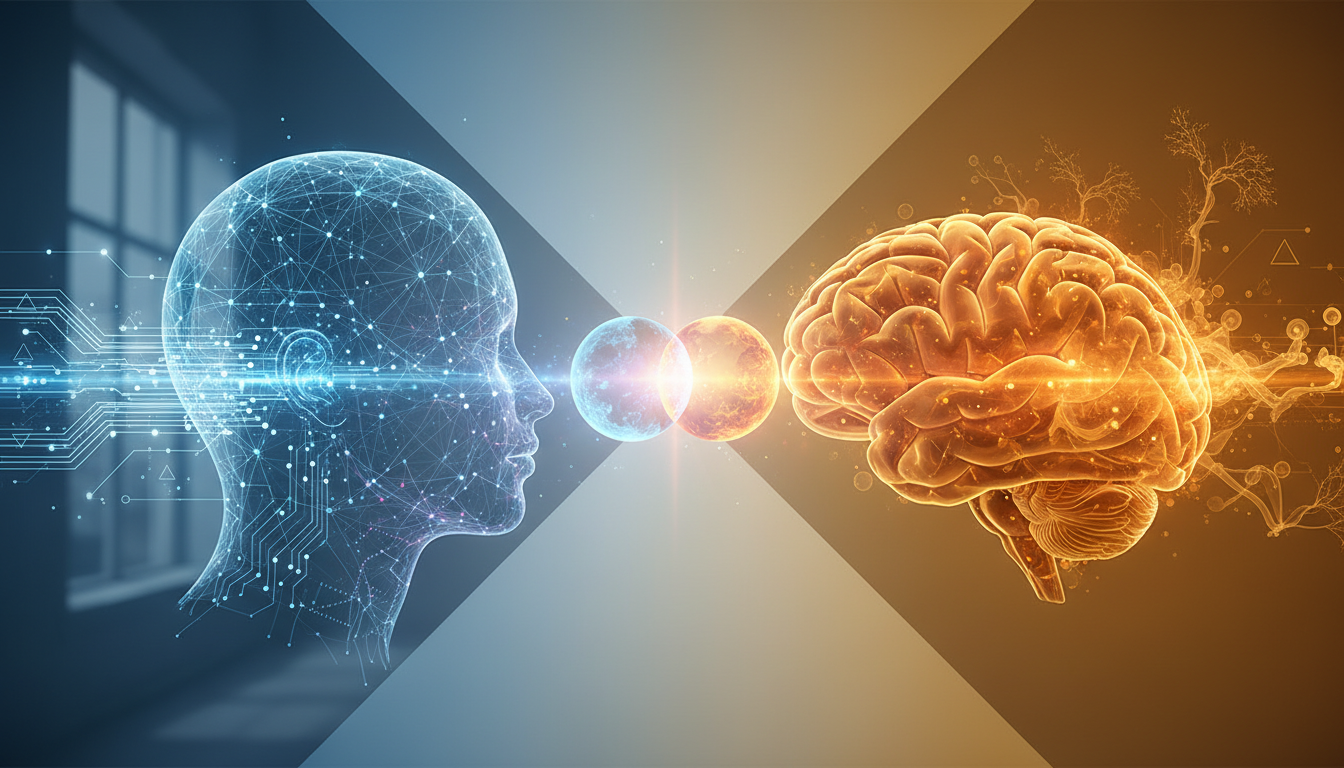
Building AI systems has taught me more about human intelligence than any psychology textbook ever could.
Pattern Recognition: Where AI Excels
Our machine learning models can process thousands of data points and identify patterns that humans would never notice. They’re incredibly good at specific, well-defined tasks with clear success metrics.
But here’s what surprised me: the more sophisticated our AI becomes, the more I appreciate uniquely human cognitive abilities. AI can recognize patterns in existing data, but it struggles with the kind of creative leaps that lead to breakthrough innovations.
Context and Common Sense
Humans excel at understanding context and applying common sense to novel situations. We can take knowledge from one domain and apply it to a completely different problem. AI systems, despite their impressive capabilities, still struggle with this kind of flexible thinking.
I remember testing our customer service chatbot with edge cases. It could handle 90% of standard queries perfectly, but the moment someone asked something slightly unusual, it would give completely nonsensical responses. Humans naturally fill in gaps and make reasonable assumptions.
Wisdom vs. Intelligence
The more I work with AI, the more I value human wisdom , the ability to make good judgments based on experience, values, and long-term thinking. AI can optimize for specific metrics, but it can’t weigh competing values or consider unintended consequences.
When we were deciding whether to accept a lucrative partnership that might compromise our long-term vision, no algorithm could make that choice. It required human judgment about what kind of company we wanted to build.
Cultural and Environmental Factors
Intelligence doesn’t develop in a vacuum. The environment shapes how cognitive abilities emerge and get expressed.
Socioeconomic Impact on Development
Growing up, I had access to books, computers, and educational opportunities that many of my peers didn’t. This head start compounded over time, creating advantages that had nothing to do with innate ability.
When we started our scholarship program for underrepresented students in tech, I was struck by how much raw talent exists in communities that lack resources. Many of these students could outthink our senior engineers once they had access to the same tools and training.
Educational Systems and Cognitive Development
Different educational approaches develop different types of cognitive skills. The rote memorization I experienced in early schooling was great for building foundational knowledge but terrible for creative problem-solving.
Our most innovative team members often come from non-traditional educational backgrounds. They learned to think independently and question assumptions because they had to navigate systems that weren’t designed for them.
Technology’s Role in Shaping Modern Intelligence
The internet has fundamentally changed what it means to be intelligent. Why memorize facts when you can look up anything instantly? The valuable skill now is knowing what questions to ask and how to evaluate the quality of information you find.
I’ve noticed that younger team members approach problems differently than I do. They’re comfortable with ambiguity and excel at synthesizing information from multiple sources. They’ve developed cognitive skills that my generation had to learn later in life.
Measuring Intelligence in the Modern World
If traditional IQ tests are inadequate, how should we evaluate cognitive abilities in 2026?
Performance-Based Assessment
Instead of abstract puzzles, we need to measure how people perform on real-world tasks. When hiring, I care less about test scores and more about what candidates have actually built or accomplished.
Our technical interviews involve pair programming sessions where candidates work through actual problems from our codebase. This reveals not just technical skills but also communication ability, problem-solving approach, and how they handle uncertainty.
Adaptive Learning Metrics
The most valuable metric might be learning velocity , how quickly someone can master new skills or adapt to changing requirements. In our fast-moving industry, this matters more than existing knowledge.
We track how team members respond to new challenges and technologies. The people who thrive are those who can quickly identify what they need to learn and figure out how to acquire those skills efficiently.
Collaborative Intelligence Assessment
Individual intelligence matters, but team intelligence often determines success. How well can someone contribute to collective problem-solving? Do they make the people around them smarter?
Some of our best hires weren’t the strongest individual contributors but were exceptional at elevating team performance. They asked the right questions, facilitated productive discussions, and helped others think more clearly.
The Future of Human Intelligence
As AI capabilities expand, the definition of valuable human intelligence continues to evolve.
Augmented Cognition
We’re already seeing the emergence of human-AI collaboration that amplifies cognitive abilities. Our data analysts use AI tools to process information faster, but they provide the strategic thinking and domain expertise that guides the analysis.
The future belongs to people who can effectively partner with AI systems , knowing when to rely on machine capabilities and when human judgment is essential. This requires a new kind of intelligence that combines technical understanding with wisdom about AI limitations.
Uniquely Human Capabilities
As AI handles more routine cognitive tasks, uniquely human abilities become more valuable. Creativity, empathy, ethical reasoning, and the ability to navigate complex social situations can’t be easily automated.
I’m betting on team members who excel at these distinctly human capabilities. They’re the ones who will remain irreplaceable as AI transforms the workplace.
Continuous Learning and Adaptation
The half-life of specific skills continues to shrink. What matters most is meta-learning , the ability to learn how to learn. People who can continuously update their mental models and acquire new capabilities will thrive.
This shift requires us to rethink education and professional development. Instead of front-loading knowledge in school, we need systems that support lifelong learning and cognitive flexibility.
What I’ve Learned About Intelligence
After years of building teams and AI systems, here’s what I believe about intelligence in 2026:
It’s Multifaceted and Context-Dependent
There’s no single measure of intelligence that captures human cognitive ability. Different situations require different types of thinking. The key is matching cognitive strengths to the right challenges and building diverse teams that complement each other.
Emotional and Social Skills Matter More Than Ever
As AI handles more analytical tasks, the ability to understand and work with other humans becomes increasingly valuable. The leaders and innovators of the future will be those who can navigate complex human dynamics while leveraging technological capabilities.
Adaptability Trumps Current Knowledge
In a rapidly changing world, the ability to learn and adapt matters more than what you know today. The smartest people I work with are comfortable with uncertainty and excited by the challenge of mastering new domains.
Intelligence isn’t fixed or simple. It’s a dynamic, multifaceted capability that continues to evolve as our world changes. The future belongs to those who understand this complexity and develop the full range of human cognitive abilities.
Enjoyed this article?
Connect with me for collaboration, ventures, or just a good conversation about building things.
Get in Touch