SEO Strategy for Ecommerce: 7 Steps That Work
An SEO strategy for ecommerce is a structured system of keyword research, technical optimization, content creation, and structured data implementation designed to attract high-intent shoppers through organic search and convert them into buyers.
Key Takeaways
- A strong SEO strategy for ecommerce aligns site structure and content with how shoppers actually search and buy.
- Keyword research must go beyond volume to capture commercial and transactional intent.
- Product and category pages need unique, valuable content and proper technical optimization.
- Structured data (Product, Review, FAQ) helps search engines display rich results and can lift click-through rates meaningfully.
- Continuous monitoring of crawl health, page speed, and conversion data is essential for long-term growth.
- Combining AI search trends, voice commerce, and visual search with classic SEO yields real competitive advantage.
What is an SEO Strategy for Ecommerce?
Defining Ecommerce SEO Strategy
An SEO strategy for ecommerce is the practice of optimizing an online store to rank higher in search engine results pages for queries that signal purchase intent. Unlike general SEO, which often targets informational or service-based queries, this approach revolves around product discovery, category browsing, and conversion. According to Google Search Central, the critical challenge is being discovered at each stage of the shopping journey, from initial research to final purchase. A well-crafted strategy ensures that every product page, category page, and supporting resource is both visible and persuasive.
Key Differences from General SEO
General SEO deals with blog posts, service pages, or local listings. Ecommerce sites face a different set of problems: hundreds or thousands of product pages, dynamic facets and filters, duplicate content risks, and constant inventory changes. A focused SEO strategy for ecommerce must also handle user-generated reviews, structured data for pricing and availability, and direct competition from massive marketplaces like Amazon and Walmart. As of 2026, OuterBox notes that AI Overviews and AI Mode raise the bar for clarity: product pages need crawlable text, accurate data, and visible answers that match what shoppers see in results.
Why a Clear Strategy Matters More in 2026
Roughly 37.5% of all online purchases start with an organic search, according to Search Engine Journal. On top of that, about 75% of searchers never look past page one of results. A defined SEO strategy for ecommerce connects six essential workstreams: keyword research, on-page optimization, technical SEO, structured data, content and links, and analytics. Together, these capture high-intent demand and convert it into revenue. Google’s search results now include multiple entry points for ecommerce products, including Shopping tabs, image carousels, and AI-generated product grids, which means more surface area to win or lose.
The Core Pillars of an Effective Ecommerce SEO Strategy
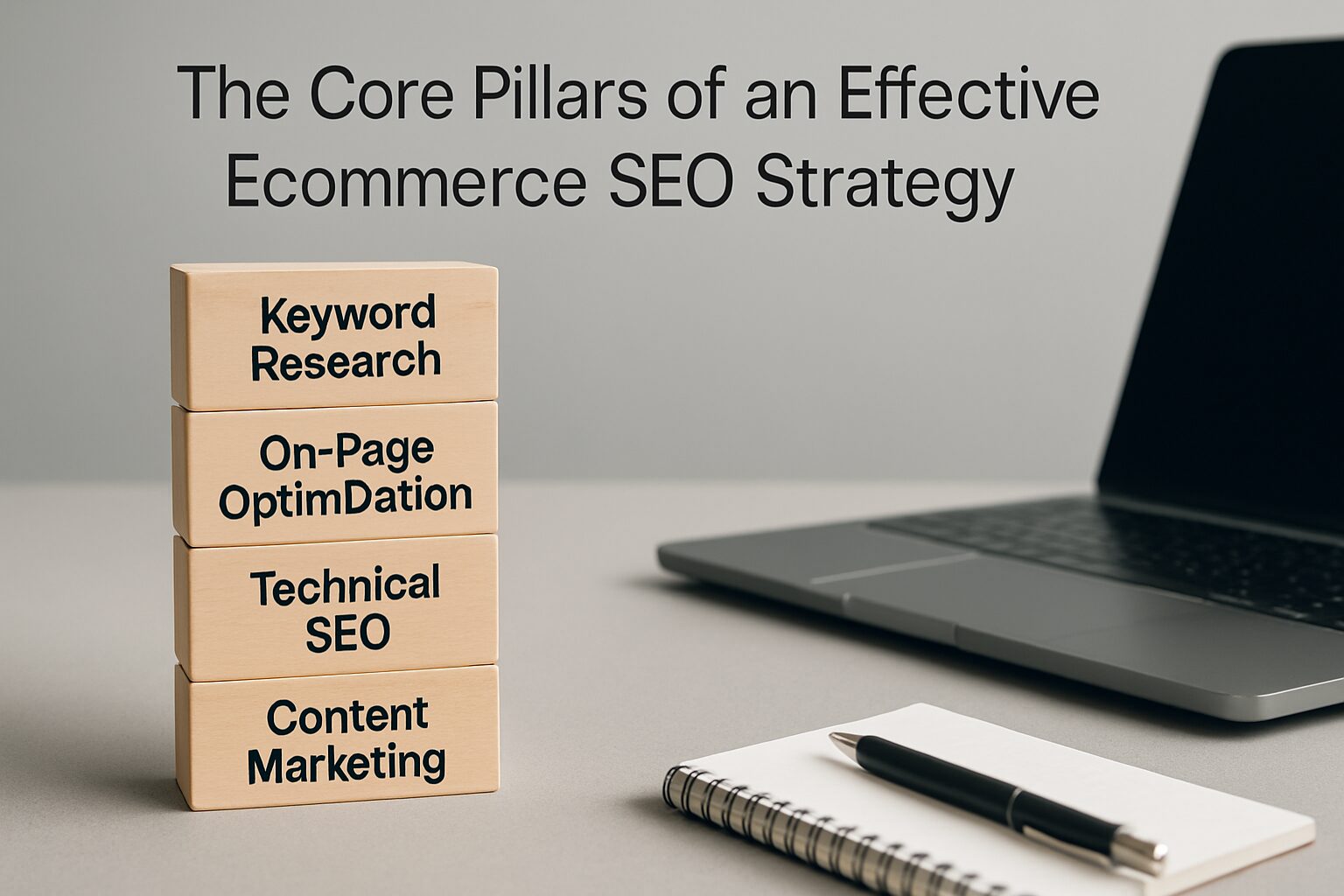
Content: Creating Value for Users and Search Engines
Quality content is the foundation of any SEO strategy for ecommerce. Instead of copying manufacturer descriptions, craft unique product copy that incorporates target keywords naturally. Informational guides, comparison posts, and how-to articles support the buyer’s journey and attract organic traffic at every stage. Google’s quality guidelines emphasize writing reviews that genuinely help shoppers decide, and this kind of content fuels long-term ranking growth rather than short-term spikes.
Technical Setup: Ensuring Crawlability and Indexation
The technical backbone includes HTTPS, mobile-friendliness, fast loading times with Core Web Vitals passing, proper XML sitemaps, and clean URL structures. For ecommerce, special attention goes to faceted navigation, pagination, and canonical tags to prevent duplicate content from diluting rankings. Google’s Search Central documentation details how to design URL structures that don’t trap crawlers in infinite filter combinations. Sites with more than 10,000 SKUs need to think carefully about crawl budget allocation.
User Experience Signals and Their SEO Impact
Google uses behavioral signals like time on page, bounce rate, and conversion patterns to assess relevance. A store that loads quickly and helps shoppers find what they need sends strong relevance signals. Optimizing for UX, including clear category paths, robust internal search, and mobile responsiveness, directly influences organic rankings and sales. A Largest Contentful Paint (LCP) under 2.5 seconds is the baseline target for mobile ecommerce pages.
Link Building: Internal and External Authority
Internal links connect related products, categories, and content, distributing PageRank and guiding users through the catalog. External backlinks from authoritative sites build trust signals that Google weighs heavily. A strategic link-building campaign might include guest posts, influencer outreach, and digital PR, all targeting pages relevant to commercial queries. For most ecommerce stores, a mix of category-level and product-level link targets works better than concentrating all effort on the homepage.
Expert Insight: “Ecommerce sites cannot afford to treat SEO as an afterthought. Every product variant, every filter combination, and every review snippet must be meticulously optimized. An effective SEO strategy for ecommerce ties together data feeds, structured markup, and content hierarchy so that shoppers find exactly what they need, whether on Google, Google Shopping, or AI-powered search assistants.” – Amin Ferdowsi, Founder of AminFerdowsi.com
Industry Perspective: “The stores winning in organic search right now are the ones treating their product catalog as a content asset, not just an inventory list. Structured data, original descriptions, and genuine customer reviews are the three signals that separate page-one results from everything else.” – Based on analysis from the Shopify Ecommerce SEO Guide
Pros and Cons

Pros
- Compounding returns: Unlike paid ads, organic traffic built through a solid SEO strategy for ecommerce keeps delivering without per-click costs.
- High purchase intent: Shoppers arriving from transactional queries are already primed to buy, which lifts conversion rates compared to cold traffic.
- Brand authority: Consistent page-one visibility builds trust with shoppers who see your store repeatedly before they purchase.
- Structured data advantages: Rich snippets showing price, availability, and star ratings give ecommerce listings a visual edge over plain blue links.
- AI search inclusion: Well-structured, authoritative product pages are more likely to be cited in Google’s AI Overviews, creating visibility even in zero-click results.
Cons
- Slow initial results: Meaningful ranking improvements typically take 3 to 6 months, and profitable ROI often requires 12 months or more of consistent effort.
- Technical complexity: Large catalogs with thousands of SKUs, faceted navigation, and dynamic URLs create crawl and duplicate content challenges that require ongoing maintenance.
- Algorithm dependency: Google updates can shift rankings overnight, making pure organic reliance risky without a diversified traffic strategy.
- Resource intensive: Producing unique content for hundreds of product pages, building quality backlinks, and maintaining technical health demands real time and budget.
7 Steps to Build Your SEO Strategy for Ecommerce
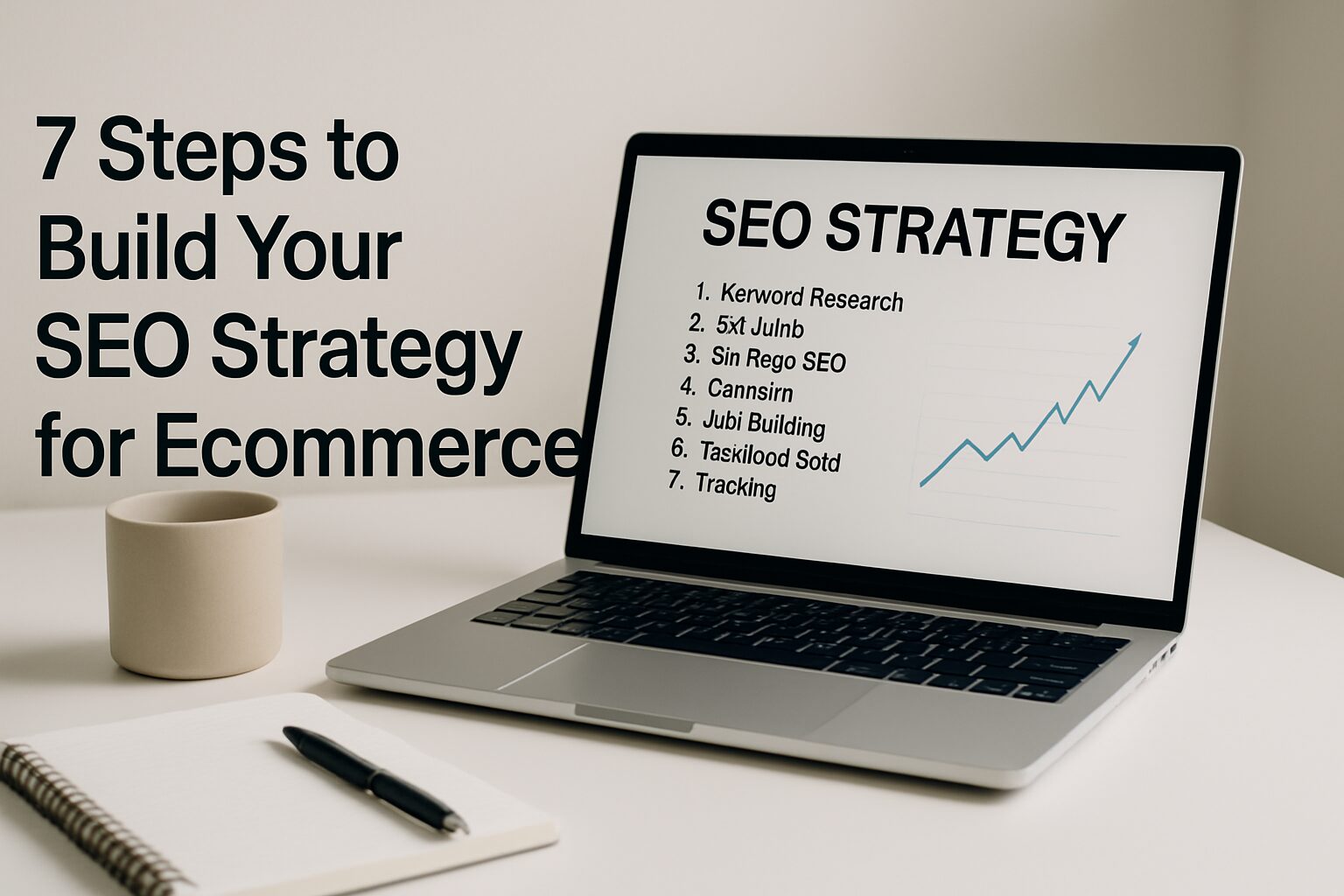
Step 1: Conduct Intent-Driven Keyword Research
Start by mapping queries to search intent. Use tools like Semrush, Ahrefs, and Google Keyword Planner to identify terms with commercial modifiers: “buy,” “for sale,” “best,” “deals.” Separate broad category terms like “running shoes” from specific product queries like “Nike Air Max 90 men’s size 11” and assign each to the appropriate page type. Search intent is critical here. If Google shows category pages for a query, trying to force a product page into that slot will fail. This is the single most common mistake I see founders make when building their first ecommerce SEO strategy.
Step 2: Optimize Product and Category Pages
Every product page needs a unique title tag, meta description, and H1 that include the primary keyword. Write original descriptions focused on benefits and specifications, not just features copied from a supplier sheet. For category pages, provide a brief introduction and bullet points that define the category and its value. Use high-quality images with descriptive alt text, and include customer reviews and Q&A sections to add content depth. These elements are what separate stores that rank from stores that don’t, even when the product catalog is identical.
Step 3: Implement Technical SEO Fundamentals
Ensure your site uses HTTPS, has a mobile-responsive design, and passes Google’s Core Web Vitals benchmarks. Submit an XML sitemap via Google Search Console and use robots.txt to control crawling of low-value pages. For large catalogs, implement pagination correctly and use canonical tags to consolidate duplicate page authority. Monitor crawl budget and fix broken links promptly. Site architecture should be shallow: products reachable within 3 clicks from the homepage. Screaming Frog (free for up to 500 URLs, then £149 per year) is my go-to tool for catching technical issues before they compound.
Step 4: Handle Faceted Navigation and URL Parameters
Faceted navigation is one of the biggest technical challenges in any ecommerce SEO strategy. Filter combinations like color, size, and price can generate thousands of near-duplicate URLs that waste crawl budget and dilute page authority. The standard approach is to use canonical tags pointing filtered URLs back to the base category page, and to configure Google Search Console’s URL parameter handling for parameters that don’t change page content. For high-value filter combinations that do have genuine search demand, like “red running shoes women,” consider creating dedicated landing pages rather than relying on dynamic filter URLs. Platforms like Shopify and BigCommerce handle some of this automatically, but always verify the output in Search Console.
Step 5: Leverage Structured Data and Product Feeds
Add Product structured data covering name, price, availability, and brand. Enable Merchant Listing structured data for enhanced visibility in the Google Shopping tab. Use Review and FAQ schema to earn rich snippets. According to Google Merchant Center documentation, providing a product feed via Google Merchant Center complements organic SEO by surfacing products across multiple Google surfaces simultaneously. As of 2026, structured data remains a direct signal for AI Overviews inclusion, making it one of the highest-ROI technical investments for any ecommerce SEO strategy.
Step 6: Create Valuable Content and Build Links
Launch a blog or resource center with buying guides, comparison articles, and tutorials. Detailed comparisons like “Product A vs Product B” drive both traffic and conversions because they capture shoppers at the decision stage. Build backlinks through outreach, industry partnerships, and shareable resources. Internal links from high-authority pages, like the homepage or a popular buying guide, to product pages pass authority and help search engines discover new inventory. According to the Shopify Ecommerce SEO Guide, content marketing and link building work best when tied directly to commercial keyword clusters rather than treated as separate initiatives.
Step 7: Monitor, Measure, and Adjust
Track organic traffic, click-through rates, and conversions via Google Analytics 4 and Search Console. Monitor keyword rankings weekly and analyze which pages are underperforming relative to their potential. Use heatmaps and session recordings to spot UX issues that data alone won’t reveal. Revenue per organic visitor is the ultimate KPI for any ecommerce SEO strategy: align reporting with actual sales data from your platform, whether that’s Shopify, BigCommerce, or Magento. Frequent audits catch crawling errors, index bloat, and page speed regressions before they erode rankings.
Ecommerce SEO Tools Comparison Table
| Tool | Primary Use | Pricing Model | Notable Feature |
|---|---|---|---|
| Google Search Console | Technical health, indexing, queries | Free | Direct Google data |
| Ahrefs | Keyword research, backlink analysis | Subscription ($99+/mo) | Site Explorer and Content Explorer |
| Semrush | All-in-one SEO and competitive research | Subscription ($119.95+/mo) | Keyword Magic Tool and Position Tracking |
| Screaming Frog | Site crawls and technical audits | Free for up to 500 URLs, then £149/yr | Custom extraction and crawl configurations |
| Google Merchant Center | Product feeds for Google Shopping | Free (paid ads optional) | Feed management and diagnostics |
Common Pitfalls in Ecommerce SEO
Pitfall 1: Ignoring Search Intent in Keyword Targeting
Targeting head terms like “shoes” on a product page that doesn’t match user intent leads to high bounce rates and wasted crawl budget. Always verify the SERP landscape before assigning a keyword to a page type. If the top results are category pages or guides, that’s what Google expects to see. Forcing a product page into a category-intent query is a losing battle, no matter how well-optimized the page is.
Pitfall 2: Neglecting Mobile Optimization and Page Speed
Mobile commerce accounts for a growing share of all ecommerce transactions, and a slow mobile experience kills both conversions and rankings. Use Google’s PageSpeed Insights to diagnose issues and aim for an LCP under 2.5 seconds. Responsive design isn’t optional: it’s a baseline requirement for any serious SEO strategy for ecommerce in 2026.
Pitfall 3: Duplicate Content and Poor URL Structure
Ecommerce sites routinely generate duplicate pages through filters, tags, and session IDs. Implement canonical URLs and configure parameter handling in Google Search Console. Keep URLs simple and meaningful, avoiding lengthy parameters and dynamic session strings. A clean hierarchy like example.com/category/subcategory/product helps both users and crawlers navigate efficiently.
Advanced Strategies to Differentiate Your Ecommerce SEO
Map Content to Shopper Journey Stages
Instead of focusing solely on product pages, align content with awareness, consideration, purchase, and post-purchase stages. For awareness, target informational queries with blog posts and guides. For consideration, offer comparison tools and buying guides. For purchase, optimize product pages with strong CTAs, trust signals, and detailed specs. Post-purchase, create FAQ and support content that keeps customers returning and signals brand depth to Google. This full-funnel mapping builds topical authority and captures micro-moments that most competitors miss entirely.
Go Beyond Basic Product Schema
While many stores implement basic Product schema, advanced practitioners also deploy Shipping, Return Policy, and FAQ structured data. These can generate rich results that answer shopper questions directly in SERPs, reducing friction before the click. Combining Product with Review and Offer schema ensures pricing, star ratings, and shipping estimates appear in search results, which is critical for standing out in crowded result pages where every visual element matters.
Optimize for Voice and Visual Search
Voice commerce via Alexa and Google Assistant requires natural language optimization: long-tail conversational keywords and featured snippet targets. For visual search, product images should have descriptive file names, alt attributes, and proper compression. Google Lens uses these signals to match images with queries. As of 2026, visual discovery is a growing traffic source for fashion, home goods, and consumer electronics stores, not a future trend to plan for later.
Measuring Success: KPIs for Ecommerce SEO
Track metrics that tie directly to revenue: organic sessions, conversion rate, average order value from organic traffic, and revenue per landing page. Also monitor keyword rankings for commercial terms, impressions from structured data via Search Console’s Enhancement reports, and backlink growth over time. Use GA4’s ecommerce reports to segment traffic by acquisition channel and analyze assisted conversions. Frequent audits identify crawling errors, index bloat, and page speed regressions before they damage rankings. The stores I’ve seen grow fastest treat SEO reporting as a weekly operational habit, not a quarterly review.
Building a Durable SEO Strategy for Ecommerce
An SEO strategy for ecommerce is not a one-time project. It’s an integrated, evolving system. Start with solid keyword research and technical foundations, layer in compelling content and structured data, and continuously refine based on user behavior and search data. As Google’s AI capabilities expand, the stores that present clear, trustworthy, and easily parsed information will win the organic channel. Follow the seven steps, avoid the common pitfalls, and embrace the advanced tactics above, and your ecommerce business can claim its place on page one and hold it.
If you’re building or scaling an ecommerce store and want to talk through your SEO strategy, connect with me at AminFerdowsi.com. I’m always up for a direct conversation about what’s actually working.
Frequently Asked Questions
What is the difference between ecommerce SEO and regular SEO?
Ecommerce SEO focuses on product and category pages, inventory scale, and conversion-specific metrics, whereas regular SEO often deals with blogs, services, or location-based visibility. Unique challenges like duplicate product descriptions, faceted navigation, and direct competition from marketplaces require specialized tactics that general SEO playbooks don’t cover.
How long does it take to see results from an ecommerce SEO strategy?
Noticeable improvements in rankings and traffic typically appear between 3 to 6 months, but profitable ROI often takes 12 months or more. The timeline depends on site age, competition level, and execution consistency: stores that treat SEO as a continuous system rather than a one-time project see compounding returns over time.
Is SEO still effective in the age of AI search and chatbots?
Yes. AI search features like Google’s AI Overviews pull from well-structured, authoritative pages. By following SEO fundamentals, including clear headings, concise answers, and structured data, you increase the likelihood of being cited as a source and driving traffic even in zero-click environments.
Do I need an agency for my ecommerce SEO?
Small stores with limited catalogs can manage SEO in-house using tools like Semrush, Ahrefs, and Google Search Console. Larger operations with thousands of SKUs benefit from agency expertise in technical audits, link building, and feed optimization. Evaluate based on catalog size, internal bandwidth, and growth targets.
Can I use paid ads together with ecommerce SEO?
Absolutely. Combining Google Ads with an organic SEO strategy for ecommerce creates a complementary effect: SEO captures high-intent traffic without per-click costs, while paid ads fill gaps for highly competitive or time-sensitive terms. Data from paid campaigns also informs SEO keyword prioritization.
What are the most important structured data types for ecommerce?
Product, Review, Offer, and FAQ schemas are essential starting points. Shipping and Return Policy structured data can further enhance rich results. Implementing these correctly gives ecommerce listings a visual edge in SERPs and improves eligibility for AI Overview citations.
Enjoyed this article?
Connect with me for collaboration, ventures, or just a good conversation about building things.
Get in Touch