Landing Pages: Build, Optimize & Convert in 2026
Key Takeaways
- Landing pages are standalone pages built for a single campaign goal, unlike multi-purpose homepages that serve every visitor intent at once.
- Purpose-built landing pages consistently outperform generic pages for conversion, with AI-driven tools like Leadpages showing variant lifts as high as 386% in real split tests.
- The best landing pages combine a sharp headline, focused copy, a single strong CTA, social proof, and mobile-first design.
- Modern builders from Carrd, Leadpages, Instapage, and Canva let you publish a high-converting page in under an hour, no coding required.
- As of 2026, AI personalization and generative search are reshaping landing page strategy: clear, answer-first content now earns AI citations directly.
Landing pages are standalone web pages built for a single marketing campaign with one focused call to action. They strip away navigation and distractions to maximize conversion rates from paid ads, emails, and social media.
What Are Landing Pages?
Definition and Core Purpose
A landing page is a specific web page designed to receive and convert traffic from an online marketing campaign. When someone clicks a Google Ads link, a Facebook ad, or an email newsletter, they land on this page. Unlike a company homepage, which encourages browsing and brand exploration across many products, landing pages focus on one outcome: the call to action. That might be a purchase, a sign-up, a demo request, or a download. Because every element supports that single goal, landing pages routinely outperform general-purpose pages for campaign conversion.
According to Unbounce, dedicated landing pages are the most effective way to increase conversion rates while lowering the cost of acquiring a lead or sale. That focus is why experienced marketers never send paid traffic to a generic homepage. A purpose-built page captures more of the clicks you already paid for.
How Landing Pages Differ from Regular Websites
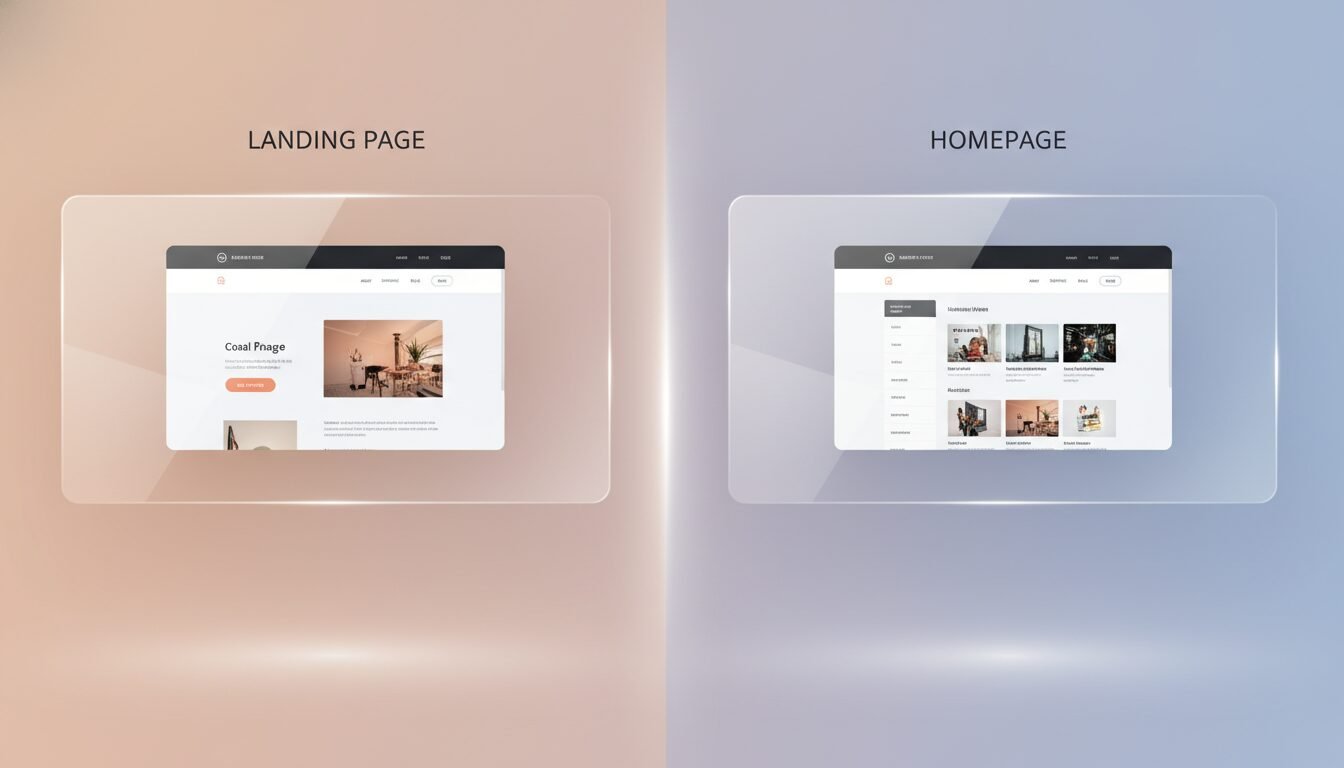
A standard website page lives inside a site’s navigation, contains links to other sections, and serves multiple visitor intents. A landing page, by contrast, is often a standalone URL with no navigation menu, minimal outbound links, and one clear action. Removing exit paths keeps visitors focused: they either convert or leave. Conversion-rate research consistently shows that fewer links mean fewer distractions, and fewer distractions mean higher conversions.
The Anatomy of High-Converting Landing Pages
Compelling Headlines and Subheadings
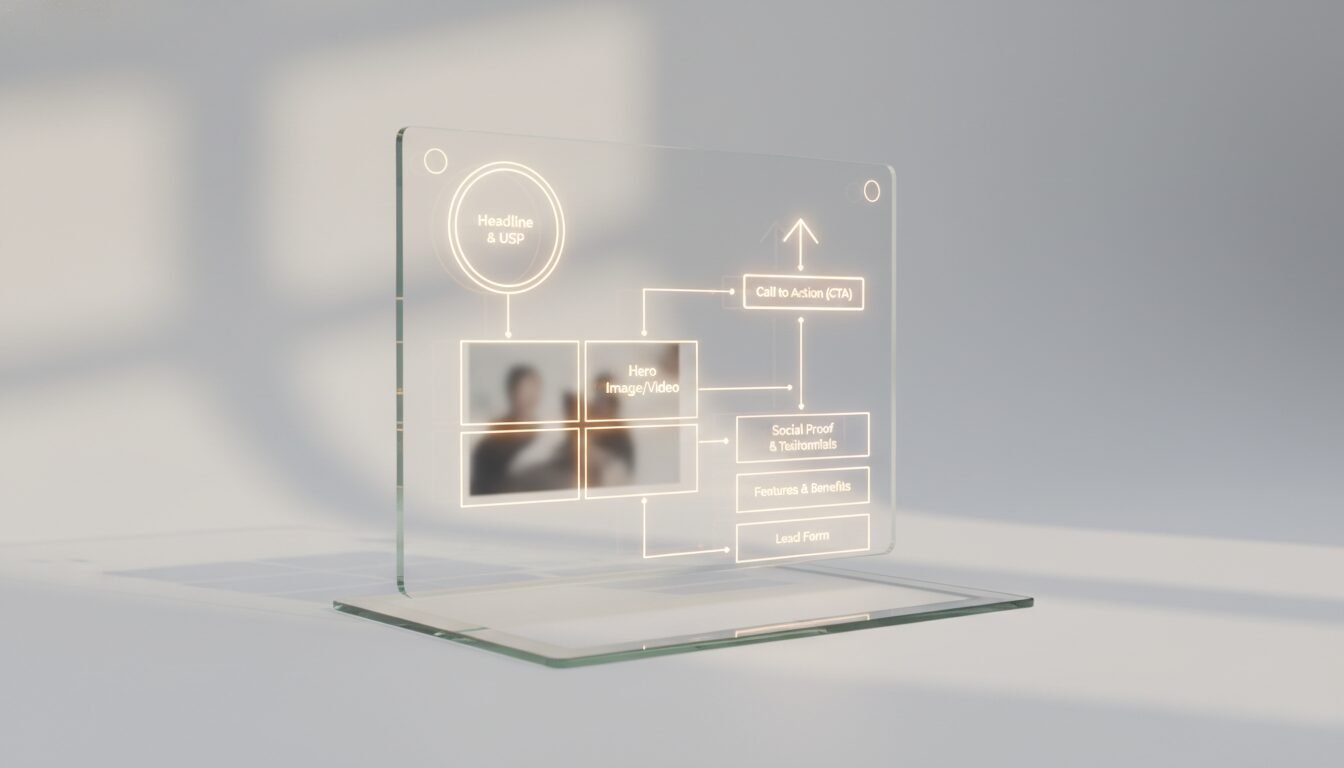
The headline is the first thing a visitor reads, and it must immediately connect the click they just made to the offer in front of them. A strong headline states the primary benefit clearly and echoes the promise of the ad or email that brought them. Below it, a subheading adds a secondary reason to stay, often a short description or a social-proof snippet that reinforces the offer.
Persuasive Visuals and Copy
High-quality images, short product demos, or explainer videos boost engagement significantly. Unbounce notes that adding video to a landing page can increase conversion rates by up to 80%. Copy should be benefit-driven and scan-friendly. Use bullet points to break down features, and always answer the visitor’s core question: “What’s in it for me?”
Irresistible Calls to Action
A call to action is the button or link that prompts the visitor to take the next step. Effective CTAs use action verbs: “Get started,” “Download now,” “Claim your free trial.” They stand out visually with contrasting colors and appear above the fold and again further down the page. Every landing page should have one primary CTA. Secondary CTAs dilute focus and reduce conversions.
Types of Landing Pages and When to Use Them
Lead Generation Pages
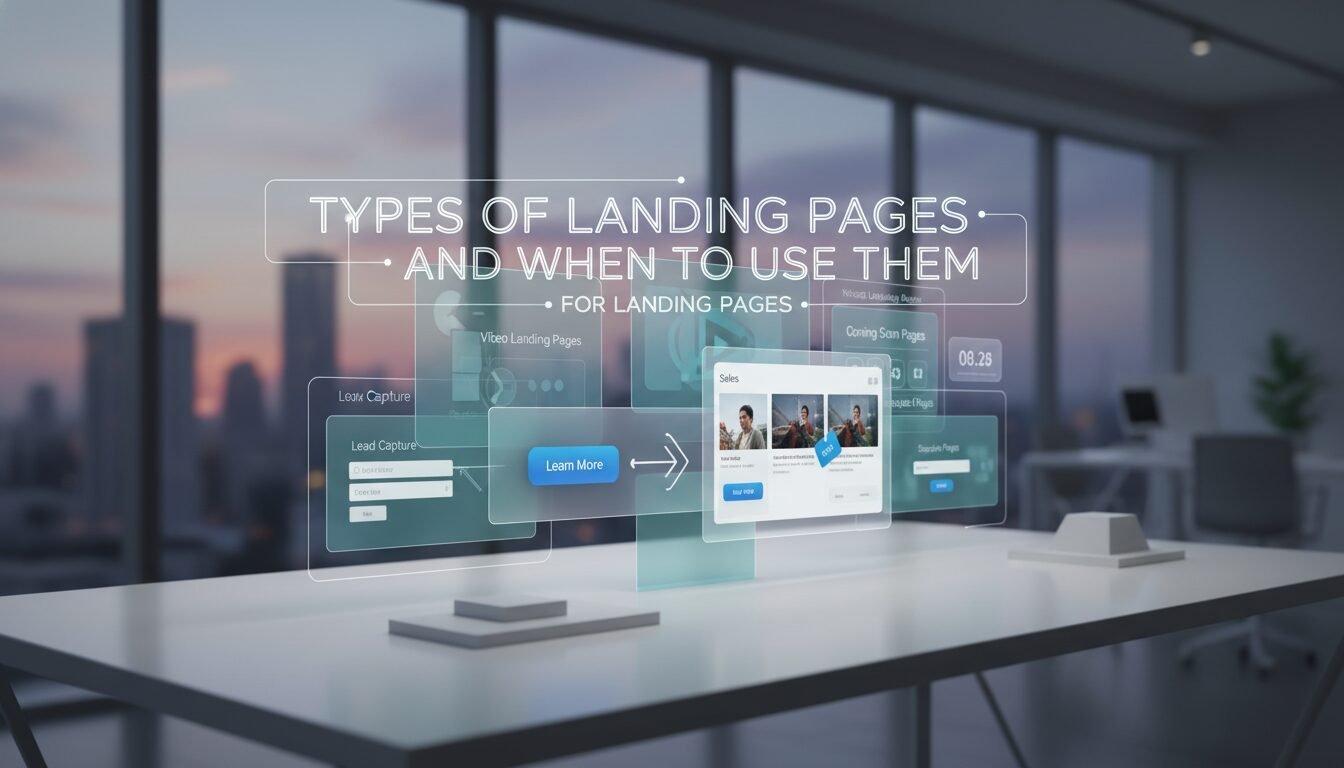
These pages collect user information, such as name, email, or phone number, in exchange for something of value: an ebook, a webinar, or a coupon. The form is the central element, and the page is optimized to make the exchange feel worthwhile. Mailchimp notes that landing pages are ideal for capturing leads from digital campaigns because they sit outside the main website navigation, giving marketers full control over the experience.
Click-Through Pages
Click-through landing pages warm up visitors before sending them to a purchase or checkout page. They provide persuasive details about the product or service, build trust, and then direct the user to the final transaction. E-commerce brands often use these for high-consideration items, reducing friction in the buying process.
Microsites and Squeeze Pages
A microsite is a small, separate site, often with multiple pages, created for a specific campaign. A squeeze page is a focused lead-capture page that offers little else besides the form. Per Wikipedia, “squeeze page” is a common synonym for a landing page whose sole function is to collect email addresses. These formats work well for product launches, event registrations, and viral giveaways.
Landing Pages vs. Homepages: Why the Distinction Matters
The Distraction-Free Advantage
A homepage is the face of a company. It welcomes all visitors, shares the brand story, and offers dozens of links to other pages. A landing page removes every link that could pull a visitor away from the conversion goal. When Unbounce compared the two visually, the homepage displayed over 30 clickable elements while the landing page showed only one CTA button. That radical simplicity is the engine behind conversion rate gains.
Message Match from Ad to Page
Message match is the alignment between the text of the ad or email that brought the visitor and the headline of the landing page. A tight message match reassures visitors they are in the right place and increases the likelihood they will convert. Homepages can never offer this level of match because they must serve every possible audience segment at once.
Conversion Focus vs. Brand Exploration
Homepages are built for exploration. They invite visitors to learn, browse products, read about the mission, or check job openings. Landing pages demand an immediate decision. This single-minded focus is why a dedicated landing page can double or even triple campaign conversion rates compared to sending traffic to a homepage, as reported by conversion-rate optimization experts at Unbounce.
Pros and Cons of Using Landing Pages
Pros
- Higher conversion rates: Removing navigation and distractions keeps visitors focused on one action, consistently lifting conversions versus general pages.
- Precise message match: You can tailor the headline and offer to match each specific ad or email, creating a seamless experience that builds trust instantly.
- Easier to test: A single-purpose page is far simpler to A/B test than a full website. Change one element, measure the result, repeat.
- Lower cost per lead: Better conversion rates mean you get more leads from the same ad budget, directly improving campaign ROI.
- Fast to build: Modern builders like Carrd and Leadpages let you publish a functional page in under an hour, even without design experience.
Cons
- Ongoing maintenance: Each campaign ideally needs its own page, which means managing multiple URLs, copy variations, and form integrations over time.
- Limited SEO value alone: A standalone landing page with thin content rarely ranks organically. You need paid or social traffic to make it work.
- Compliance overhead: Forms collecting personal data require GDPR and CCPA-compliant consent language, privacy policy links, and sometimes cookie banners, adding setup complexity.
How to Choose the Right Landing Page Builder in 2026
Free vs. Paid Options
Several builders offer free tiers that work well for small projects or testing ideas. Carrd provides a generous free plan with a Pro subscription starting at $19 per year. Canva’s landing page maker is included in its free design suite, with a Pro plan at $12.99 per month. For serious business use, paid plans from Leadpages ($49 per month), Unbounce ($99 per month), or Instapage ($199 per month) unlock AI optimization, A/B testing, and premium integrations.
AI Capabilities and Automation
The 2026 market is defined by AI-powered tools that build, test, and optimize landing pages automatically. Leadpages uses Smart Traffic to route visitors to the best-performing variant in real time. Zapier’s 2026 roundup tested seven leading builders and found that AI is no longer optional: it’s essential for scaling conversion optimization without a dedicated analytics team. Leadpages’ own platform data shows one variant achieving a 386% lift in button clicks over the original, a result driven entirely by machine-learning split-routing.
Integrations and Templates
Look for builders that connect with your existing marketing stack. Kit (formerly ConvertKit) is purpose-built for newsletter sign-ups and integrates natively with email sequences. Instapage offers deep Adobe Target and Salesforce connections for enterprise teams. Template count matters too: Landingfolio offers over 805 pre-built components for Tailwind and Webflow, cutting design time dramatically.
| Builder | Starting Price | Best For | Notable Feature |
|---|---|---|---|
| Carrd | Free ($19/yr Pro) | Simple one-page sites | Extremely fast setup, no design skills required |
| Leadpages | $49/month | AI-driven optimization | Built-in A/B testing, Smart Traffic, 400K+ users |
| Instapage | $199/month | Enterprise teams | Advanced personalization, heatmaps, Adobe Target integration |
| Unbounce | $99/month | Marketers and agencies | AI copywriting assistant, Smart Builder, conversion tools |
| Canva | Free (Pro $12.99/mo) | DIY designers | Drag-and-drop editor with thousands of templates |
| Kit (ConvertKit) | Free (up to 10K subs) | Email creators | Landing pages built for newsletter signups |
Designing Landing Pages That Convert: Best Practices
Visual Hierarchy and Scannability
Visitors skim before they read. A clear visual hierarchy, using size, color, and spacing, guides their eyes from the headline to supporting visuals and finally to the CTA button. Bullet points, short paragraphs, and generous white space make the page feel effortless. A well-known fintech landing page example on Dribbble accumulated 1.5 million views, partly because its custom 3D animations communicated the product’s value without a wall of text.
Mobile-First Design
More than half of web traffic now comes from smartphones. A mobile-friendliness check is mandatory. Responsive builders like Carrd, Unbounce, and Leadpages automatically adapt your page layout to any screen size. Test on real devices to ensure forms are easy to fill, buttons are thumb-sized, and load time stays under three seconds.
Social Proof and Trust Builders
Testimonials, customer logos, trust badges, and precise numbers build instant credibility. Leadpages prominently displays its 4.6/5 G2 rating and the fact that it has served over 400,000 businesses since 2012, generating more than 9.1 million leads per month across its platform. Even landing-page platforms use landing-page best practices to sell themselves. That’s the clearest signal these tactics work.
SEO for Landing Pages
Standalone landing pages can rank organically when built correctly. Target one specific keyword phrase per page, include it in the title tag, H1, and first paragraph. Keep page load time under 3 seconds, since Google’s Core Web Vitals directly affect ranking. Add a descriptive meta description, use schema markup for your offer or event, and build at least a few inbound links from your main site to pass authority. Mailchimp recommends treating each landing page as its own mini-SEO asset, with unique copy that avoids duplicating content from your main site.
The Role of AI in Modern Landing Page Optimization
AI-Powered A/B Testing and Personalization
Traditional A/B testing required manual setup and lengthy wait times for statistical significance. Today’s AI-native tools run continuous multivariate tests behind the scenes.
“B is converting 386% better. Smart Traffic is sending more visitors to B,” reads a real-time Leadpages dashboard, showing how adaptive split-routing learns which variant works for which visitor segment and shifts traffic instantly.
Personalization goes further. By analyzing location, referrer, or past behavior, AI can swap headlines, images, or offers for each user. Instapage and Unbounce both offer personalization engines that layer dynamic content onto a single URL.
Generative Search and Answer Engine Visibility
In 2026, Google’s AI Overviews and voice assistants frequently cite content directly from landing pages when answering user questions. To earn that citation, your page must give a clear, definitional answer in the first paragraph, use structured headings, and include trust signals. A landing page that opens with “Landing pages are standalone pages built for a single campaign…” aligns precisely with how generative AI extracts and surfaces knowledge.
Dynamic Content and Smart Traffic
Smart Traffic algorithms automatically send visitors to the variant most likely to convert them, based on device, time of day, or demographic signals. Instead of waiting weeks for an A/B winner, the system continuously allocates more traffic to the best performer. Platform reports suggest this approach can lift campaign ROI by 20-30% without any additional ad spend.
Legal and Compliance Considerations for Landing Page Forms
Compliance is the part most founders skip until it becomes a problem. If your landing page collects personal data from EU residents, GDPR requires explicit consent before you store or process that data. For California residents, CCPA gives users the right to know what data you collect and to opt out of its sale. In practice, this means adding a clear privacy policy link near every form, using opt-in checkboxes rather than pre-checked boxes, and displaying a cookie consent banner if you run tracking pixels.
Most major builders, including Leadpages and Unbounce, offer built-in GDPR consent fields and integrate with cookie management platforms like OneTrust. Set these up before you launch, not after your first complaint. A non-compliant form can result in fines starting at €20 million or 4% of global annual turnover under GDPR, whichever is higher. That’s a steep price for skipping a checkbox.
Measuring Landing Page Success: KPIs That Matter
Conversion Rate and Cost Per Lead
Conversion rate is the percentage of visitors who complete the desired action. It’s the single most important metric for any landing page. A healthy conversion rate varies by industry, but improving it even one percentage point can dramatically lower cost per lead when you’re paying for clicks. Dedicated landing pages routinely outperform general pages by stripping away distractions, directly lowering acquisition costs.
Bounce Rate and Time on Page
Bounce rate shows the percentage of visitors who leave without interacting. A high bounce rate may signal poor message match, slow load times, or a confusing layout. Time on page, paired with scroll depth, helps you understand whether visitors actually consume your content. Tools like Hotjar and Microsoft Clarity offer heatmaps and session recordings for deeper insight.
A/B Testing and Statistical Significance
A/B testing compares two versions of a landing page to see which performs better. Modern builders bake this in: clone your control page, change one element (headline, CTA color, form length), and let traffic split. A result is statistically significant when it reaches at least 95% confidence, meaning the lift is real and not due to random chance.
“Landing pages are the best option for increasing the conversion rates of your marketing campaigns,” states Unbounce, underscoring why testing is not optional but foundational to any serious growth strategy.
Frequently Asked Questions
What is the difference between a landing page and a homepage?
A homepage serves as a navigational hub with links to every part of your site, while a landing page is a stripped-down, standalone page focused on a single call to action. Homepages welcome everyone; landing pages convert a specific audience arriving from a specific source.
Do I need a landing page for my business?
If you run paid ads, email campaigns, or social promotions, yes. Sending traffic to a generic page wastes ad spend. A tailored landing page increases conversion rates and lowers your cost per lead, often significantly.
How long does it take to create a landing page?
With modern builders like Carrd or Canva, a basic landing page can be live in under an hour. More complex pages with custom design and copy may take a few hours, but rarely more than an evening of focused work.
What is the best landing page builder for beginners?
Carrd and Canva are both free and require zero coding. For marketers who want AI-assisted optimization, Leadpages offers a gentle learning curve with drag-and-drop editing and automated split testing built in.
How do I drive traffic to my landing page?
The most common methods are pay-per-click ads (Google Ads, Facebook Ads), email newsletters, social media posts, and QR codes on print materials. Each traffic source should have a dedicated landing page with matching messaging for best results.
What is A/B testing and why does it matter for landing pages?
A/B testing shows two variants of your page to different visitors to see which one converts better. It removes guesswork and lets data drive improvements. Even small changes, like button color or headline phrasing, can produce double-digit conversion lifts over time.
Ready to Build Landing Pages That Actually Convert?
I’ve built landing pages for product launches, SaaS sign-ups, and investor pitches. The ones that worked weren’t the prettiest. They were the most focused. One clear offer, one CTA, zero distractions. If you’re thinking through your conversion strategy or want to talk AI-driven optimization for your next campaign, connect with me at aminferdowsi.com. I’m always up for a direct conversation about what’s actually working in 2026.
Enjoyed this article?
Connect with me for collaboration, ventures, or just a good conversation about building things.
Get in Touch