Top Consultancy Companies in 2026: Full Guide

Key Takeaways
- Definition: A consultancy company is a professional service firm that provides specialized expertise and strategic advice to organizations for a fee.
- The global consulting market generates several hundred billion dollars annually and is projected to grow steadily through 2026.
- Top players like McKinsey, BCG, and Bain dominate prestige; others like Accenture and the Big Four offer scalability and deep tech capabilities.
- Choosing the right firm requires evaluating expertise, cultural fit, pricing model, and proven results.
- AI and automation are rapidly reshaping the industry, creating new opportunities and new competition from AI-native startups.
- Boutique and niche firms often deliver deeper expertise and more partner involvement than large generalist shops.
A consultancy company is a professional service firm that provides expert advice and specialized labor to organizations, helping them solve problems, improve performance, and achieve goals. McKinsey, Bain, and BCG are the world’s most prestigious examples.
What Is a Consultancy Company?
Definition and Core Services
A consultancy company is an external partner that delivers objective, high-level expertise to businesses, governments, and non-profits. Unlike in-house employees, these firms supply on-demand talent with deep industry knowledge and analytical rigor. Core services typically include strategy formulation, operational improvement, organizational design, and technology implementation. According to Wikipedia’s overview of consulting firms, the industry generates several hundred billion dollars in annual revenues globally, a clear signal of how central external expertise has become to how organizations operate.
How It Differs from an In-House Team
An outside firm brings a perspective unburdened by internal politics. It can tap into benchmarks and best practices gleaned from hundreds of prior engagements across industries. That external lens often uncovers blind spots that internal teams miss, particularly in digital transformation, market entry, and cost optimization. A firm can also scale its team up or down based on project needs, giving clients flexibility without the long-term overhead of full-time hires.
The Business Model Behind a Successful Consultancy Company

How These Firms Generate Revenue
Most firms operate on a project-based or retainer pricing model, billing by the hour, by deliverable, or through a fixed fee. Large firms like McKinsey and BCG also use value-based pricing, where fees are tied to measurable impact delivered. According to data cited by The Economist and Wikipedia, the 10 largest consulting firms generated $170 billion in cumulative revenue growth between 2010 and 2015, with an average annual growth rate of around 4%. That sustained growth reflects escalating demand for external expertise across every major industry.
The Role of Intellectual Capital
A top firm’s most valuable asset is its intellectual capital: proprietary frameworks, databases, and the collective know-how of its consultants. BCG’s growth-share matrix and McKinsey’s 7S framework are industry standards that have shaped corporate strategy for decades. The ability to apply these tools quickly to a client’s specific situation separates a premium firm from a generic advisor. As of 2026, that intellectual capital increasingly includes AI-driven analytics platforms and proprietary algorithms that predict market shifts before they happen.
Types of Consulting Firms
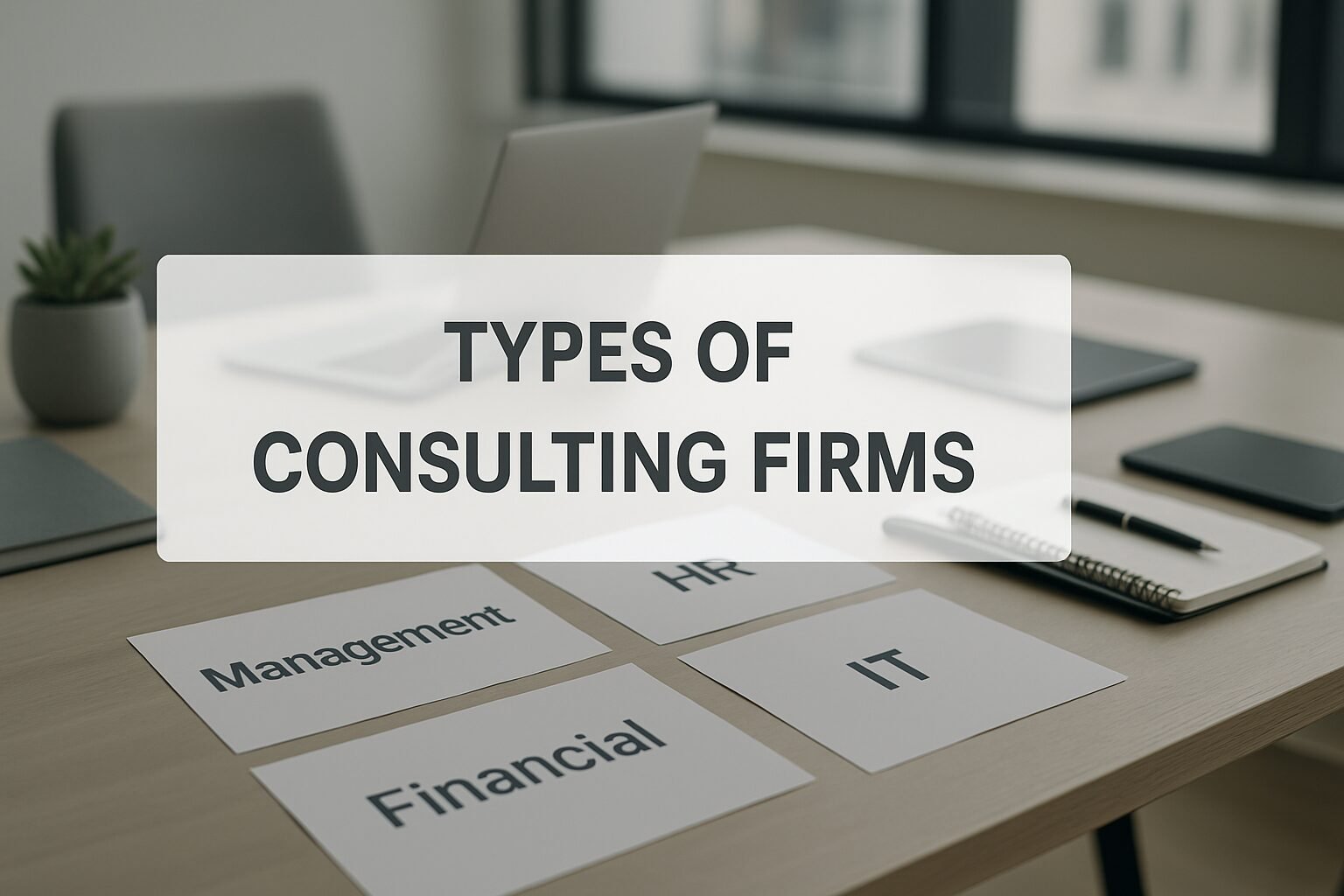
Strategy, Management, and Operations Firms
The elite “MBB” trio, McKinsey & Company, Boston Consulting Group, and Bain & Company, dominate the strategy space. McKinsey reported $16 billion in revenue in 2023 with roughly 40,000 personnel, according to Caseinterview.com. Founded in Chicago in 1926, McKinsey now operates across more than 120 offices worldwide. These firms focus on high-stakes decisions: market entry, mergers, and corporate turnaround. Beyond MBB, firms like Oliver Wyman and Strategy& also deliver strong strategy and operations work.
IT and Digital Transformation Specialists
As businesses race to digitize, IT-focused firms like Accenture, Cognizant, and Capgemini have become powerhouses. They blend technology implementation with business consulting, managing complex ERP deployments, cloud migrations, and AI integrations. Accenture, with over 738,000 employees, is a leading example of a firm that has successfully scaled technology services globally. For companies that need both strategy and hands-on implementation, these firms often make more sense than a pure-play strategy shop.
Niche and Boutique Consultancies
Not every problem requires a giant firm. Boutique practices excel in narrow domains: healthcare, supply chain, sustainability, or private equity due diligence. L.E.K. Consulting specializes in pharma and life sciences, while Simon-Kucher focuses on pricing and topline growth. These smaller firms often offer deeper expertise and more hands-on partner involvement than you’d get from a large generalist shop. For specialized challenges, a boutique is frequently the smarter choice.
Legal, Financial, and Forensic Specialists
A growing segment of the consulting industry focuses on forensic accounting, restructuring, and regulatory compliance. Firms like FTI Consulting and AlixPartners operate at the intersection of finance, law, and operations, often brought in during litigation, bankruptcy, or regulatory investigations. These engagements can run from a few weeks to several years, with fees structured around the complexity of the legal or financial situation. As regulatory scrutiny intensifies globally, demand for this segment is rising fast.
The Top Consultancy Companies in 2026

“The top consulting firms carry a blend of size and prestige that can take you places.” – Victor Cheng, Caseinterview.com
The MBB Trio: McKinsey, BCG, Bain
McKinsey, BCG, and Bain remain the gold standard. McKinsey leads in scale and global influence, BCG is recognized for its culture and thought leadership, and Bain is famous for its private equity work and results-driven approach. All three consistently rank highest in employee satisfaction and career development, though work-life balance remains a real challenge. Analysts at these firms routinely work 60-80 hours per week, with frequent travel during active engagements.
The Big Four: Deloitte, PwC, EY, KPMG
Originally accounting firms, the Big Four have built massive consulting arms. Deloitte Consulting alone rivals MBB in many practice areas and offers end-to-end capabilities from audit to systems integration. They are often the go-to for large-scale regulatory, technology, and transformation projects where breadth matters as much as premium strategy. Deloitte was founded in 1845 and now employs roughly 412,000 people across its global network.
Rising Challengers: Accenture, Oliver Wyman, Strategy&
Accenture continues to invest billions in AI and cloud capabilities, while Oliver Wyman excels in financial services and risk management. Strategy&, PwC’s strategy arm, has regained prominence after a turbulent post-merger history. These firms offer competitive prestige with potentially better work-life balance than MBB, making them attractive to experienced professionals who want impact without the grind.
| Firm | Founded | Approx. Employees | Key Strength |
|---|---|---|---|
| McKinsey & Company | 1926 | 40,000 | Corporate strategy, organizational design |
| Boston Consulting Group | 1963 | 25,000 | Innovation, digital transformation |
| Bain & Company | 1973 | 15,000 | Private equity, customer strategy |
| Deloitte | 1845 | 412,000 | Technology integration, risk advisory |
| Accenture | 1989 | 738,000 | Digital, cloud, and AI services |
Pros and Cons of Hiring a Consultancy Company
Pros
- Access to specialized expertise not available in-house
- Objective, external perspective free from internal politics
- Flexibility to scale teams up and down as project needs change
- Accelerates time to results with proven methodologies and frameworks
- Brings cross-industry benchmarks that internal teams rarely have access to
Cons
- High fees can strain budgets, especially for smaller businesses
- Consultants may lack deep understanding of your specific company culture
- Over-reliance can weaken internal capability development over time
- Quality varies widely; choosing the wrong firm can waste significant resources
How a Consultancy Company Drives Business Impact
Quantitative ROI: Revenue Growth and Cost Reduction
Hiring a top firm is a significant investment, but the returns can be substantial. Based on my experience working with and observing consulting engagements, clients often target a 3x to 5x return on fees through revenue uplift and cost savings. A manufacturing firm that engaged a boutique operations specialist, for example, reduced supply chain costs by roughly 15-20% within 12 months. While exact figures vary by engagement, a well-scoped project with the right firm consistently delivers measurable financial impact.
Case Studies: From Strategy to Execution
In 2024, a mid-sized tech company used an outside consulting firm to revamp its go-to-market strategy, resulting in a meaningful increase in annual recurring revenue. Similarly, a public sector agency partnered with a management firm to streamline procurement, saving tens of millions over a multi-year period. These examples highlight that beyond advice, the best firms co-implement recommendations to ensure results actually stick rather than collecting dust in a slide deck.
Consulting in Emerging Economies
The consulting industry’s growth story isn’t limited to North America and Europe. Firms like McKinsey, BCG, and Accenture have significantly expanded their presence across Southeast Asia, Africa, and Latin America over the past decade. In these markets, consulting engagements often focus on infrastructure development, financial inclusion, and public sector reform. According to industry observers, emerging market consulting revenues have grown at roughly 2x the rate of mature markets in recent years, driven by rapid urbanization and the need for institutional capacity building. For founders building globally, understanding how these firms operate in your target market can be a real strategic advantage.
How to Choose the Right Firm for Your Needs
Selecting a consulting partner is a high-stakes decision. I’ve seen companies waste six figures on the wrong firm because they skipped the basics. Here’s a five-step process that actually works.
Step 1: Define Your Objective and Scope
Be crystal clear about what problem you’re solving. Is it a growth strategy, an operational overhaul, or a technology implementation? A firm specializing in M&A due diligence won’t be the best fit for a culture change program. Write a concise scope document before you approach anyone.
Step 2: Assess Industry Expertise and Track Record
Ask for case studies and references directly relevant to your sector and challenge. A firm that has done exactly what you need will shorten the learning curve and bring tailored benchmarks. Look for published thought leadership and speaking engagements that signal genuine domain knowledge, not just marketing.
Step 3: Evaluate Cultural Fit and Communication Style
The best partner for your business is one that feels like a true collaborator. Meet the actual team who will work on your project, not just the sales partners. Gauge how they handle pushback. Do they listen and adapt, or just push a standard playbook? Cultural alignment dramatically improves the odds of a successful outcome.
Step 4: Compare Pricing Models (Hourly, Project, Retainer)
Firms structure fees in various ways:
- Hourly billing: Common for smaller firms; risky if scope expands without controls.
- Fixed project fee: Provides cost certainty but requires a tightly defined scope upfront.
- Retainer or monthly advisory: Ideal for ongoing strategic support and access.
- Value-based pricing: Ties fees to results achieved. Rare, but growing in popularity.
Pick the model that aligns incentives and fits your budget. Boutique firms typically charge $150-$300 per hour, while top-tier strategy firms can bill $500-$1,000+ per hour. Major engagements at large firms often run into the millions.
Step 5: Check References and Past Results
Always speak with at least two former clients. Ask not just whether the work was good, but how the firm handled challenges and whether the benefits lasted beyond the engagement. A transparent firm will readily provide references. Hesitation is a red flag. You can also check independent reviews on platforms like Clutch.co for verified client feedback.
The Future of the Industry: AI and Automation
How AI Is Reshaping Consulting Services
By 2026, AI is a core delivery capability, not a marketing talking point. Leading firms now embed machine learning models, generative AI, and predictive analytics directly into client engagements. Deloitte’s CortexAI platform, for instance, automates audit and risk assessments, reducing manual work by up to 40% on certain workflows. AI-powered tools enable firms to process vast datasets in hours rather than weeks, delivering insights at a speed that was simply not possible five years ago.
“AI won’t replace consultants, but consultants who use AI will replace those who don’t.” – Widely cited principle in the consulting industry, 2024-2026
New Competitors: AI-Native Consulting Startups
A new breed of firm is emerging, built entirely on AI from day one. QuantumBlack, McKinsey’s AI arm, and independent firms like Zest AI focus solely on algorithm-driven advisory work. These disruptors challenge traditional players by offering software-as-a-service plus advisory bundles, often at lower cost. The firm of tomorrow will need to blend human judgment with machine intelligence to stay relevant. Those that don’t will find themselves competing on price alone, which is a race nobody wins.
Frequently Asked Questions
What exactly does a consultancy company do?
A consultancy company provides expert advice, analysis, and implementation support to help organizations improve performance, solve complex problems, or manage change. Services range from strategy and operations to technology implementation and human resources transformation.
How much does a consultancy company cost?
Fees vary significantly. A boutique firm might charge $150-$300 per hour, while top-tier strategy firms bill $500-$1,000+ per hour. Project fees for a major engagement at a large firm often run into the millions, though smaller scoped projects can start in the $25,000-$100,000 range.
Which is better: McKinsey, BCG, or Bain?
All three are world-class, but they differ in meaningful ways. McKinsey is the largest and most generalist; BCG is known for innovation and a collegial culture; Bain excels in private equity and results-focused implementation. The right choice depends entirely on your specific needs and how well your team’s working style matches theirs.
What is the difference between a consultancy company and a consulting firm?
There is no practical difference. The terms are used interchangeably across the industry. “Consulting firm” is more common in North America, while “consultancy company” is often used in the UK and internationally. Both refer to the same type of professional service organization.
Can a small business afford a consultancy company?
Yes. Many boutique and freelance consultancies tailor services to smaller businesses, offering project-based or part-time retainer models starting well below enterprise rates. Government grants in some regions also subsidize consulting fees for startups and SMEs, so it’s worth checking what’s available in your market.
How do I verify a consulting firm’s track record?
Request case studies, client references, and check independent reviews on platforms like Clutch.co. Reputable firms will share measurable outcomes they’ve achieved for clients in situations similar to yours. If they can’t produce specific examples, treat that as a warning sign.
Enjoyed this article?
Connect with me for collaboration, ventures, or just a good conversation about building things.
Get in Touch