


Key Takeaways
- Social media management services range from $500-$5,000+ monthly, but price doesn’t guarantee results
- Most businesses need content creation, scheduling, and community management — not just posting
- In-house vs agency vs freelancer each work best for different business stages and goals
- AI tools are changing the game, but human strategy and creativity remain essential
- Success metrics should focus on business outcomes, not vanity metrics like follower count
Understanding Social Media Management Services in 2026

Social media management services encompass everything from content creation and scheduling to community engagement and strategic planning across platforms like Instagram, LinkedIn, TikTok, and emerging channels. After building multiple ventures and working with dozens of service providers, I’ve learned that the definition varies wildly depending on who you ask.
Core Service Components
Most legitimate social media management services include content creation, posting schedules, basic analytics reporting, and some level of community management. The better ones add strategic planning, competitor analysis, and performance optimization. I’ve seen packages that promise the world for $99/month — they usually deliver content that looks like it came from a template factory.
Platform-Specific Expertise
Each platform requires different approaches. LinkedIn content that works for B2B lead generation won’t translate to TikTok’s algorithm-driven discovery. When evaluating services, I always ask for platform-specific case studies. Generic social media expertise is becoming less valuable as platforms become more specialized.
Technology Integration
Modern social media management relies heavily on scheduling tools, analytics platforms, and increasingly, AI-powered content generation. Services that haven’t adapted to include these technologies are operating with outdated playbooks. Based on my experience building AI infrastructure, the best providers are already integrating AI for content ideation while maintaining human oversight for strategy and brand voice.
Types of Social Media Management Service Providers
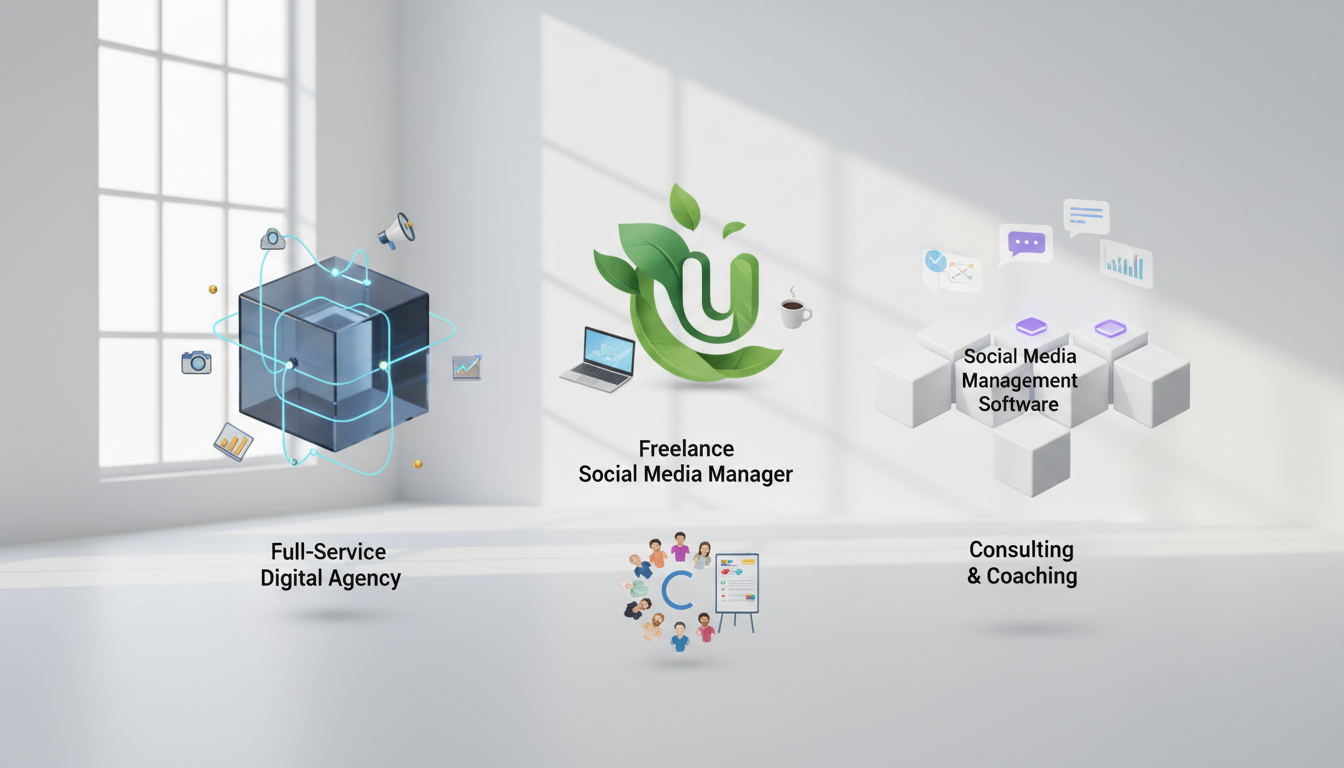
The social media management space includes three main provider types: agencies, freelancers, and in-house teams, each with distinct advantages and limitations based on your business needs and growth stage.
Full-Service Agencies
Agencies typically offer complete packages including strategy, content creation, paid advertising, and analytics. They work best for established businesses with budgets above $2,000 monthly. I’ve worked with agencies that delivered exceptional results and others that felt like content mills. The key differentiator is whether they assign dedicated strategists who understand your industry.
The downside? Agencies often juggle dozens of clients, leading to generic content and slow response times. I once waited three weeks for a simple post revision because our account was managed by junior staff while senior strategists focused on bigger clients.
Freelance Specialists
Freelancers offer more personalized attention and often specialize in specific platforms or industries. Costs typically range from $500-$2,500 monthly depending on scope and expertise. The challenge is finding reliable freelancers who can scale with your business growth.
I’ve had great success with freelancers for specific projects — like a TikTok specialist who helped one of my ventures gain 50K followers in six months. But managing multiple freelancers across different platforms becomes complex as you scale.
In-House Social Media Teams
Building internal teams makes sense once you’re spending $3,000+ monthly on external services. You get complete control, deep brand knowledge, and faster execution. However, you’re responsible for hiring, training, and providing the tools and resources needed for success.
My current approach combines in-house strategy with selective outsourcing for specialized content like video production or platform-specific campaigns.
Service Pricing Models and What You Actually Get

Social media management service pricing varies dramatically based on scope, provider type, and deliverables, with monthly retainers ranging from $300 for basic posting to $10,000+ for complete management with paid advertising.
Budget-Tier Services ($300-$800/month)
These services typically include 10-20 posts monthly, basic scheduling, and minimal engagement. Content is often template-based with limited customization. I tested several budget providers for a side project — the content looked professional but lacked strategic thinking and brand personality.
Budget services work for businesses that need consistent posting but have limited expectations for growth or engagement. They’re essentially paying for content production and scheduling automation.
Mid-Range Packages ($800-$3,000/month)
This tier usually includes custom content creation, strategic planning, community management, and basic analytics reporting. Providers in this range often assign dedicated account managers and offer more responsive communication.
Based on data from multiple ventures, mid-range services deliver the best value for most growing businesses. You get strategic thinking without the overhead costs of premium agencies.
Premium Services ($3,000+/month)
Premium packages include complete strategy development, paid advertising management, influencer partnerships, and detailed performance analysis. These services work best for established businesses with significant social media budgets and complex needs.
I’ve invested in premium services when launching new products or entering competitive markets. The strategic insights and execution quality justify the cost, but only if social media is a primary growth channel for your business.
Essential Features to Look for in Service Providers

The most effective social media management services combine strategic planning, consistent content creation, active community management, and data-driven optimization rather than just posting content on schedule.
Strategic Planning and Brand Alignment
Look for providers who start with strategy sessions to understand your business goals, target audience, and competitive space. They should develop content calendars aligned with product launches, seasonal trends, and industry events. I’ve learned that services focused only on content creation without strategic context rarely drive meaningful business results.
The best providers ask detailed questions about your customer journey, sales process, and key performance indicators before creating any content.
Content Quality and Originality
Evaluate content samples across different industries and platforms. Original content that reflects brand personality performs better than generic stock photo posts. I always request to see the actual content creation process — do they use templates, AI tools, or custom design work?
Video content capabilities are increasingly important as platforms prioritize video formats. Services that can’t produce engaging video content are missing a significant opportunity for reach and engagement.
Analytics and Performance Reporting
Complete reporting should include engagement metrics, audience growth, website traffic from social channels, and lead generation data. Monthly reports with actionable insights matter more than vanity metrics like total impressions.
I prefer services that provide weekly performance updates and quarterly strategy reviews based on data trends. This approach allows for rapid optimization and strategic pivots when needed.
Common Pitfalls When Choosing Social Media Services
Most businesses make predictable mistakes when selecting social media management services, including focusing on price over value, ignoring industry expertise, and failing to establish clear success metrics upfront.
Prioritizing Low Cost Over Results
The cheapest option rarely delivers the best return on investment. I made this mistake early on, choosing a $200/month service that produced generic content with zero engagement. We spent six months building an audience that never converted to customers because the content didn’t align with our target market.
Calculate the true cost including opportunity cost of poor performance. A $1,500/month service that generates qualified leads is more valuable than a $500/month service that builds an irrelevant audience.
Ignoring Platform-Specific Expertise
Generic social media management doesn’t work in 2026. Each platform has unique algorithms, content formats, and audience behaviors. Services claiming expertise across all platforms often lack depth in any single platform.
I now prefer working with specialists who deeply understand 2-3 platforms rather than generalists who claim to handle everything. Platform expertise translates to better content performance and audience growth.
Unclear Success Metrics and Expectations
Many businesses hire social media services without defining what success looks like. Is the goal brand awareness, lead generation, customer support, or sales? Different goals require different strategies and content approaches.
Establish clear KPIs before starting any engagement. I learned this lesson after three months of beautiful content that generated zero business impact because we never aligned on objectives.
DIY vs Professional Services: Making the Right Choice
The decision between managing social media internally versus hiring professional services depends on your available time, expertise, budget, and business priorities rather than a one-size-fits-all approach.
When DIY Makes Sense
DIY social media management works best for solopreneurs, early-stage startups, and businesses where the founder’s personal brand drives customer acquisition. If you have deep industry knowledge and enjoy creating content, managing your own social media can be more authentic and cost-effective.
I still personally manage LinkedIn for my ventures because the platform rewards authentic, first-person content from founders. Outsourcing my LinkedIn presence would lose the personal connection that drives business relationships.
Hybrid Approaches
Many successful businesses use hybrid models — handling strategy and high-level content internally while outsourcing production, scheduling, and community management. This approach maintains brand control while using professional expertise for execution.
For one of my ventures, I write the strategic content and key posts while a freelancer handles daily engagement, story creation, and scheduling. This balance provides authenticity with professional consistency.
When to Fully Outsource
Full outsourcing makes sense when social media is critical to your business but not your core expertise. If you’re spending more than 10 hours weekly on social media tasks, professional services often provide better ROI than your time investment.
Consider outsourcing when you need specialized skills like video production, paid advertising management, or platform-specific growth strategies that require dedicated expertise.
Measuring ROI and Success Metrics
Effective social media management services should demonstrate clear business impact through metrics like lead generation, website traffic, and customer acquisition rather than just engagement and follower growth.
Business-Focused Metrics
Track metrics that directly connect to revenue: website traffic from social channels, email signups, demo requests, and actual sales attributed to social media. I use UTM parameters and conversion tracking to measure the customer journey from social media to purchase.
Engagement metrics matter, but only if they correlate with business outcomes. High engagement on content that doesn’t drive business results is essentially expensive entertainment.
Platform-Specific Performance Indicators
Each platform requires different success metrics. LinkedIn success might be measured by connection requests from target prospects, while Instagram success could focus on story completion rates and profile visits. TikTok performance often correlates with video completion rates and shares.
I’ve learned to set platform-specific goals rather than applying universal metrics across all channels. This approach provides clearer insights into what content and strategies work best on each platform.
Long-Term Brand Building vs Short-Term Conversions
Balance immediate conversion metrics with long-term brand building indicators like brand mention sentiment, share of voice in your industry, and audience quality improvements. Some social media investments pay off over months rather than weeks.
Track both leading indicators (engagement, reach, audience growth) and lagging indicators (conversions, sales, customer lifetime value) to understand the full impact of your social media investment.
Future of Social Media Management Services
Social media management services are evolving rapidly with AI integration, new platform emergence, and changing consumer behaviors requiring more sophisticated, data-driven approaches to content and community management.
AI Integration and Automation
AI tools are transforming content creation, scheduling optimization, and audience analysis. The best services are integrating AI for efficiency while maintaining human creativity and strategic thinking. I’m seeing providers use AI for content ideation, image generation, and performance prediction while humans handle strategy and brand voice.
However, AI-generated content without human oversight often lacks authenticity and brand personality. The future belongs to services that thoughtfully combine AI capabilities with human expertise.
Emerging Platforms and Formats
New platforms and content formats emerge constantly — from audio-based social networks to AR/VR experiences. Social media management services must stay ahead of these trends while avoiding the temptation to chase every new platform without strategic purpose.
I advise focusing on platforms where your audience actually spends time rather than trying to maintain presence everywhere. Quality execution on 2-3 platforms beats mediocre content across 10 platforms.
Privacy and Data Regulations
Increasing privacy regulations and platform policy changes are affecting targeting capabilities and analytics access. Social media services must adapt to these constraints while maintaining performance and compliance.
The services that will thrive are those building first-party data strategies and focusing on organic growth rather than relying solely on paid advertising and detailed targeting options.
Frequently Asked Questions
How much does it cost to get someone to manage your social media?
Social media management costs typically range from $500-$5,000+ monthly depending on scope and provider type. Budget services start around $300-$800 for basic posting, while complete management with strategy and advertising can exceed $10,000 monthly for enterprise businesses.
What are social media management services?
Social media management services include content creation, posting schedules, community engagement, strategic planning, and performance analytics across social platforms. The best services combine creative content production with data-driven strategy to achieve specific business objectives like lead generation or brand awareness.
What is the 5-5-5 rule on social media?
The 5-5-5 rule suggests spending 5 minutes finding content, 5 minutes engaging with your audience, and 5 minutes networking with industry peers daily. While this framework helps maintain consistent activity, successful social media requires more strategic planning and quality content creation than this simplified approach suggests.