


Key Takeaways
- Pricing by project value, not hours, increased my revenue by roughly 3x
- Most videographers fail because they focus on gear instead of storytelling
- AI tools now handle 60% of my editing workflow, but human creativity remains irreplaceable
- Corporate clients pay 4-5x more than weddings but require different skills
- Building a personal brand matters more than having the latest camera
I started my videography side business in 2023 with a $2,000 camera and zero clients. Three years later, I’m running a profitable operation that generates six figures annually while building my main tech ventures.
Here’s what nobody tells you about becoming a videographer: the technical skills are the easy part. The hard part is building a business that doesn’t depend on you holding a camera 60 hours a week.
The Reality Check: What Being a Videographer Actually Means

When I first picked up a camera, I thought being a videographer meant shooting beautiful footage and calling it a day. I was wrong about almost everything.
Beyond the Camera Work
A videographer today wears multiple hats. You’re part cinematographer, part editor, part project manager, and part therapist for anxious clients. I spend roughly 30% of my time actually filming and 70% on everything else — client communication, editing, marketing, and business operations.
The definition has expanded dramatically. Traditional videographers captured events and produced basic edits. Modern videographers create branded content, manage social media campaigns, and often serve as creative directors for entire projects.
The Skills That Actually Matter
Technical proficiency is table stakes. What separates successful videographers from hobbyists is understanding client psychology and business objectives. My biggest breakthrough came when I stopped thinking like a filmmaker and started thinking like a business consultant who happens to use video.
I learned this the hard way when a corporate client rejected a technically perfect video because it didn’t align with their brand messaging. The footage was flawless, but I’d missed the strategic mark entirely.
Market Positioning Reality
The videography market splits into distinct segments with vastly different requirements. Wedding videographers need emotional intelligence and stress management skills. Corporate videographers need business acumen and the ability to work within brand guidelines. Content creators need speed and social media savvy.
I initially tried to serve everyone and excelled at nothing. Focusing on corporate and tech company work doubled my rates and halved my stress levels.
Equipment vs. Storytelling: Where Most Videographers Get It Wrong
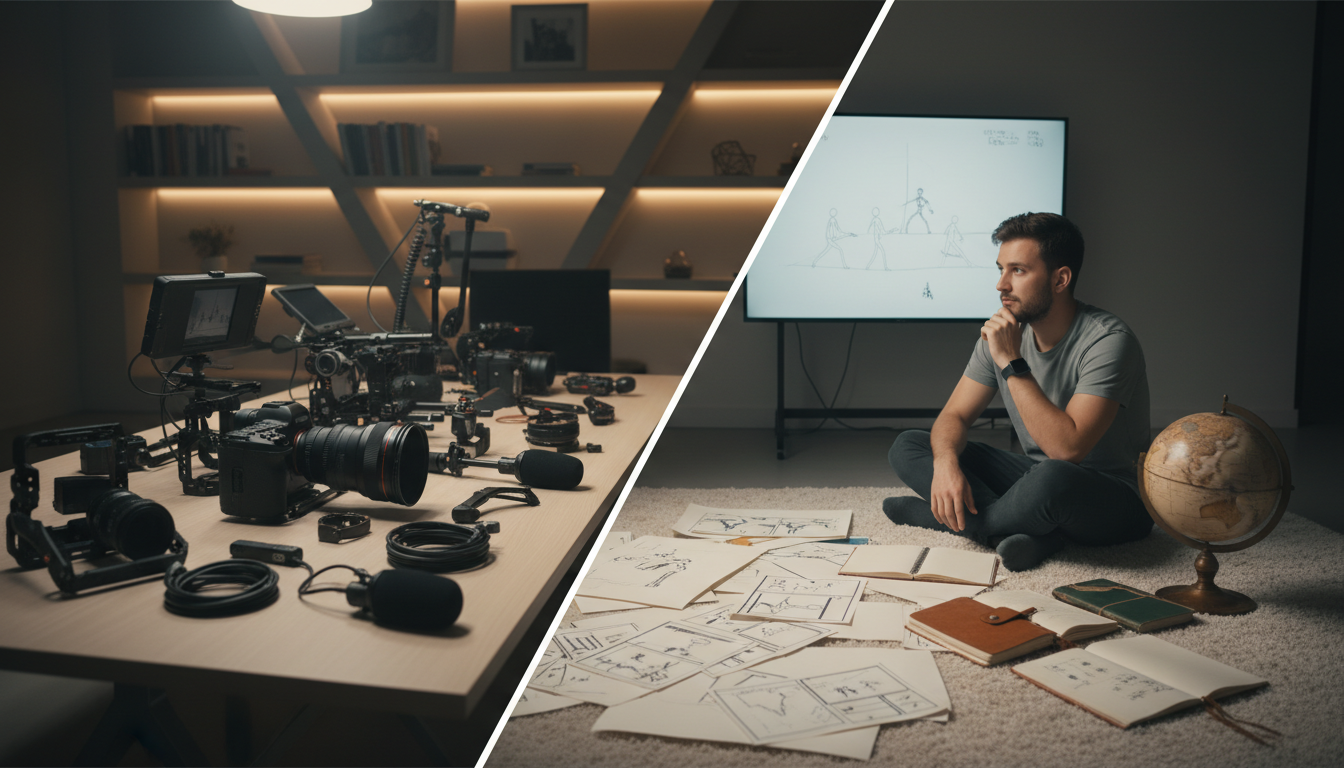
I made the classic mistake of obsessing over gear instead of developing my storytelling abilities. My first year was spent researching cameras, lenses, and stabilizers. My second year was spent learning why none of that mattered as much as I thought.
The Gear Trap
Most aspiring videographers fall into the equipment trap. They believe better gear equals better results. I spent $8,000 on equipment in my first six months and saw minimal improvement in client satisfaction or rates.
The turning point came when I shot a corporate testimonial with basic equipment but focused intensely on the story structure. The client loved it more than previous videos I’d shot with premium gear. The difference wasn’t the camera — it was the narrative arc.
What Clients Actually Value
Clients don’t care about your camera specs. They care about results. A wedding couple wants to feel the emotion of their day. A startup wants to communicate their value proposition clearly. A nonprofit wants to inspire donations.
I started asking different questions during client consultations. Instead of “What style do you want?” I asked “What do you want viewers to feel?” and “What action should they take after watching?” This shift transformed my work from pretty footage to strategic communication.
The Minimum Viable Setup
You can build a profitable videography business with surprisingly basic equipment. My current “travel light” kit consists of a mirrorless camera, two lenses, a wireless mic system, and a small LED panel. Total cost: under $4,000.
This setup has produced videos for Fortune 500 companies and generated hundreds of thousands in revenue. The limitation isn’t the gear — it’s the operator’s creativity and business skills.
Pricing Strategies That Actually Work in 2026

My biggest pricing mistake was charging by the hour like a freelancer instead of by value like a business owner. This mindset shift tripled my revenue while reducing my workload.
Value-Based Pricing Framework
Instead of hourly rates, I price based on project outcomes and client budgets. A startup raising Series A funding will pay more for a pitch video than a local restaurant promoting their lunch special — not because the work is harder, but because the stakes are higher.
I developed a simple framework: What’s the cost of not having this video? If a company needs a product demo to close a $100,000 deal, my $5,000 fee looks reasonable. If they just want something for their website, $1,500 might be the ceiling.
Package Structure That Scales
I stopped selling individual videos and started selling video strategies. My packages include multiple deliverables: a hero video, social media cuts, behind-the-scenes content, and usage rights. This approach increases project values while providing more client value.
A typical corporate package includes a 2-3 minute main video, six 15-second social cuts, raw footage access, and three rounds of revisions. Clients love the complete approach, and I love the predictable revenue.
The Subscription Model Experiment
For ongoing clients, I’ve tested monthly retainer arrangements. Instead of project-by-project pricing, clients pay a monthly fee for a certain amount of video content. This model provides predictable income and deeper client relationships.
One tech client pays $3,000 monthly for two videos and unlimited social media cuts. They get consistent content, I get steady revenue, and we both avoid the friction of constant negotiations.
Client Acquisition: Beyond “Videographer Near Me” Searches

Relying on local search results is a race to the bottom. The videographers winning long-term are building personal brands and specialized expertise that transcends geography.
The Personal Brand Advantage
I started sharing behind-the-scenes content and business lessons on LinkedIn and Twitter. This content attracted clients who valued my business perspective, not just my camera skills. My best clients now find me through my writing, not my portfolio.
Personal branding works because it demonstrates expertise beyond technical skills. When potential clients see me discussing video strategy and business growth, they perceive higher value than someone just showcasing pretty shots.
Niche Specialization Strategy
General videographers compete on price. Specialized videographers compete on expertise. I focused on tech companies and SaaS businesses, learning their language and challenges. This specialization allows me to charge premium rates and attract better clients.
Understanding software demos, product launches, and technical concepts gives me an edge over generalist videographers. Clients pay more for someone who “gets” their business.
Referral System That Compounds
My most profitable client acquisition channel is referrals, but I had to systematize the process. After every successful project, I ask clients for introductions to similar businesses. I also offer referral bonuses to past clients who send new business.
One satisfied startup founder has referred four other companies, generating over $40,000 in additional revenue. Building these referral relationships takes time but creates compound growth.
| Client Type | Average Project Value | Time Investment | Referral Rate |
|---|---|---|---|
| Wedding | $2,500 | High | Low |
| Corporate | $8,000 | Medium | High |
| Startup | $5,000 | Medium | Very High |
| Content Creator | $1,500 | Low | Medium |
The AI Revolution: How Technology is Reshaping Videography
AI tools have transformed my workflow more than any camera upgrade. What used to take hours now takes minutes, but the creative decisions still require human judgment.
Editing Workflow Transformation
AI-powered editing tools now handle my rough cuts, color correction, and audio cleanup. I use tools like Descript for transcription and rough editing, then refine the creative decisions manually. This hybrid approach cuts my editing time by roughly 60%.
The time savings are dramatic, but the quality improvement is subtle. AI excels at technical tasks but struggles with emotional pacing and creative transitions. The sweet spot is using AI for the tedious work while focusing human effort on storytelling.
Content Multiplication Strategy
AI helps me create multiple content formats from single shoots. One interview can become a long-form video, six social media clips, a podcast episode, and a blog post. This content multiplication increases project value without proportional time investment.
I’ve started positioning this as “content ecosystem creation” rather than simple video production. Clients love getting complete content packages, and I love the efficiency gains.
Future-Proofing Your Skills
The videographers who’ll thrive are those who embrace AI as a creative partner, not a threat. Technical skills become commoditized, but strategic thinking and client relationships remain valuable.
I’m investing time in learning AI tools and understanding how they can enhance rather than replace human creativity. The goal isn’t to compete with AI but to use it for better client outcomes.
Building Systems That Scale Beyond Your Time
The biggest limitation in most videography businesses is the owner’s time. I’ve spent two years building systems that generate revenue without requiring my direct involvement in every project.
Template-Based Production
I developed standardized workflows for common project types. Corporate testimonials follow a proven structure: pre-interview questionnaire, shot list template, editing checklist, and delivery format. This systematization maintains quality while reducing decision fatigue.
Templates don’t limit creativity — they provide a foundation for consistent results. Clients appreciate the professional process, and I appreciate the efficiency gains.
Contractor Network Development
For larger projects or busy periods, I work with a network of trusted contractors. This allows me to take on more work without burning out or compromising quality. The key is finding videographers who share similar standards and work styles.
Building this network took time and careful vetting, but it’s essential for scaling beyond personal capacity. I now handle strategy and client relationships while contractors execute the technical work.
Passive Revenue Streams
I’ve experimented with creating video templates, stock footage, and educational content. While these haven’t replaced client work, they provide supplementary income and demonstrate expertise to potential clients.
The most successful passive stream has been selling video strategy templates to other videographers. This meta-approach — helping other professionals improve their businesses — aligns with my entrepreneurial background.
The Business Side: What Film School Doesn’t Teach
Technical training prepares you to operate a camera, not run a business. The videographers who succeed long-term master the business fundamentals that film programs ignore.
Financial Management Reality
Cash flow management is important in project-based businesses. Clients often pay 30-60 days after delivery, but expenses happen immediately. I learned to maintain a cash buffer and negotiate better payment terms after a few stressful months.
Tracking project profitability revealed surprising insights. Some high-paying projects had terrible margins due to excessive revisions or scope creep. Others seemed small but generated excellent returns on time invested.
Legal Protection Essentials
Contracts aren’t just legal documents — they’re business tools that set expectations and protect relationships. My contract template covers usage rights, revision limits, payment terms, and cancellation policies.
I learned this lesson when a client used my video for purposes beyond our agreement, then refused to pay additional licensing fees. A clearer contract would have prevented the dispute and preserved the relationship.
Tax Strategy and Business Structure
Proper business structure and tax planning can significantly impact profitability. I initially operated as a sole proprietor but switched to an LLC for liability protection and tax benefits.
Working with a CPA who understands creative businesses has saved thousands in taxes and provided valuable business advice. The investment in professional services pays for itself quickly.
Looking Forward: The Future of Videography in 2026 and Beyond
The videography industry is evolving rapidly, driven by AI advancement, changing consumption patterns, and new distribution platforms. The professionals who adapt will thrive; those who resist change will struggle.
Emerging Technology Integration
Virtual and augmented reality are creating new opportunities for videographers willing to learn new skills. I’m experimenting with 360-degree video and interactive content for forward-thinking clients.
The technical barriers are dropping rapidly, but the creative and strategic challenges remain complex. Early adopters have opportunities to establish expertise before these technologies become mainstream.
Content Consumption Shifts
Attention spans continue fragmenting, creating demand for both micro-content and long-form storytelling. Successful videographers will master multiple formats and understand platform-specific requirements.
The rise of vertical video, live streaming, and interactive content requires new skills and approaches. I’m adapting my workflows to accommodate these format requirements while maintaining storytelling quality.
Business Model Evolution
The most successful videographers are evolving beyond service providers to become strategic partners. This shift requires business acumen, industry expertise, and the ability to tie video content to measurable outcomes.
I see opportunities in subscription models, performance-based pricing, and equity partnerships with growing companies. The key is demonstrating value beyond video production.
What I Learned
Building a videography business taught me that success depends more on business skills than camera skills. The technical aspects are learnable; the strategic thinking and client relationships are what create sustainable competitive advantages.
The biggest mistake I made was focusing on equipment instead of outcomes. The biggest breakthrough was shifting from hourly billing to value-based pricing. The most important skill I developed was understanding client psychology and business objectives.
If you’re considering videography as a business opportunity, focus on solving client problems rather than creating beautiful footage. The market rewards results, not artistry — though the best videographers deliver both.
Connect with me to discuss how video strategy can accelerate your business growth, or if you’re building a videography business and want to share lessons learned.