Small Business Finance: Loans & Funding Guide

Small business finance is the practice of securing and managing capital to start, operate, or grow a small enterprise. It covers SBA-guaranteed loans, bank credit lines, alternative lending platforms, and cash flow strategy.
Key Takeaways
- SBA loans remain the most accessible government-backed option, with amounts from $500 to $5.5 million and competitive rates.
- Banks like Bank of America and Wells Fargo serve established businesses, while online lenders like OnDeck and Bluevine move faster for newer firms.
- Effective funding strategy involves not just borrowing but also cash flow management and avoiding predatory lenders.
- As of 2026, AI-powered lending and programs like SSBCI are expanding capital access for underserved founders.
- Startups face more hurdles but still have real options: SBA microloans, business credit cards, and select online platforms.
What Is Small Business Finance?
The Core Definition
Small business finance is the practice of securing and managing funds to start, operate, or expand a small enterprise. It involves choosing between debt financing (loans, lines of credit) and equity financing (investors), as well as using government programs like SBA loans. A solid approach ensures you have enough working capital to cover day-to-day expenses while still investing in growth.
Why It Matters More Than Most Founders Realize
I’ve watched profitable businesses fail because of cash flow gaps, not bad ideas. Without a clear funding strategy, even a healthy revenue line won’t save you when payroll hits before receivables clear. According to the U.S. Small Business Administration (SBA), SBA-backed loans provide competitive terms and free counseling, which are real advantages that most founders overlook until they’re already in trouble.
Key Types of Small Business Financing
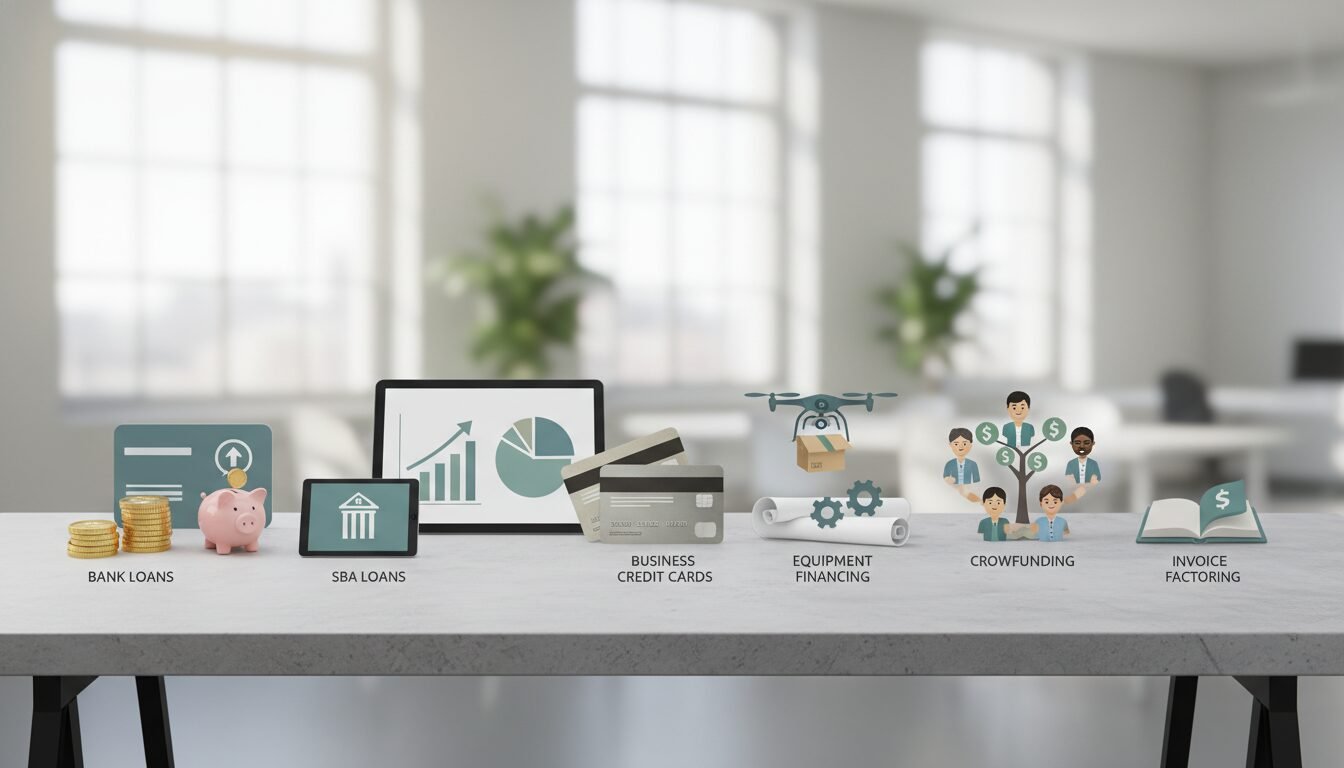 Small Business Financing – small business finance | Amin Ferdowsi” class=”wp-image-2765″ loading=”lazy” width=”1792″ height=”1024″ />
SBA Loans: The Gold Standard
SBA-guaranteed loans are the most accessible government-backed option for small businesses. The SBA doesn’t lend directly (except for disaster recovery) but partners with approved lenders to offer loans from $500 to $5.5 million. The flagship 7(a) loan covers working capital, equipment, and real estate. The 504 program offers fixed-rate, long-term financing for major assets. Microloans go up to $50,000 and serve startups and nonprofits specifically.
Traditional Bank Loans and Lines of Credit
Large banks like Bank of America and Wells Fargo offer term loans and revolving lines of credit. Bank of America’s Business Advantage Credit Line requires a minimum 700 FICO Score, 2 years in business, and $100,000 in annual revenue. Wells Fargo’s BusinessLine provides unsecured credit from $10,000 to $150,000 at rates as low as Prime + 1.75%. These products work well for established businesses with strong credit histories.
Alternative Lenders and Online Platforms
Non-bank lenders like OnDeck and Bluevine have reshaped the funding space by offering faster approvals and more flexible requirements. Per NerdWallet, which evaluated 90 small business loan products, OnDeck can approve loans up to $250,000 with as little as 3 months in business, though APRs may start at 36%. Funding Circle offers rates from 8.5% for businesses with at least 6 months of history. These options are built for founders who can’t wait weeks for traditional bank processing.
| Financing Type | Max Amount | Min. Time in Business | Min. Credit/Qualification | Typical APR | Best For |
|---|---|---|---|---|---|
| SBA 7(a) Loan | $5 million | 2 years | Good credit | 6% – 9.75% | Long-term, low-rate funding |
| Bank of America Unsecured Line | $150,000 | 2 years | 700+ FICO | Prime + 3-5% | Flexible working capital |
| Wells Fargo BusinessLine | $150,000 | 2 years | Good credit | Prime + 1.75% | Established businesses |
| OnDeck Term Loan | $250,000 | 3 months | 600+ FICO | 36% – 99% | Quick cash for low-revenue firms |
| Funding Circle | $150,000 | 6 months | 660+ FICO | 8.5% – 36% | Low interest, longer terms |
Pros and Cons of Common Funding Options

Pros
- SBA loans offer some of the lowest rates available, with terms up to 25 years for real estate and 10 years for equipment.
- Bank lines of credit give you flexible, revolving access to capital without reapplying each time.
- Online lenders approve in days, not weeks, which matters when you’re moving fast.
- CDFIs and nonprofit lenders often pair capital with mentoring, which is genuinely useful for first-time founders.
Cons
- SBA applications are detailed and can take 30–90 days to process, which is brutal if you need cash now.
- Alternative lenders charge significantly higher APRs, sometimes exceeding 99% on short-term products.
- Bank products require 2+ years of operating history and strong credit, locking out many early-stage businesses.
- Merchant cash advances can carry effective APRs above 100%, making them one of the most expensive options available.
SBA Loans: How They Actually Work

The Mechanics Behind the Guarantee
SBA loans work because the SBA guarantees a portion of the loan, which reduces risk for lenders. That guarantee is what expands access to companies that wouldn’t qualify for conventional bank loans. Borrowers apply through SBA-approved lenders and use funds for working capital, fixed assets, and refinancing. The SBA’s Lender Match tool connects applicants with approved lenders in their area, often within 2 business days.
Benefits and Real Drawbacks
The SBA program offers competitive interest rates and longer repayment periods. Free counseling and training through the SBA’s partner network is a genuine advantage most founders don’t use. That said, lenders may require collateral for loans above $25,000, and personal guarantees are standard. The paperwork is real. Budget time for it.
“The SBA’s guarantee programs exist specifically to reduce lender risk, which means businesses that would otherwise be turned away can access capital they actually need to grow.” – U.S. Small Business Administration, SBA.gov
Beyond SBA: Alternative Funding Solutions
Community-Based and Nonprofit Lenders
Community Development Financial Institutions (CDFIs) and micro-lenders fill a real gap, especially for underserved communities. The U.S. Treasury’s Small Business Lending Fund (SBLF) invested over $4.0 billion in 332 community banks and loan funds to stimulate small business lending. These institutions often provide mentoring alongside capital, which is something a bank will never do.
Invoice Factoring and Merchant Cash Advances
Invoice factoring advances cash against unpaid invoices, giving you immediate working capital without adding traditional debt. Merchant cash advances (MCAs) sell a portion of future sales for upfront cash, but they carry very high effective APRs, sometimes exceeding 100%. Use them only when you have a clear, short-term repayment path. Otherwise, they’ll eat your margin faster than any slow month will.
Export Loans and Specialty Programs
If your business sells internationally, the SBA’s export loan programs, including the Export Working Capital Program and International Trade Loan, are worth knowing. These are specifically designed to help small businesses compete in global markets and can provide up to $5 million in financing. The Farm Service Agency also offers targeted loans for rural and agricultural businesses that don’t fit standard SBA criteria.
How to Qualify: A Step-by-Step Approach
Preparing Your Loan Application
- Review your credit scores: Lenders typically require a personal FICO score above 680 for SBA loans and 700+ for bank lines.
- Gather financial documents: Two to three years of tax returns, profit-and-loss statements, and balance sheets are standard for approval.
- Write a solid business plan: Explain how you’ll use the funds and how you’ll repay the loan. Be specific.
- Determine your collateral: Many loans require assets to back the financing, especially above $25,000.
- Shop at least three lenders: Rates and terms vary significantly. Don’t take the first offer.
What Lenders Actually Look For
Most traditional lenders require at least 2 years of operating history, a strong debt-to-equity ratio, and consistent revenue. According to a Federal Reserve Bank of Cleveland report, younger firms (3–10 years old) and those with under $1 million in revenue turn to non-bank lenders more often, largely because bank application processes are too slow and too demanding for their stage.
“Younger and smaller firms are disproportionately reliant on non-bank lenders, not by preference, but because traditional institutions have requirements that exclude them by design.” – Federal Reserve Bank of Cleveland, Economic Commentary
Smart Strategies for Managing Your Business Finances
Cash Flow Management
Effective funding strategy isn’t just about borrowing. It’s about optimizing cash flow. Monitor your accounts receivable and payable closely. Tools like QuickBooks and Xero integrate with bank feeds to provide real-time insights. Building a cash reserve of 3–6 months of operating expenses can protect against unexpected downturns. I’ve seen founders skip this step and regret it within a year.
Separating Personal and Business Finances
One of the first rules of running a business is keeping personal and business accounts separate. This simplifies tax preparation and strengthens your business credit profile, making it easier to qualify for future financing. It also protects you personally if the business ever faces legal or financial trouble.
Funding for Specific Groups: Women, Veterans, and Minority Owners
The SBA and many state programs offer targeted loans and grants for women-owned, veteran-owned, and minority-owned businesses. Programs like the SBA’s 8(a) Business Development program and the Women’s Business Center network provide both capital access and technical assistance. If you qualify for any of these designations, use them. They exist specifically to level an uneven playing field.
Common Pitfalls to Avoid
Predatory Lending and Hidden Fees
The SBA warns that some lenders charge fees exceeding 5% of the loan value or interest rates significantly above market. Always verify the full APR and complete payment schedule before signing. Never sign blank documents or accept pressure to close fast. Transparency is non-negotiable in any lending relationship.
Over-Borrowing or Underestimating Costs
Borrowing too much burdens your business with unmanageable debt. Borrowing too little leaves you scrambling mid-project. A thorough financial projection solves both problems. Also check for prepayment penalties. Some lenders charge fees if you pay off early, which can eliminate the benefit of refinancing later.
The 2026 Outlook for Business Funding
Technology and AI-Powered Lending
As of 2026, the funding space is increasingly driven by AI and data analytics. Platforms like Fundera by NerdWallet match borrowers with lenders in minutes, while advanced algorithms assess creditworthiness using cash flow data rather than outdated credit models. This is expanding access for startups and minority-owned businesses in ways that traditional banking never could.
Government Initiatives and Policy Changes
Programs like the State Small Business Credit Initiative (SSBCI) continue to inject capital into state-level lending programs. The push for financial inclusion means more targeted products for women-, veteran-, and minority-owned firms. Staying current on these programs can give you a real edge, especially if you qualify for multiple designations.
Mastering your business finances requires informed borrowing, disciplined cash flow management, and staying alert to new funding avenues. Whether you choose an SBA loan, a bank line of credit, or an alternative lender, compare terms carefully and consult an SBA resource partner before committing. The right capital structure can make the difference between a business that survives and one that scales.
If you’re building a venture and want to think through your funding strategy, connect with me at aminferdowsi.com. I’m always up for a real conversation about what actually works.
Frequently Asked Questions
What is small business finance?
Small business finance involves the strategies and tools used to fund a small business, including loans, lines of credit, equity investments, and government programs. It also covers cash flow management and financial planning to keep operations running and support growth.
How do I get a small business loan with bad credit?
Some SBA microloan programs accept lower credit scores, and alternative lenders like OnDeck focus more on revenue and cash flow than credit history. Building a solid business plan and demonstrating consistent revenue can meaningfully improve your approval odds.
Are there grants for small businesses?
The federal government does not offer grants to start a for-profit business, but state and local programs, as well as private foundations, may provide grants for specific purposes like research or community development. The SBA’s website maintains a directory of state-level resources worth checking.
What is the difference between a line of credit and a term loan?
A line of credit gives you access to funds up to a set limit, and you only pay interest on what you draw. A term loan provides a lump sum with fixed payments over a defined period, which works better for one-time investments like equipment or real estate.
How long does it take to get an SBA loan?
SBA loan processing typically takes 30–90 days, depending on the lender and the complexity of the application. Express loan programs move faster, but traditional bank SBA lenders often require extensive documentation that adds time to the process.
Can startups get small business financing?
Startups face more hurdles but still have real options: SBA microloans (up to $50,000), business credit cards, and select online lenders that require as little as 3 months in business. A strong business plan and personal investment in the venture are typically required to qualify.
Enjoyed this article?
Connect with me for collaboration, ventures, or just a good conversation about building things.
Get in Touch