Personal Brand: Build Yours in 2026

A personal brand is the intentional practice of defining and expressing your unique value to shape how others perceive you. It covers your skills, reputation, and story, both online and off. Get it right, and doors open. Ignore it, and someone else writes your narrative for you.
Key Takeaways
- A strong brand must be accurate, coherent, compelling, and differentiated.
- According to Sprout Social, 92% of people trust recommendations from individuals over companies.
- Tom Peters coined the term in 1997. The concept has only grown more urgent since.
- Consistency across every touchpoint, not just LinkedIn, is what separates forgettable from memorable.
- AI tools can accelerate content creation, but they cannot replace your authentic voice.
- Building a recognizable identity takes 6 to 12 months of consistent effort before results become visible.
What Is a Personal Brand?
Definition and Core Concepts
A this type of brand is the sum of associations, beliefs, and expectations people hold about you, and it exists whether you manage it or not. Harvard Business School Senior Lecturer Jill Avery describes it as “the amalgamation of the associations, beliefs, feelings, attitudes, and expectations that people collectively hold about you” (HBS Online). That definition landed differently for me the first time I read it. It means you already have a brand. The only question is whether you’re shaping it intentionally.
The concept draws from two academic traditions, as documented on Wikipedia: marketing theory, which treats the individual as a product to be positioned, and self-presentation theory, which focuses on identity and impression management. Both matter. One gives you strategy. The other keeps you honest.
The Four Attributes of a Strong Personal Brand
Researchers Jill Avery and Rachel Greenwald, writing in the Harvard Business Review, argue that an effective identity must meet four criteria: accurate (true to who you are), coherent (makes sense as a whole), compelling (draws people in), and differentiated (stands apart from others). Miss any one of these and your brand either blends in or misfires. I’ve seen founders nail compelling and differentiated but skip accurate. It always catches up with them.
Pros and Cons of Building a Personal Brand

Pros
- Career resilience: A recognized identity makes you less dependent on any single employer or platform.
- Inbound opportunities: Speaking invitations, partnerships, and client referrals start coming to you instead of the other way around.
- Higher earning potential: Consultants and operators with strong reputations routinely command rates 2 to 3 times higher than anonymous peers with equivalent skills.
- Trust at scale: Consistent content builds credibility with audiences you’ve never met in person.
- Business leverage: As Dan Koe notes, a strong identity is a traffic and trust source that can fuel any venture (Dan Koe’s Blog).
Cons
- Time intensive: Consistent content creation and community engagement can consume 5 to 10 hours per week, especially early on.
- Public scrutiny: Visibility invites criticism. Every public statement becomes part of your record.
- Risk of inauthenticity: Over-curating your image to chase trends can erode the trust you worked to build.
- Platform dependency: Building primarily on rented platforms like LinkedIn or TikTok means algorithm changes can cut your reach overnight.
The History and Evolution of Personal Branding
From “Brand You” to Digital Identity
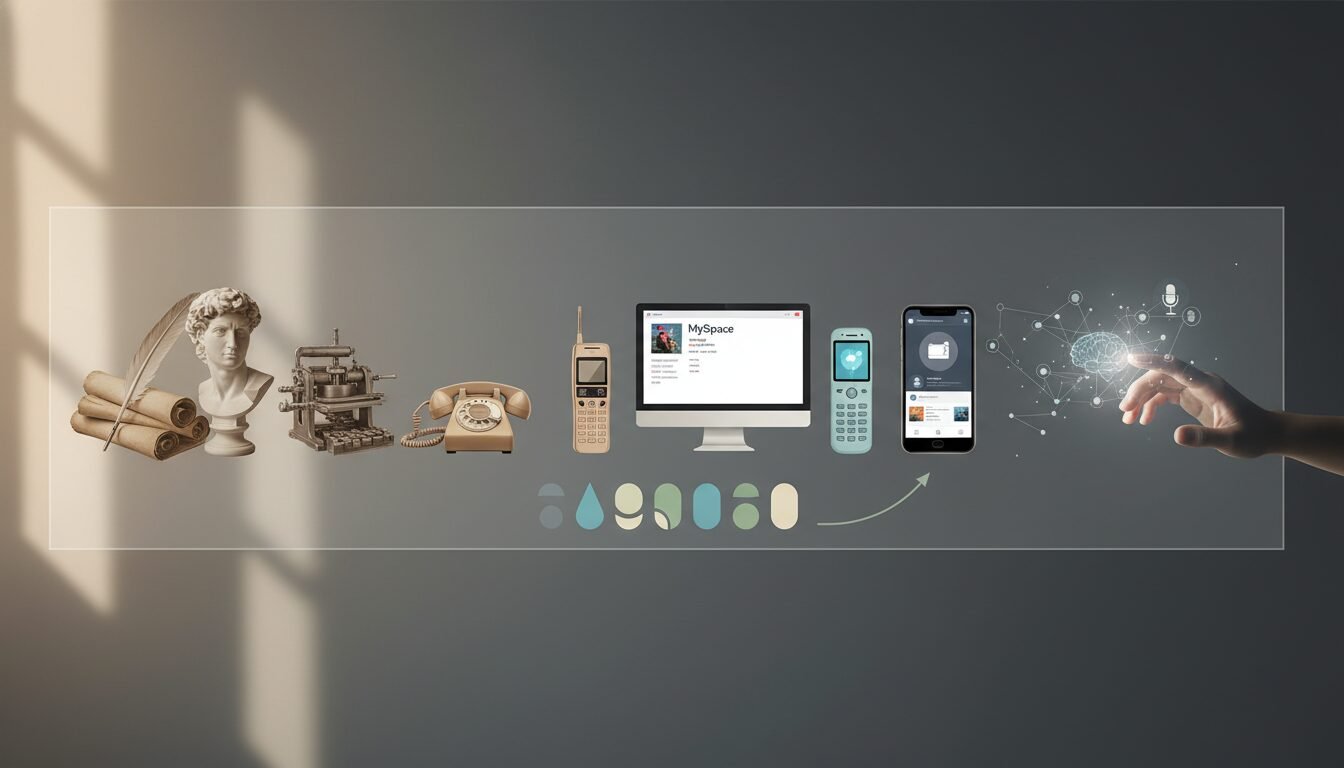
The term “this kind of branding” was coined by business writer Tom Peters in his 1997 Fast Company article “The Brand Called You,” later expanded in his 1999 book The Brand You 50 (Wikipedia). Peters argued that in a world of constant change, each individual must manage their career like a product. That was a contrarian idea in 1997. Today it’s table stakes.
The rise of social media accelerated everything. Platforms like LinkedIn, Instagram, and TikTok gave everyone a broadcast channel. What was once reserved for celebrities and C-suite executives is now a critical tool for professionals at every level, from early-career engineers to independent consultants.
Theoretical Foundations: Marketing and Self-Presentation
Marketing theory pushes you to identify your unique value proposition, much like a product’s positioning. Self-presentation theory, drawn from sociology, examines how people manage impressions to control social outcomes. Understanding both sides helps you craft an identity that is strategic without feeling manufactured.
Why Your Personal Brand Matters More Than Ever
The Trust Economy and Social Proof
Trust has shifted from institutions to individuals. According to Sprout Social, 92% of people trust recommendations from individuals over companies. Your reputation functions as a trust mechanism. When you consistently deliver value and demonstrate expertise, you build social proof that attracts opportunities without paid advertising.
“personaling is not self-promotion. It’s self-clarification. The clearer you are about what you stand for, the easier it is for the right people to find you.” – Jill Avery, Harvard Business School Senior Lecturer
Career Resilience and Opportunity
The job market as of 2026 is increasingly shaped by AI and automation. A distinct identity helps you stand out in a sea of resumes and algorithmic filters. It’s not just about landing your next role. It’s about becoming a magnet for projects, partnerships, and promotions that align with your actual skills and goals.
The Core Components of a Successful Personal Brand
Authenticity and Purpose
At the heart of every powerful identity is authenticity. A purpose-driven approach, as advocated by Berkeley Executive Education, connects your brand to deeper motivations, building trust and engagement. When your public identity reflects your true values, you attract people who resonate with your mission, which leads to more meaningful professional relationships and less time spent on misaligned opportunities.
Consistency Across Touchpoints
Every interaction, from your LinkedIn profile to your in-person demeanor at a conference, should reinforce the same core message. Inconsistency confuses your audience and dilutes your credibility. Build a cohesive identity that spans your website, social media, speaking engagements, and even your email signature. The details compound.
Ethical Considerations and Disclosure
This part doesn’t get discussed enough. As branding intersects with influencer marketing and sponsored content, disclosure requirements matter. The FTC requires clear disclosure when you’re compensated to promote products or services. Beyond legal compliance, transparency about partnerships and affiliations protects the trust you’ve built. Audiences forgive mistakes. They rarely forgive deception.
“Authenticity in this type of branding isn’t just a strategy. It’s a long-term commitment. The moment you start performing a version of yourself that doesn’t exist, you’ve started a clock on your own credibility.” – Based on frameworks from Berkeley Executive Education’s this kind of branding research
How to Build Your Personal Brand: A Step-by-Step Guide
Step 1: Define Your Purpose and Values
Start with foundational questions: What do I care about? What impact do I want to make? Write a value proposition statement that captures who you are and the unique value you offer. Something like: “I’m a financial analyst passionate about simplifying complex data for early-stage startups.” Specific beats generic every time.
Step 2: Audit Your Current Brand Perception
Before you can shape your identity, understand what already exists. Google yourself. Review your social profiles. Ask trusted colleagues for honest feedback. This audit reveals gaps between your intended and actual perception, giving you a concrete baseline for improvement. Most people skip this step and wonder why their efforts feel disconnected.
Step 3: Craft Your Value Proposition and Narrative
Build a compelling story around your skills, experiences, and purpose. Your narrative should connect the dots and demonstrate your unique perspective. Use the four attributes, accurate, coherent, compelling, differentiated, to stress-test your story. A strong narrative becomes the foundation of every piece of content you create.
Step 4: Build Your Online Presence Strategically
Choose platforms that suit your target audience and content style. For thought leadership, LinkedIn and a personal website are non-negotiable. For visual creatives, Instagram and TikTok may be more effective. Ensure every profile is complete, professional, and aligned with your core message. Incomplete profiles signal low commitment.
Step 5: Create Consistent, Value-Driven Content
Content is the engine of your public identity. Share insights, stories, and expertise that provide genuine value. Set a sustainable publishing schedule and stick to it. Over time, this builds authority and keeps you top-of-mind with your audience. I’ve found that one high-quality post per week outperforms five mediocre ones every time.
Step 6: Network and Collaborate to Amplify Reach
No brand grows in isolation. Engage with your community, collaborate with peers, and pursue speaking or guest posting opportunities. Each interaction expands your reach and reinforces your credibility. Influencer marketing and user-generated content (UGC) collaborations are increasingly effective ways to reach adjacent audiences without starting from zero.
Step 7: Evolve and Adapt Over Time
Your identity is not static. As your career evolves, so should your public narrative. Revisit your purpose annually, audit your presence, and update your story. The most successful personal brands stay relevant and authentic through change, not by chasing every trend, but by staying grounded in their core values while adapting their format and focus.
Personal Branding for the Digital Age: AI, Social Media, and Beyond
Using AI Tools for Personal Branding in 2026
AI is a genuine accelerant for identity management in 2026. Tools built on generative AI can help draft content, analyze audience engagement patterns, and optimize your LinkedIn profile for search visibility. That said, the human element remains irreplaceable. Use AI as an assistant, not a ghostwriter for your entire voice. The most effective personal brands balance technology with genuine human connection. Audiences can tell the difference faster than most founders expect.
The Social Media Platform Playbook for 2026
Choosing the right platform can make or break your visibility. The table below compares major platforms based on audience, content type, and investment required:
| Platform | Best For | Content Type | Reach Potential | Time Investment |
|---|---|---|---|---|
| B2B, executives, thought leaders | Long-form posts, articles | High organic reach | Medium | |
| Creatives, coaches, lifestyle | Images, Stories, Reels | High engagement | High | |
| TikTok | Gen Z, viral marketers, educators | Short-form video | Viral potential | Very High |
| YouTube | Educators, long-form content creators | Video | SEO-driven, long-tail | High |
| X (Twitter) | Journalists, tech, real-time engagement | Short text, threads | Rapid dissemination | Medium |
Consistently showing up on one or two channels beats spreading yourself thin across five. Pick the platform where your target audience actually spends time, not the one that feels most comfortable to you.
Measuring the ROI of Your Personal Brand
Tangible Metrics: Network Growth, Engagement, and Inbound Leads
Quantifying impact means tracking follower count growth, engagement rates, website traffic, and inbound inquiries. LinkedIn Analytics and Google Analytics are the starting points. For consultants, a strong reputation often translates directly into higher billing rates and client referrals. Track at least 3 to 4 metrics consistently over a 90-day window before drawing conclusions.
Intangible Benefits: Confidence, Authority, and Legacy
Not all returns are financial. A well-crafted identity boosts your confidence, establishes you as an authority in your field, and creates a lasting legacy. These intangibles compound over time. Every piece of content you publish, every relationship you build, and every stage you speak on adds to a body of work that outlasts any single job title.
Common Mistakes to Avoid When Crafting Your Personal Brand
Inauthenticity and Over-Curation
The quickest way to damage your reputation is to be fake. Audiences today have a sharp radar for inauthenticity. Trying to be someone you’re not, or over-curating your image to the point of sterility, will backfire. Let your quirks and genuine personality show. They make you relatable and memorable in ways that polished corporate personas never can.
Inconsistency Across Channels
A disjointed identity confuses people. If your LinkedIn presents a corporate persona while your Instagram is all weekend party photos, your overall credibility suffers. Ensure a coherent message across every touchpoint, even if the format and tone adapt to each platform. The core story should always be recognizable.
Neglecting Offline Brand Touchpoints
While digital is dominant, face-to-face interactions still shape perception. How you behave at conferences, dinners, or casual meetups feeds into what people think of you. Align your real-world actions with your online identity. The gap between who you are online and who you are in person is where trust goes to die.
Your Personal Brand Is Your Legacy
Your personal brand is not a vanity project. It’s the most important career asset you own. It influences how others perceive your value, opens doors to unexpected opportunities, and defines the legacy you leave. Start building it today with intention, authenticity, and a clear strategy. As of 2026, a distinctive identity is no longer optional. It’s essential for standing out and making a lasting impact.
If you want to discuss how AI strategy intersects with building your professional identity, connect with me at aminferdowsi.com. I’m always open to a real conversation.
Frequently Asked Questions
What exactly is a personal brand?
A personal brand is the deliberate practice of defining and communicating your unique value to influence how others perceive you. It encompasses your skills, values, and reputation, both online and offline. It exists whether you manage it or not.
Why is personal branding important in 2026?
In an AI-driven job market, a strong identity differentiates you from competitors, builds trust, and attracts opportunities. It’s the foundation of career resilience in the digital economy, where algorithms and automation are reshaping how professionals get discovered.
Can introverts build a strong personal brand?
Absolutely. Introverts often excel at deep, one-on-one connections and thoughtful written content. A recognizable identity can be built through writing, quiet expertise, and selective networking, all of which play directly to introvert strengths.
How long does it take to build a personal brand?
Consistent effort over 6 to 12 months can yield visible results, but the most powerful identities are cultivated over years of intentional action. Think of it as compound interest: the returns accelerate the longer you stay consistent.
What are the biggest mistakes in personal branding?
Common pitfalls include being inauthentic, inconsistent across channels, and focusing only on digital presence while ignoring offline interactions. An effective identity is coherent, genuine, and present across every touchpoint where your audience encounters you.
Do I need a website for my personal brand?
While not mandatory, a personal website acts as your own digital hub and portfolio. It gives you full control over your narrative and is a powerful asset for credibility and discoverability, especially when social platforms change their algorithms.
Enjoyed this article?
Connect with me for collaboration, ventures, or just a good conversation about building things.
Get in Touch