How to Start a Crypto ATM Business: 2026 Complete Guide
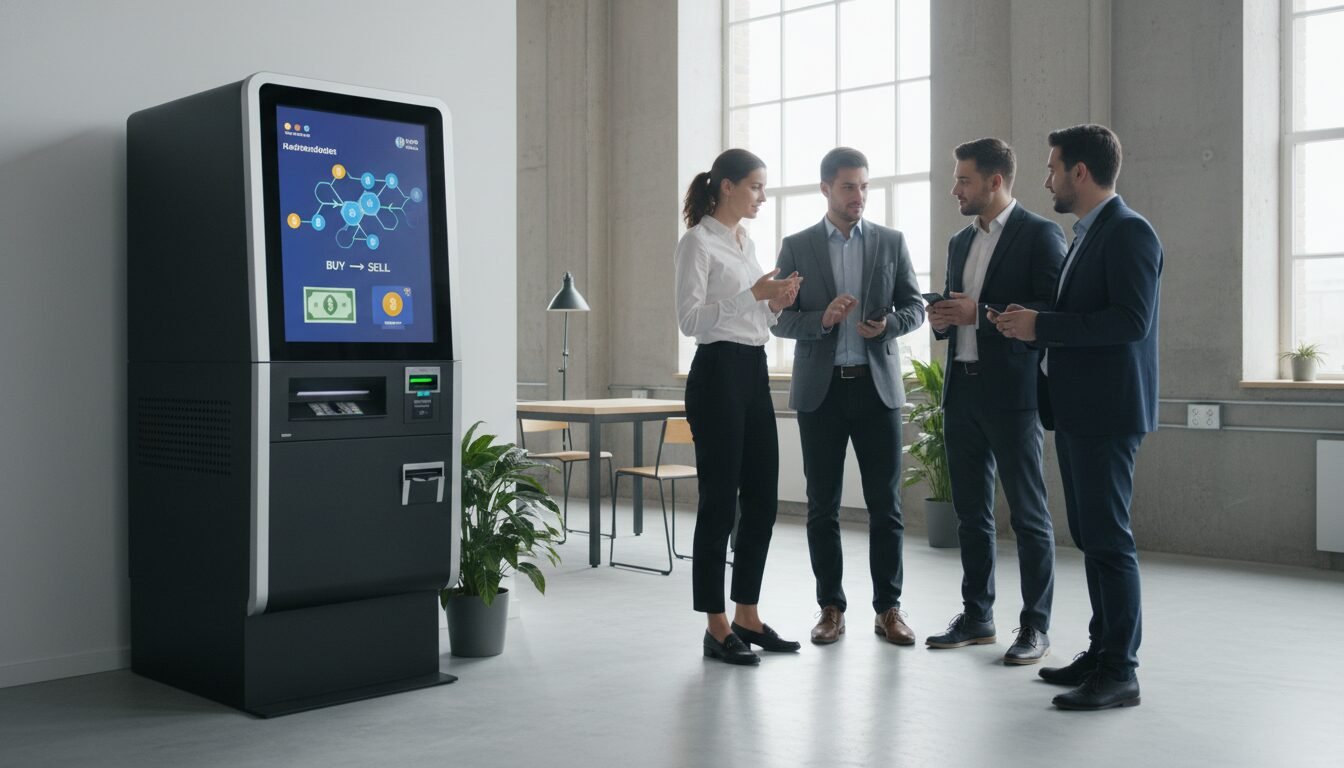
Key Takeaways
- A crypto atm business generates recurring revenue through transaction fees, typically 8-12% per transaction, with strategic placement in high-traffic locations
- Compliance with KYC/AML regulations and MSB registration is mandatory before deploying any machine
- Hardware costs range from $5,000-$15,000 per machine, with most operators breaking even within 12-18 months
- Modern software platforms like General Bytes’ CAS automate compliance, accounting, and remote management
- Location strategy determines success, convenience stores and gas stations generate 20-50 transactions daily in urban areas
A crypto atm business is a venture that operates self-service kiosks enabling users to buy and sell cryptocurrencies using cash or debit cards for transaction fees.
Understanding the Crypto ATM Business Model
The atm business model generates revenue by charging users a fee on each transaction, typically 8-12% of the traded amount or a flat markup above exchange rates. I’ve seen operators collect these fees automatically through machine software, then split revenue with host locations according to pre-negotiated agreements. Because Bitcoin ATMs handle physical cash, per-transaction margins often exceed those of online exchanges, making this model especially attractive for brick-and-mortar entrepreneurs.
Key Profit Drivers
Transaction volume, fee structure, and operational efficiency drive profitability in any these business. Machines placed in convenience stores, gas stations, and grocery stores benefit from constant foot traffic. According to General Bytes, operators have processed over 23 million transactions across their global networks. Managing costs for cash collection, maintenance, and compliance is equally important, modern software stacks reduce manual intervention by roughly 15-25% compared to legacy systems.
Market Growth and Demand
The shift toward decentralized finance fuels sustained demand for cash-to-crypto services. A 2025 industry review by General Bytes projected the global crypto kiosk market to reach $1.3 billion by 2032, growing as more consumers seek instant, private access to digital assets. With 18,415+ machines sold by the leading manufacturer alone and presence in 60+ countries, the infrastructure is well established, new entrants benefit from proven technology and an expanding user base.
Navigating Regulatory Compliance
Operating a such business means you’re a Money Services Business (MSB) in regulators’ eyes, requiring strict compliance protocols. You must implement Know Your Customer (KYC) protocols and file Suspicious Activity Reports (SARs) when required. Most modern ATMs integrate identity verification, such as scanning government-issued ID or using biometric data, before allowing transactions above certain thresholds, ensuring compliance with the Bank Secrecy Act.
State and Federal Licensing
In the United States, any crypto atm must register with FinCEN as an MSB and obtain state-level money transmitter licenses where applicable. For example, Bitcoin Depot holds FinCEN MSB #31000323474501 and NMLS #1886902, publicly showing the documentation required. Each state has different rules; New York’s BitLicense and California’s evolving framework demand careful legal review before deployment.
DORA Compliance in Europe
For operators in the European Union, the Digital Operational Resilience Act (DORA) became a hard requirement in 2025. General Bytes achieved official DORA compliance in June 2025, meaning their ATMs and supporting software meet strict standards for ICT risk management, incident reporting, and operational resilience. This compliance layer isn’t optional, it directly affects your ability to operate legally across the EU.
Selecting the Right Hardware
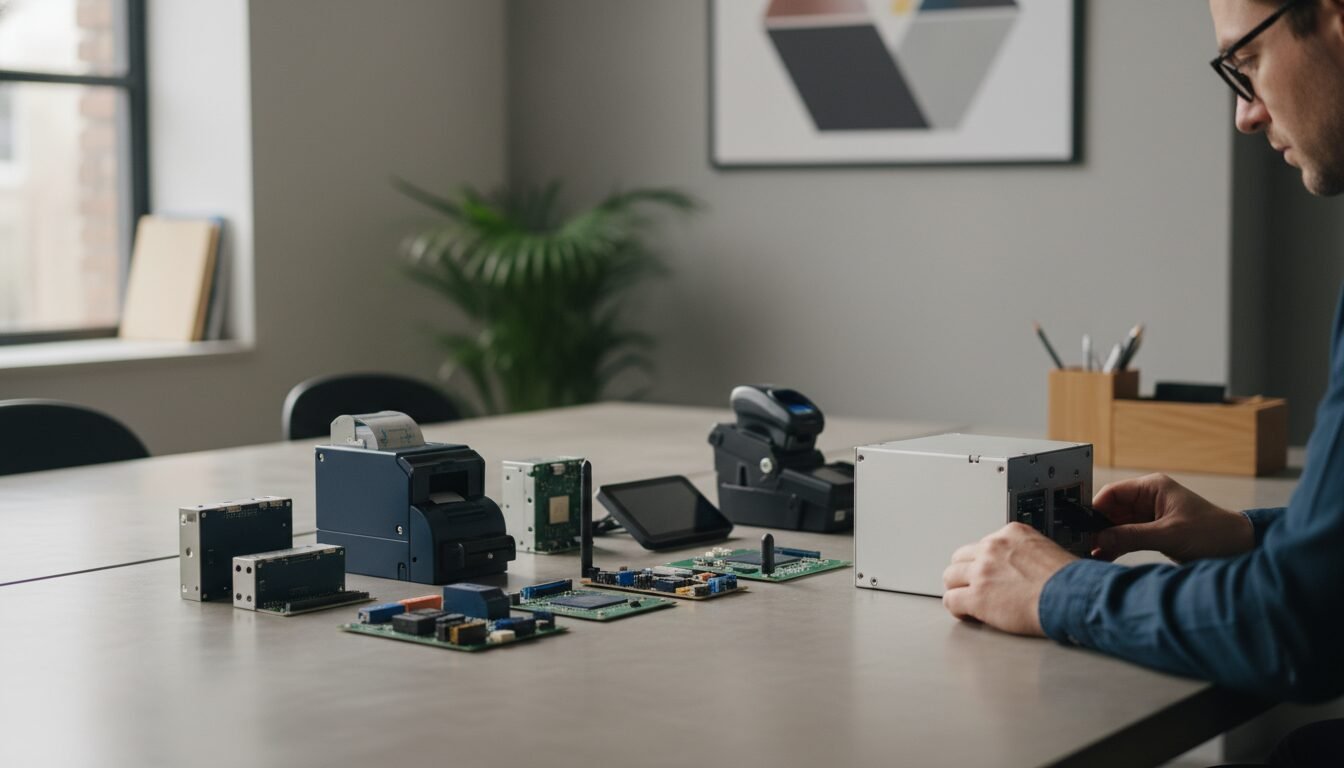
The first choice every crypto atm business faces is between one-way (buy-only) and two-way (buy and sell) machines. One-way units, such as the BATMSeven, are simpler to manage, no cash dispensing mechanism means lower maintenance and fewer security concerns. Two-way ATMs like the BATMTwoPro or BATMThree let users sell crypto for cash, which can attract higher foot traffic but requires continuous cash replenishment and stricter compliance controls.
General Bytes ATM Model Comparison
| Model | Type | Cash Acceptance | Card Support | Smart Safe Compatible |
|---|---|---|---|---|
| BATMSeven | Card-only, one-way | None | Debit/Credit | No |
| BATMTwo | Cash-in, one-way | Bill acceptor | Optional via QPay POS | Yes |
| BATMTwoPro | Two-way cash | Bill acceptor + cash dispenser | Optional | Yes |
| BATMThree | Two-way cash + card | Cassette-based cash handling | Integrated | Yes |
| BATMFour | High-volume two-way | Cash cassette system | Integrated | Yes |
Models like the BATMTwoUltra and BATMFour are designed for high-traffic locations and support Liquid Network integration, which lowers transaction costs and speeds up settlement by using sidechain technology.
Card-Only and Cashless Options
The BATMSeven, introduced in October 2025, is the industry’s first payment card-only crypto ATM. It removes cash handling entirely, eliminating cash collection costs and theft risk. For a crypto atm business focused on tech-savvy demographics, this model slashes operational overhead and aligns with the global shift toward digital payments.
Location Strategy for Maximum Transactions
The location of your crypto atm business directly determines revenue potential. The most successful operators place machines in convenience stores, gas stations, grocery stores, and airports, venues with 24/7 foot traffic and unattended access. According to H&S Energy Group, adding a Bitcoin ATM can boost convenience store foot traffic by providing a new service that attracts digital-native customers.
Negotiating Revenue Share with Hosts
Property owners typically receive a percentage of transaction fees, often $200–$600 per month for a well-placed machine. In return, the operator gets a secure location and built-in customer base. Some operators also pay flat monthly rent, but performance-based splits align incentives better. Always formalize the agreement with a written contract covering insurance, power, and internet access.
Case Study: Convenience Stores and Gas Stations
H&S Energy, a c-store chain, notes that Bitcoin ATMs serve as a draw for customers who want to convert spare cash into crypto without waiting days for exchange settlements. Their analysis states that adding a Bitcoin ATM can be a smart way to diversify offerings, generate new revenue, and align with the growing trend toward digital finance. For any crypto atm business, a single high-traffic gas station can generate 20–50 transactions per day in urban areas, quickly justifying the hardware investment.
Software and Management Platforms
General Bytes’ Crypto Application Server (CAS) is the backbone of an enterprise-class crypto atm business. It provides real-time monitoring, remote configuration, compliance reporting, and multi-currency support across all machines. The 2026 update introduced external payment acceptance, allowing operators to collect online payments and automate buy/sell spreads without manual intervention.
WhaleBooks Accounting for Operators
Built specifically for crypto ATM businesses, WhaleBooks syncs with CAS to auto-generate profit/loss statements, tax reports, and cash-flow tracking. It reconciles blockchain transactions with fiat balances, reducing administrative burden by an estimated 30-40% compared to manual bookkeeping. This tool becomes essential once you operate more than three machines.
Integrating Smart Safes
The GBSafeOne is a smart safe that automates cash counting, validation, and reporting. When integrated with a two-way ATM, it eliminates the need for daily cash runs. Cash is securely stored and insured until a CIT (cash-in-transit) company picks it up, significantly lowering operational risk for operators with multiple high-cash locations.
Financial Projections and Startup Costs
A new crypto ATM costs between $5,000 and $15,000, depending on features. General Bytes offers lease-to-own financing through partners, allowing operators to amortize the investment over three to five years. A typical BATMTwoPro model runs around $8,000–$10,000 and includes a bill acceptor, cash dispenser, and touchscreen. KIOSK Information Systems also manufactures US-built machines with similar pricing and quick lead times.
Break-Even Analysis
Most crypto atm business operators reach break-even within 12 to 18 months after deployment. Assuming an average transaction fee of 8-12% and a machine processing $30,000 per month in volume, monthly gross revenue sits around $3,000. Deducting rent share ($500), cash collection ($300), and compliance ($200) leaves a net of roughly $2,000 per machine. With a $10,000 initial outlay, payback comes in 5 months, though real-world traffic often takes time to build, pushing the timeline closer to a year.
Estimating Ongoing Expenses
Fixed costs include software licenses ($50–$150/month), internet connectivity ($30), insurance ($50–$100), and regulatory filings. Variable costs are cash replenishment, maintenance, and host commissions. Operators should budget $300–$500 per month per machine in operating expenses before paying themselves. Using the CAS platform also reduces support tickets by providing remote diagnostics.
Scaling Your Crypto ATM Business
Once your first unit proves profitable, scaling requires standardized processes. General Bytes recommends operators start with a “launch and testing phase,” during which a single machine validates the compliance framework and location model. After reaching stable profits, the “expansion phase” involves deploying additional machines, hiring field technicians, and using the CAS platform to manage 10+ ATMs from a single dashboard.
Hiring and Field Service Teams
At scale, any crypto atm business needs dedicated staff for cash logistics, repairs, and compliance audits. General Bytes offers Field Services, including installation, repair, and maintenance, in select regions, but larger operators eventually bring these functions in-house. Smart safe integration reduces cash handling labor, while remote training programs keep staff up-to-date on anti-money laundering procedures.
Expanding to New Markets
Operators looking beyond the US find that the European market’s regulatory clarity under DORA and MiCA provides a stable launchpad. General Bytes’ global presence in 60+ countries means the same hardware and CAS software work across borders. Expanding from Texas to Portugal, for example, only requires adjusting compliance settings and licensing, the core technology remains identical.
“Our machines have processed over 23 million transactions across 60 countries, demonstrating the robust demand for cash-to-crypto services worldwide.” , General Bytes company announcement
“According to the 2025 year-in-review, the global crypto kiosk market is on track to reach $1.3 billion by 2032, making this a high-growth segment for entrepreneurs.” , General Bytes Blog
Pros and Cons
Pros
- High profit margins with 8-12% transaction fees and recurring revenue model
- Growing market demand driven by mainstream crypto adoption
- Passive income potential once machines are properly placed and configured
- Scalable business model with remote management capabilities
- Established technology and compliance frameworks reduce startup risk
Cons
- Heavy regulatory burden requiring MSB registration and ongoing compliance
- High upfront capital requirements of $5,000-$15,000 per machine
- Location dependency makes revenue unpredictable in new markets
- Cash handling creates security risks and operational complexity
- Market volatility can affect transaction volumes during crypto downturns
Frequently Asked Questions
How much does a crypto ATM cost?
New machines range from $5,000 for a basic card-only model up to $15,000 for a high-volume two-way unit. Leasing options and financing help spread the cost over several years.
Are crypto ATMs profitable?
Yes, a crypto atm business can be highly profitable when placed in busy retail spots. Typical net margins per machine run $1,500–$2,500 per month after expenses, with break-even often reached within 12-18 months.
What are the legal requirements for a crypto atm business?
In the US, you must register as an MSB with FinCEN and obtain state money transmitter licenses. KYC/AML compliance, identity verification, and suspicious transaction reporting are mandatory for every transaction.
Which crypto ATM model is best for beginners?
The BATMTwo is a solid entry-level option: it’s a one-way cash machine that avoids the complexities of cash dispensing while capturing the largest user demand, buying crypto with cash.
How do I find a location for my crypto ATM?
Target convenience stores, gas stations, and grocery stores. Negotiate a revenue share of 10-20% of transaction fees with the property owner, and secure a written agreement covering internet, power, and insurance.
Can I operate a crypto atm business remotely?
Absolutely. Cloud-based platforms like General Bytes’ CAS allow you to monitor transactions, adjust fees, and push software updates remotely. Smart safes handle cash, reducing the need for daily on-site visits.
Connect with Amin to discuss AI strategy for your business.
Enjoyed this article?
Connect with me for collaboration, ventures, or just a good conversation about building things.
Get in Touch