Business Equipment Finance Guide: Loans vs Leases in 2026
Key Takeaways
- Business equipment finance lets you acquire machinery, vehicles, or technology with manageable payments instead of large upfront costs.
- Nearly 80% of U.S. businesses finance equipment purchases each year, according to the Equipment Leasing & Finance Association (ELFA).
- Loan and lease options exist, with loans typically covering up to 80-100% of equipment value, while leases often require no down payment.
- Funding amounts range from $5,000 at niche lenders to $20 million+ at major banks like J.P. Morgan for industrial equipment.
- Section 179 of the tax code can allow 100% deduction on financed equipment placed in service by December 31.
- Same-day decisions and 48-hour funding are possible from lenders like U.S. Bank and Crest Capital for well-qualified borrowers.
Business equipment finance is a structured lending or leasing solution that provides companies with the capital to obtain essential assets, from MRI machines to excavators, without liquidating cash reserves.
How Business Equipment Finance Works
The mechanics work exactly like you’d expect: a lender provides the funds, you repay over time with interest, and the equipment serves as collateral. I’ve used this structure to acquire everything from servers to manufacturing equipment across my ventures.
The Application Process
Applying for equipment finance can be done online in minutes. U.S. Bank‘s application-only process for existing customers handles amounts up to $200,000 with just a tax ID, gross annual sales, business start date, and equipment description. Non-bank lenders like Crest Capital have simplified forms that don’t trigger a personal credit inquiry for initial decisions. The trend in 2026 is toward even faster digital submissions with AI-driven pre-qualification tools.
Underwriting and Decision Timelines
Underwriting focuses on the equipment’s value, your cash flow, and credit history. Decisions can come back in hours for smaller requests. National Funding aims to provide an answer within 24 hours, while many banks take a few business days. For larger transactions, say, a $10 million manufacturing line, more detailed financial reviews are standard, but specialized lenders like Wells Fargo Equipment Finance have dedicated teams for these high-stakes deals.
Funding and Repayment Structures
Once approved, funds can be disbursed directly to the vendor, or the lender pays the invoice. U.S. Bank states that in most cases, funding occurs within 48 hours. Repayment terms often range from 24 to 60 months, with options for seasonal or quarterly payments to match cash flow cycles. Unlike traditional term loans, many these finance agreements don’t require blanket liens on all your assets, a notable advantage highlighted by Crest Capital.
Types of Business Equipment Finance
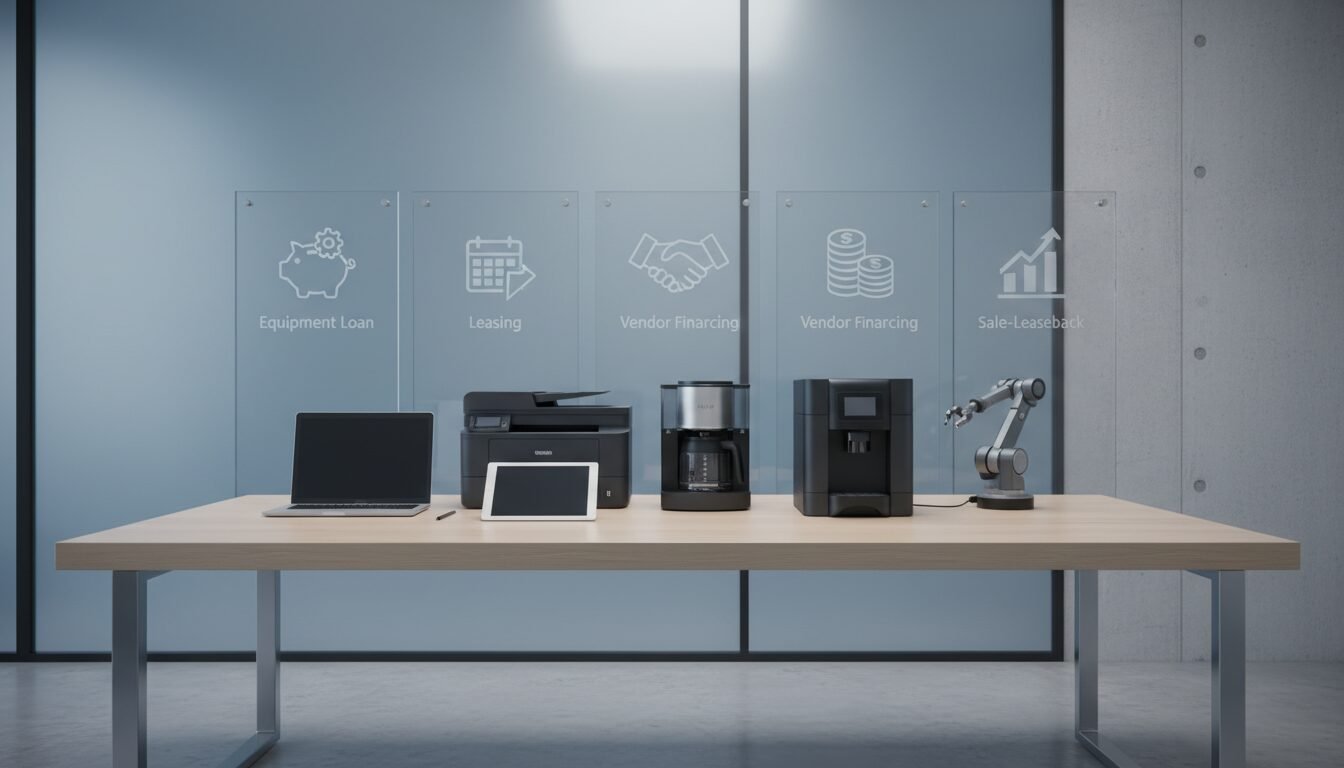
Not all such finance solutions are identical. The choice between a loan and a lease, or a hybrid, depends on your balance sheet goals, tax situation, and usage plans.
Equipment Loans
An equipment loan is a traditional installment loan used to purchase equipment. You borrow a lump sum and repay it with interest over a fixed term. Ownership transfers immediately, though the lender holds a lien until the loan is paid. According to City National Bank’s insights, many lenders cover 80% of the equipment cost, requiring a 20% down payment, though some will finance up to 100% for well-qualified buyers. Loans are ideal for long-life assets like construction machinery or custom manufacturing equipment.
Equipment Leases
A lease, by contrast, is a rental agreement. The lessor buys the equipment and you pay a monthly fee to use it. At the end of the lease term, you may return the equipment, renew the lease, or purchase it for a residual value. Leases often feature lower monthly payments than loans, and they can cover 100% of the equipment cost with no upfront cash. As Mark Bearden of First American Equipment Finance explains, this structure better aligns costs with the equipment’s useful life.
Vendor-Backed Financing Programs
An increasing number of equipment manufacturers and dealers offer in-house financing or partner with lenders to provide point-of-sale options. Wells Fargo’s Vendor Financial Services helps dealers design private-label programs that put financing terms directly into the sales conversation. These programs can speed up the purchase cycle and often include promotions like deferred payments or reduced rates during launch periods.
Loan vs. Lease: Which Is Right for Your Business?
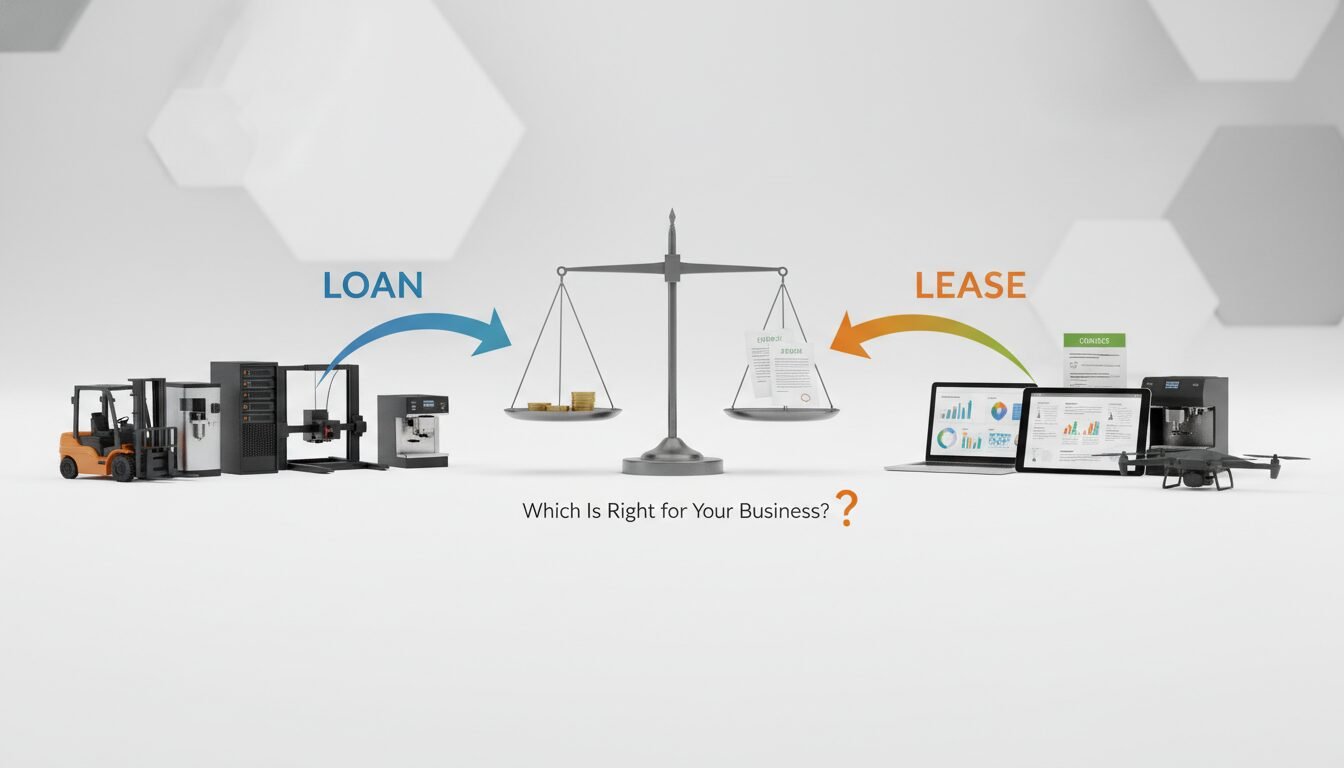
Choosing between a loan and a lease is a pivotal decision for any business equipment strategy. The table below breaks down the main differences.
| Feature | Equipment Loan | Equipment Lease |
|---|---|---|
| Ownership | You own the equipment from day one (lien until paid off) | Lessor owns the equipment; you have right of use |
| Down Payment | Often 10-20% of cost | Typically $0 down |
| Monthly Payment | Higher, but builds equity | Lower, treated as an operating expense |
| End-of-Term | Equipment is yours; no further payments | Return, renew, or purchase at a predetermined price |
| Tax Treatment | Depreciation deductions; Section 179 may apply | Lease payments can be fully deductible as operating expenses |
| Best For | Long-lived, essential assets you intend to keep | Technology that becomes obsolete quickly, or seasonal equipment |
Ownership and End-of-Term Options
If ownership is critical, for example, a dental practice purchasing a cone-beam CT scanner that will last a decade, an equipment loan makes sense. However, if you replace your IT hardware every three years, a lease lets you refresh without disposal hassles.
Cash Flow Impact
Leases often require no down payment, keeping more cash in the bank. Loans, while requiring a down payment, result in full ownership and can sometimes be structured with balloon payments or seasonal skips to match revenue cycles.
Tax Implications
The IRS lets you deduct either depreciation (for owned assets) or lease payments (for leased assets). Section 179 is a powerful incentive: businesses can potentially expense the full cost of qualified equipment in the first year if they finance before year-end. Leases can also qualify if they meet certain conditions. We’ll cover tax strategy later.
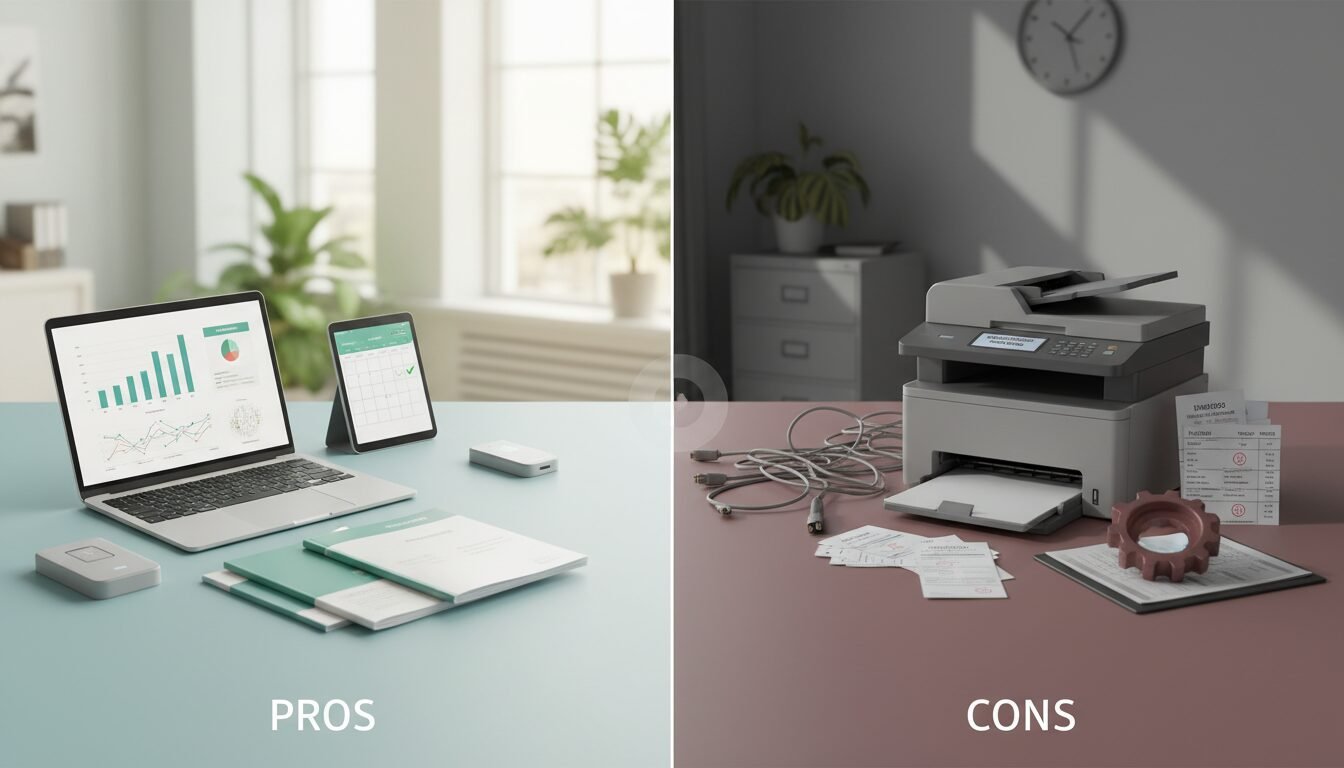
Pros and Cons
Pros
- Preserves working capital for operations and emergencies
- Fixed monthly payments make budgeting predictable
- Equipment serves as collateral, often making approval easier
- Section 179 tax deductions can offset financing costs
- Access to newer, more productive equipment without large upfront investment
Cons
- Total cost is higher than paying cash due to interest charges
- Equipment may become obsolete before the loan is paid off
- Personal guarantees are often required for smaller businesses
- Early payoff penalties may apply with some lenders
Benefits of Financing Your Business Equipment
equipment finance isn’t just about acquiring assets; it’s a strategic move. Here are the core benefits that business owners report.
Preserve Working Capital
Draining cash reserves to buy a $150,000 CNC machine can leave a company vulnerable. Business equipment finance spreads the cost over months or years, protecting liquidity for payroll, inventory, or emergencies. David Feldser of J.P. Morgan notes that using liquidity upfront has opportunity costs, money tied up in equipment could instead fund expansion or cushion against downturns.
Stay Competitive with Modern Assets
Aging equipment can drag down productivity. New, high-quality assets often reduce energy consumption and increase throughput. Feldser adds that many businesses earn more from the asset’s enhanced productivity than the interest they pay on business equipment finance agreements.
Predictable Budgeting
Fixed monthly payments make cash flow forecasting simple. Unlike revolving credit lines, business equipment finance agreements lock in your rate and term, shielding you from interest rate fluctuations. Crest Capital emphasizes that its fixed terms avoid the bank’s adjustable-rate surprises.
“When businesses purchase new equipment, it often takes years to realize the full benefits of that upfront cost. With equipment financing, business leaders can spread the costs over a period of time and better align the cost with the benefit of the equipment.”
, Mark Bearden, Senior Vice President, First American Equipment Finance (a subsidiary of City National Bank)
Top Industries Using Business Equipment Finance
Virtually every sector uses business equipment finance to some degree, but certain industries depend on it heavily.
Construction and Heavy Equipment
Bulldozers, excavators, and cranes come with six- and seven-figure price tags. Wells Fargo’s construction financing specialists offer loans and leases with seasonal payment structures, since many contractors earn the bulk of their revenue in warmer months. Up to 100% financing is available for qualified buyers, and used equipment refinancing is a popular way to unlock capital from paid-off machinery.
Healthcare and Dental Practices
Medical and dental offices frequently use business equipment finance for imaging machines, surgical lasers, and patient monitoring systems. U.S. Bank’s practice financing division specifically targets these verticals. The ability to finance 100% of soft costs, installation, training, compliance upgrades, makes healthcare equipment finance a lifeline for small clinics.
Transportation and Logistics
Truck fleets, trailers, and cargo handling equipment represent massive capital outlays. J.P. Morgan‘s equipment finance team works with freight companies on transactions that can exceed $20 million. Lease structures like the TRAC lease (terminal rental adjustment clause) give trucking companies flexibility at lease-end: return the vehicles, buy them, or extend at an adjusted rate.
Qualifying for Business Equipment Finance in 2026
Lenders have become more data-driven, but the fundamentals remain. Here’s what to expect when pursuing business equipment finance.
Credit Score Requirements
Traditional banks typically require a credit score of 660 or above for their best terms. Non-bank lenders like National Funding will consider scores in the “fair” range, though at higher rates. Crest Capital, a long-standing non-bank specialty lender, doesn’t place a hard inquiry on your personal credit during the initial application, which is valuable for entrepreneurs protecting their personal scores.
Time in Business and Revenue Thresholds
Startups may face hurdles, but not insurmountable ones. National Funding asks for just six months in business and a vendor quote. Banks generally prefer two or more years of operation. Annual revenue benchmarks vary; for larger loans, lenders like Wells Fargo target companies with $25 million+ in revenue for their commercial business equipment finance programs, while smaller-ticket lenders ($5,000–$150,000) work with a broader range.
Step-by-Step Application Process
Follow these steps to secure business equipment finance:
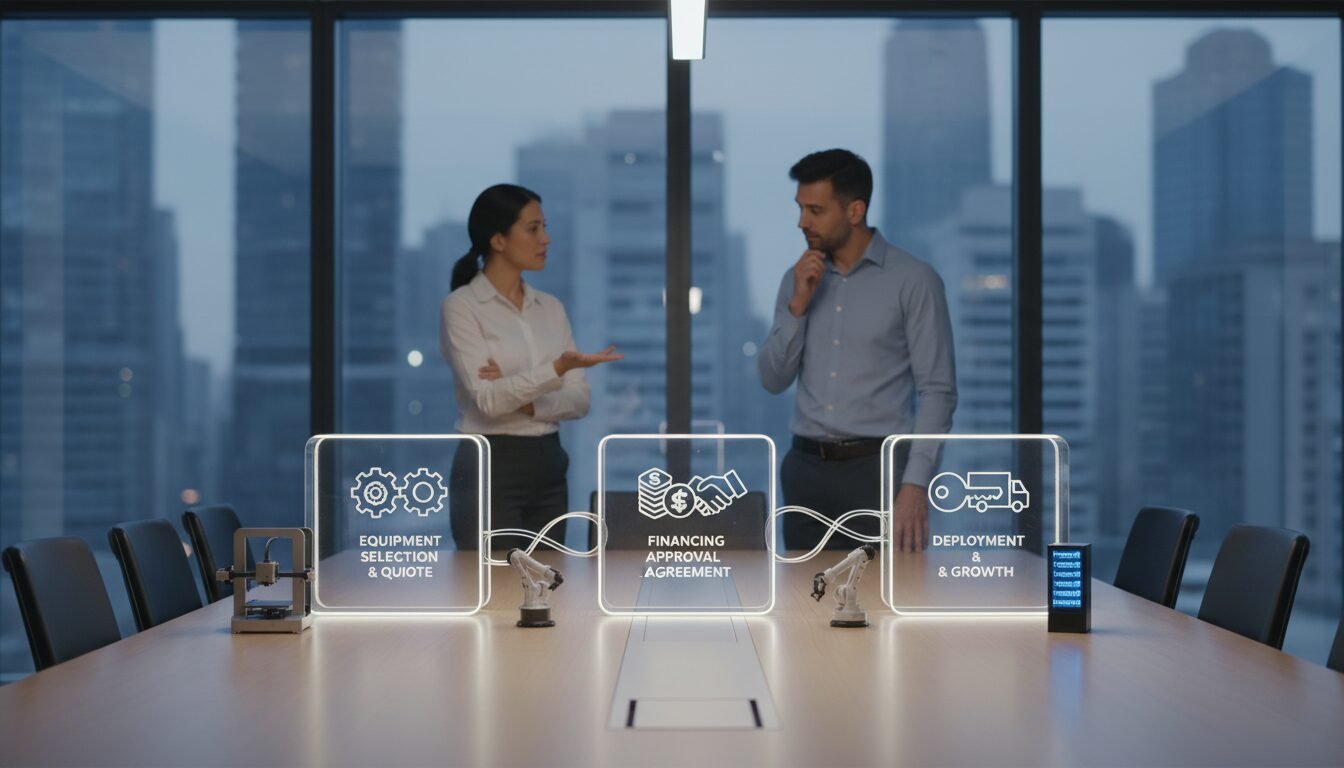
- Select and quote the equipment: Work with your vendor to get a detailed invoice or purchase agreement.
- Prepare your documents: Gather tax ID, business financials, and ownership details (if multiple owners).
- Compare lenders: Request quotes from at least three lenders, including banks and specialty financiers.
- Submit the application: Most lenders offer online forms; some require a brief phone call.
- Review and accept the offer: Once approved, you’ll receive a term sheet. Compare payment schedules and rates.
- Receive funding: Funds are typically wired to the vendor within 48 hours; you arrange delivery.
Documentation You’ll Need to Prepare
Expect to provide:
- Tax ID number
- Last year’s tax returns (waived by some up to $250,000)
- Profit and loss statement or bank statements
- Equipment quote from a vendor
- Percentage of ownership breakdown (if multiple owners)
The more complete your package, the faster the decision. Online lenders have streamlined this to a few-minute application, but having the documents ready speeds approvals.
“There are also the very large pieces of industrial equipment, things that are used in the manufacturing space. Those could be anywhere from $3 million, to $20 million.”
, David Feldser, East Region Sales Leader for Equipment Financing at J.P. Morgan
Tax Advantages: Section 179 and Bonus Depreciation
Tax code incentives turn business equipment finance into a powerful year-end planning tool.
How Section 179 Works
Section 179 of the IRS code allows businesses to deduct the full purchase price of qualifying equipment during the tax year it is placed in service, rather than depreciating it over several years. The deduction limit is updated annually for inflation. Leased equipment can also qualify under a nominal purchase option or a fair market value lease structure, but the rules are nuanced, consult a tax advisor.
Combining Tax Incentives with Financed Purchases
Yes, you can take the Section 179 deduction even if you use business equipment finance. The IRS treats the full purchase price as eligible, not just your down payment. This means a $250,000 machine financed 100% could yield a $250,000 deduction in the first year. National Funding highlights this on its site, reminding businesses to finance before December 31 to maximize the benefit.
Year-End Planning Deadlines
Equipment must be delivered and “ready for use” by year-end to qualify. Many lenders see a surge in applications in November and December. Start the process early to ensure funding and delivery align. Section 179 and bonus depreciation are hot topics among CPAs, and using business equipment finance strategically can reduce taxable income by hundreds of thousands of dollars.
Emerging Trends Shaping Equipment Finance
The business equipment finance landscape is evolving quickly. Two trends are transforming how businesses access capital for assets.
AI-Powered Lending Decisions
In 2026, machine learning models are increasingly used to assess creditworthiness by analyzing real-time cash flow data, not just static credit reports. Lenders now connect directly to accounting software or business bank accounts to offer instant, tailored business equipment finance offers. This reduces time-to-decision from days to minutes and opens doors for businesses with thin credit files but strong revenue streams.
The Rise of Equipment-as-a-Service (EaaS)
Instead of buying a forklift, a warehouse might subscribe to its use on a per-hour or per-month basis, with maintenance, insurance, and software included. This model, part lease, part service contract, is gaining traction for IT hardware, agricultural machinery, and even commercial kitchen equipment. Equipment manufacturers are partnering with financiers to bundle these offerings, moving the industry from asset ownership to outcome-based payment models.
Sustainability-Linked Financing for Energy-Efficient Assets
As net-zero targets loom, more lenders offer discounted rates for equipment that meets ENERGY STAR or LEED standards. For example, a bakery financing a new energy-efficient oven might get a rate reduction. This aligns with ESG goals and reduces long-term operating costs. Industry reports indicate that several top bank-owned business equipment finance providers are adding green asset categories to their portfolios.
Conclusion: Why Business Equipment Finance Is a Strategic Growth Lever
Business equipment finance is not just a loan, it’s a deliberate capital deployment strategy. Whether you’re a startup dentist buying your first imaging system or a logistics company scaling to a nationwide fleet, financing the right equipment at the right terms can multiply your return on investment. The key is to match the finance structure to your asset’s useful life, tax position, and cash flow pattern. In 2026, with interest rates moderating and underwriting technology accelerating, now is an opportune time to lock in fixed payments and acquire the assets that will carry your business forward.
Connect with Amin to discuss AI strategy for your business.
Frequently Asked Questions
What is business equipment financing?
Business equipment financing is a funding method that lets companies acquire essential equipment through a loan or lease, repaying the cost over time rather than paying in full upfront. It preserves cash and often provides tax advantages.
Can I get equipment financing with bad credit?
Yes, some non-bank lenders accept fair credit, though rates will be higher. Lenders like National Funding consider credit scores below prime, and some specialty lenders assess business cash flow more heavily than personal credit scores.
How fast can I get equipment financing?
Digital-first lenders can provide a decision within hours and funding in as little as 24 to 48 hours. For example, U.S. Bank offers funding in 48 hours for most applications, and Crest Capital can approve same-day for smaller deals.
What types of equipment can be financed?
Nearly any business-critical asset can be financed: construction machinery, medical devices, commercial vehicles, IT hardware, office furniture, manufacturing robots, and even software. The asset usually serves as collateral for the loan.
Does financing equipment affect my taxes?
Yes. Under Section 179, you can deduct the full cost of qualifying equipment in the year it’s placed in service, even if you finance it. Leases may allow you to deduct monthly payments as operating expenses. Always consult a CPA.
Is it better to lease or buy equipment?
It depends on usage: buy if you plan to keep the asset for a long time and want equity; lease if you need lower monthly payments, want to upgrade frequently, or want to avoid technology obsolescence. The table above compares both options in detail.
Enjoyed this article?
Connect with me for collaboration, ventures, or just a good conversation about building things.
Get in Touch