Best Small Business Financing: 2026 Guide to Loans & Credit

The best small business financing matches your credit profile, revenue, and growth stage. Options range from SBA loans with rates as low as 9.75% to online lines of credit that fund within 24 hours.
- Small business financing includes term loans, lines of credit, SBA loans, equipment financing, and invoice factoring.
- Your credit score, annual revenue, and time in business are the top factors lenders evaluate.
- For established businesses, traditional bank loans or SBA loans often offer the lowest rates.
- Startups and low-revenue businesses can turn to online lenders, microloans, or lines of credit.
- Comparing multiple offers and preparing financials in advance speeds up approval.
Understanding Small Business Financing Options
Small business financing is capital provided to businesses to cover operations, growth, or asset purchases, repaid over time with interest. I’ve bootstrapped three companies, and I can tell you that access to the right funding often determines whether you survive seasonal dips or capitalize on growth opportunities. Without it, even profitable businesses can struggle when cash flow tightens.
Types of Financing Available
A term loan gives you a lump sum of capital repaid with interest over a fixed period, typically 1 to 25 years. A business line of credit works like a credit card, you draw funds as needed and only pay interest on what you use. SBA loans are government-guaranteed loans issued by partner lenders, offering favorable terms and lower down payments. Equipment financing uses the purchased equipment as collateral, often covering up to 100% of the equipment’s value. Invoice factoring involves selling your unpaid invoices to a factoring company for immediate cash, usually at a discount.
How to Choose the Best Small Business Financing for Your Business
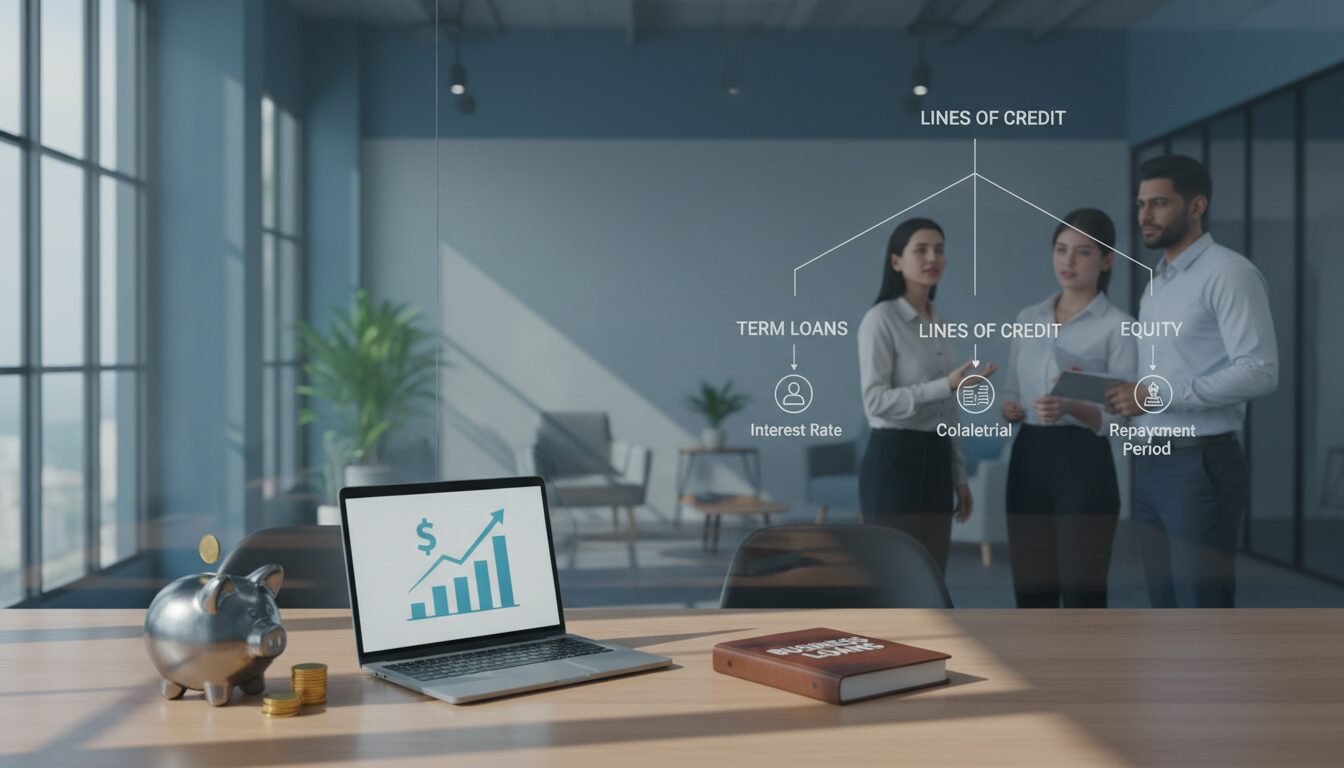
Finding the best small business financing starts with an honest assessment of your business’s financial health. Lenders evaluate three core metrics: credit score, annual revenue, and time in business. For example, Bank of America unsecured loans typically require a personal credit score above 700, at least 2 years in business, and $100,000 in annual revenue. Online lenders like Fundbox, however, approve borrowers with scores as low as 600 and just $30,000 in annual revenue.
Matching Financing to Purpose
Your financing purpose dictates the product type. Need to cover short-term payroll? A business line of credit from Bluevine, funding in 24 hours, works best. Planning a large expansion or real estate purchase? An SBA 7(a) loan up to $5 million with terms up to 25 years offers low, capped rates. For equipment, an equipment loan up to $150,000 preserves working capital while securing the asset. Aligning the financing vehicle with its intended use is key to unlocking the best small business financing for your situation.
Top Lenders and Their Offerings

SBA loans provide government-backed stability through approved lenders, reducing risk and enabling better terms. The U.S. Small Business Administration 7(a) program offers up to $5 million with rates capped at around 9.75% and repayment up to 25 years. SBA 504 loans finance fixed assets like real estate with long-term, fixed-rate structures. As an SBA-preferred lender, Wells Fargo can process SBA loans up to $15 million. These loans are ideal for businesses that can’t qualify for conventional bank loans due to collateral or time-in-business requirements.
Online Lenders: Speed and Flexibility
Online lenders have rewritten the rulebook for speed and accessibility. Bluevine offers a line of credit up to $200,000 with decisions in minutes and funding within 12 to 24 hours; rates start at 14%. Fundbox requires just $30,000 in annual revenue and a 600 credit score, with a line of credit up to $250,000. Credibly provides short-term loans up to $600,000 with factor rates as low as 1.11, money can be in your account in as few as 4 hours. Based on my experience building companies, these lenders excel when you need cash quickly or lack the track record for a traditional bank.
Traditional Banks: Relationship and Reliability
For established businesses, traditional banks often deliver the lowest rates and a full suite of financial products. Bank of America offers unsecured lines of credit, term loans, and specialized healthcare practice loans, all starting at $25,000 and requiring strong credit. Wells Fargo‘s BusinessLine credit line starts at $10,000 and goes up to $150,000 with rates as low as Prime + 1.75%. The trade-off? Applications take weeks, and strict requirements mean many small businesses won’t qualify.
Comparing the Best Small Business Financing Options
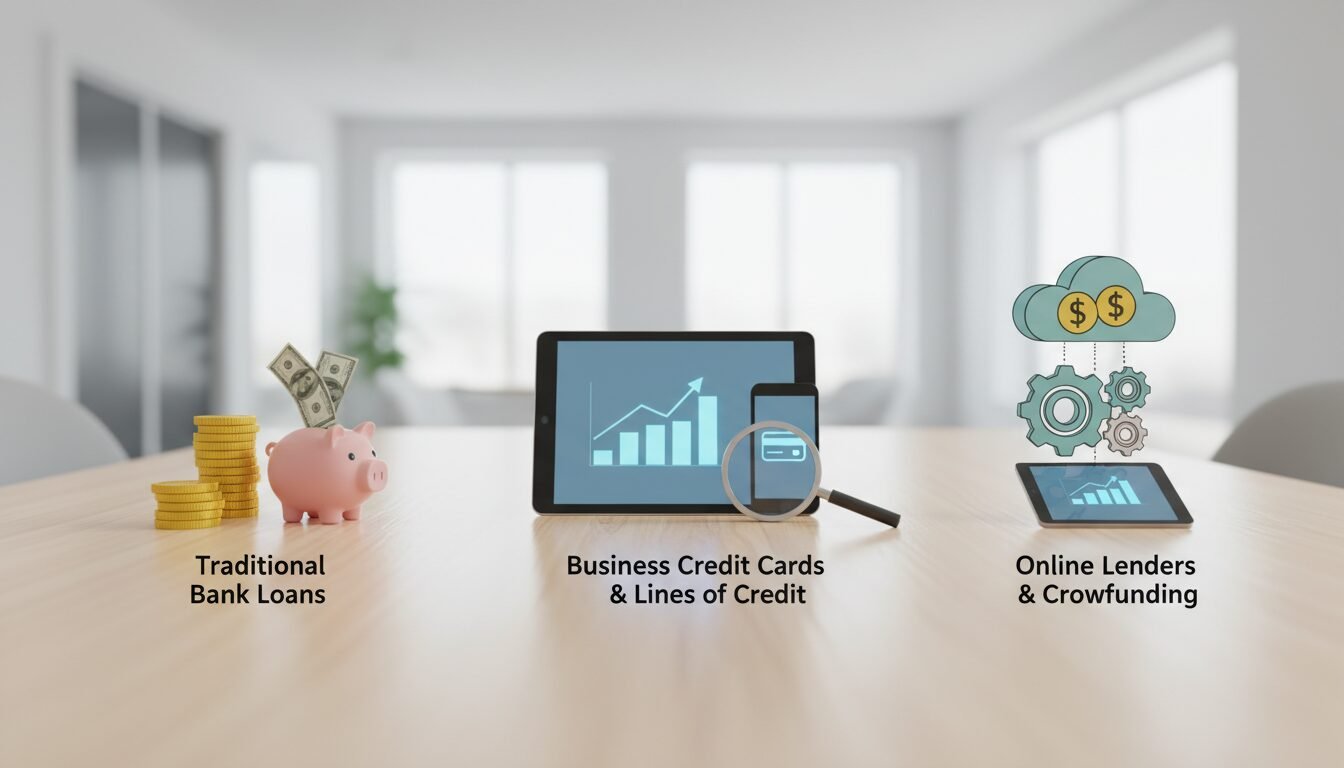
The table below distills the top options used by small business owners today. Use it to quickly identify which financing type fits your needs and eligibility.
| Financing Type | Max Amount | Typical Rate | Term | Pros | Cons |
|---|---|---|---|---|---|
| SBA 7(a) Loan | $5 million | From 9.75% | Up to 25 years | Low rates, long terms, government guarantee | Lengthy process, collateral required |
| Business Line of Credit (Online) | $200,000 | From 14% | 6–12 months (revolving) | Quick access, only pay for what you use | Higher rates, lower credit limits |
| Traditional Bank Term Loan | $100,000 | From 6.5% | 1–5 years | Lowest rates, relationship discounts | Strict requirements, slow funding |
| Online Term Loan | $600,000 | Factor rate from 1.11 | 6–15 months | Fast approval, lower credit barriers | Daily repayments, high total cost |
| Equipment Financing | $150,000 | Varies | 2–5 years | Equipment as collateral, covers full cost | Only for equipment, may need down payment |
| Invoice Factoring | $5 million | Discount rate | 1–3 months | Immediate cash for invoices | Discount fees, client perception |
Pros and Cons at a Glance
Every path comes with trade-offs. SBA loans offer rock-bottom rates but demand patience and paperwork. Online lines of credit deliver speed but at premium rates. Bank term loans reward long relationships but shut out all but the healthiest applicants. The best small business financing choice balances cost, speed, and qualification requirements against your business’s immediate and future needs.
The Application Process: Step-by-Step Guide
Preparing your documents before you apply can shave days off approval times. Organize these items: two years of business tax returns, six months of bank statements, profit & loss statement, balance sheet, and, for startups, a solid business plan. Lenders may also request your debt schedule and accounts receivable aging.
Step-by-Step Application
Follow this sequence to methodically secure the best small business financing available to you:
- Check your credit. Pull personal and business credit reports from major bureaus. Fix errors and know your score.
- Define your need. Pinpoint the exact amount and purpose, this determines which product you pursue.
- Research lenders. Use marketplaces like Nav or NerdWallet to compare offers side-by-side without impacting your credit.
- Pre-qualify. Submit a few pre-qualification applications to see rate estimates; these use soft pulls only.
- Submit formal application. Complete the chosen lender’s full application and upload supporting documents.
- Review offer. Scrutinize the APR, not just the rate or factor rate, and negotiate fees if possible.
- Accept and fund. Once signed, funds can arrive in as little as 4 hours (Credibly) or 24 hours (Bluevine).
Financing for Startups and Early-Stage Businesses
Most lenders want to see at least 6 months of operations, but you can still find the best small business financing for startups. SBA microloans (up to $50,000) require less paperwork and are offered through non-profit intermediaries. Online lenders like SoFi now offer startup-specific loans that look at your personal credit and potential cash flow. Business credit cards with 0% intro APR periods can also cover initial expenses while you build a revenue track record.
Building Business Credit Early
Even before you need financing, open a business bank account, apply for a business credit card, and pay every vendor on time. Keep your credit utilization low. These habits gradually build a strong business credit profile, which is essential for accessing the best small business financing down the road. Many founders underestimate this, only to face higher rates when they finally seek capital.
Low-Revenue and Bad Credit Financing Solutions
If your FICO is below 650 or your revenue is under $100,000, don’t count yourself out. Fundbox considers scores as low as 600 and annual revenue from $30,000. Credibly focuses more on cash flow and deposits than credit score, offering advances up to $600,000. SBA microloans also have flexible credit requirements and offer capped interest rates. While these options cost more, they keep you operational while you improve your metrics.
Building Revenue and Credit for Better Terms
Use high-cost financing as a bridge. While paying off a short-term loan, work on increasing sales, cutting expenses, and consistently paying all obligations on time. Over 12–24 months, many businesses see their credit scores rise and their revenue stabilize, opening the door to the best small business financing from banks and SBA programs. This two-step approach, bridge now, refinance later, is a proven playbook I’ve used with portfolio companies.
Expert Insights for Smart Financing Decisions
“Having bootstrapped three companies, I view financing not just as a source of cash, but as a strategic partnership. The best small business financing is the one that aligns with your cash flow cycle and doesn’t handcuff your operations. I’ve seen too many founders chase the lowest rate and end up with rigid repayment structures that strangle growth.” , Amin Ferdowsi
What Lenders Look For
Lenders evaluate based on the “five C’s”: capacity (cash flow to repay), capital (your investment in the business), collateral (assets to secure the loan), conditions (industry and economic trends), and character (personal and business credit history). Strong cash flow often outweighs a mediocre credit score. Prepare a narrative that ties these elements together.
Common Mistakes to Avoid
Three mistakes sink more loan applications than anything else: not comparing multiple offers (leaving money on the table), borrowing more than you can comfortably repay (hoping for growth that hasn’t arrived), and ignoring the true APR on factor-rate products (which can exceed 50% when annualized). Approach financing with a clear plan for use and repayment.
Conclusion: Finding Your Best Small Business Financing Fit
There is no single best small business financing vehicle, only the best fit for your business today. Whether you tap a fast online line of credit to cover seasonal inventory or secure a 25-year SBA loan for a building expansion, the key is to align the product with your goals, prepare your documents meticulously, and compare offers from multiple lenders. Revisit your financing annually; what works at launch may not serve you at scale. With the right approach, capital becomes not a burden but a catalyst for your next milestone.
Connect with Amin to discuss AI strategy for your business.
Frequently Asked Questions
What is the easiest small business loan to get?
Online lenders like Fundbox and Bluevine often have simpler applications and lower requirements, making them more accessible for businesses with lower revenue or credit scores.
Which bank is best for small business financing?
Bank of America and Wells Fargo offer a range of business loan products with competitive rates for established businesses, while Chase provides low-rate options for well-qualified borrowers.
Can I get a small business loan with no revenue?
Yes, some lenders offer startup loans or microloans without requiring revenue. SBA microloans and online lenders like SoFi are options, but rates may be higher.
How fast can I get approved for small business financing?
Online lenders can approve applications in minutes and fund within 24 to 48 hours. Traditional bank loans may take several weeks.
What credit score do I need for the best small business financing?
For the lowest rates, a credit score above 700 is typically required. However, some lenders work with scores as low as 600, though at higher cost.
Enjoyed this article?
Connect with me for collaboration, ventures, or just a good conversation about building things.
Get in Touch