Best Product Design Agencies: 2026 Guide to Choosing the

A product design agency is a specialized firm that transforms your concept into a market-ready solution through user research, prototyping, and iterative development. I’ve worked with dozens of these firms over the years, and the right partnership can make or break your product launch.
Key Takeaways
- A design agency transforms your concept into a market-ready solution through user research, prototyping, and iterative development.
- Partnering with a specialized agency can reduce development time significantly and improve user satisfaction.
- Top agencies like IDEO, MetaLab, and Phenomenon Studio showcase proven expertise with high Clutch ratings and notable client successes.
- Pricing varies widely: mid-tier agencies may charge $50–$60 per hour, while premium firms often bill $150–$199 per hour, with minimum project sizes ranging from $10,000 to over $100,000.
- Critical factors in selection include portfolio relevance, cultural fit, communication style, and transparent pricing models.
What Is a Product Design Agency and Why Does Your Business Need One?
Business Need One? – product design agency | Amin Ferdowsi” class=”wp-image-2398″ loading=”lazy” width=”1792″ height=”1024″ />Defining the Role of a Modern Product Design Agency
A product design agency provides end-to-end design and development services, helping companies create digital or physical products that solve real user problems. These firms blend expertise in user experience (UX) research, interface (UI) design, prototyping, and often engineering to deliver cohesive, scalable solutions. Unlike a general creative studio, they focus relentlessly on functionality, feasibility, and market fit, turning rough ideas into polished products that attract and retain users.
When to Outsource Product Design vs. Building an In-House Team
Early-stage startups and enterprises facing tight deadlines or skill gaps often benefit from outsourcing. A product design agency can accelerate time-to-market significantly, especially when using pre-built frameworks, Phenomenon Studio reports faster MVP development using this approach (Phenomenon Studio). On the other hand, if your organization requires continuous, long-term product iteration and you have the budget for senior hires, building an in-house design team may offer more control. Still, even large companies like Google and Nike regularly collaborate with agencies like IDEO and Instrument to inject fresh perspectives and specialized skills.
Key Services Offered by Leading Product Design Firms
UX/UI Design and User Research
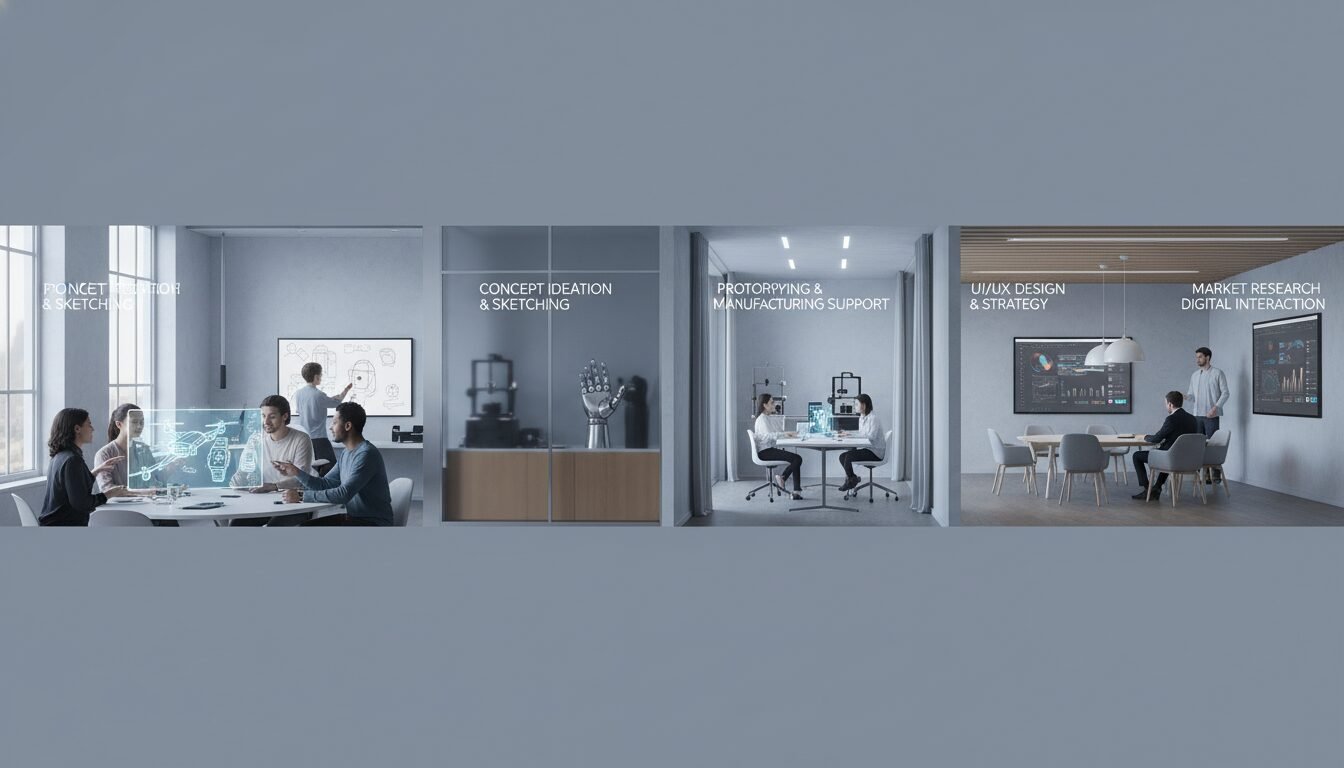
Core services from any reputable digital product design agency include in-depth user research, persona development, wireframing, and high-fidelity UI design. Agencies like MetaLab and Work.co are known for crafting intuitive interfaces that have powered household names like Slack and Coinbase. Through usability testing and iterative feedback loops, they ensure the final design aligns with both business goals and user expectations.
Prototyping and MVP Development
Rapid prototyping is essential for validating assumptions before heavy engineering begins. Many agencies now offer dedicated MVP (minimum viable product) services, combining design and low-code development to deliver functional versions of a product within weeks. This approach reduces risk and can help startups secure early funding, clients of Phenomenon Studio collectively raised over $500 million after engaging their services (Phenomenon Studio).
Branding and Visual Identity
Beyond digital interfaces, many top firms also craft complete brand identities, including logos, style guides, and packaging. For physical products, agencies like Speck Design bring industrial design expertise to shape everything from consumer gadgets to medical devices. A cohesive brand and product design agency helps ensure every touchpoint, from app to unboxing, feels intentionally crafted.
How to Choose the Right Product Design Agency for Your Project

Evaluating Portfolios and Case Studies
Start by reviewing an agency’s past work. Look for projects in your industry (e.g., fintech, healthcare, SaaS) and pay attention to measurable outcomes, such as a 35% conversion lift reported by Phenomenon Studio for the Klickex case (Phenomenon Studio). Strong case studies detail the challenge, process, and results, giving you insight into the team’s problem-solving abilities.
Assessing Cultural Fit and Communication
Technical skill is only half the equation. During initial calls, gauge how well the agency listens, asks clarifying questions, and aligns with your company values. A product design agency that works as a true partner will push back on assumptions and offer strategic advice, not just execute task lists. As one veteran product strategist notes:
“The best agency partnerships aren’t transactional; they’re built on trust, open dialogue, and a shared obsession with solving the user’s problem.”
Checking References and Reviews on Platforms Like Clutch
Third-party platforms provide unfiltered feedback. Excited Agency, for instance, holds a 5.0 Clutch rating from 52 reviews (Clutch). Similarly, Design 1st and Brash Inc. maintain strong ratings. Reach out to past clients to ask about timelines, budget adherence, and post-launch support. A consistently high rating across 20+ reviews often indicates reliable delivery and client commitment.
The Step-by-Step Product Design Process in 2026
Discovery and Research
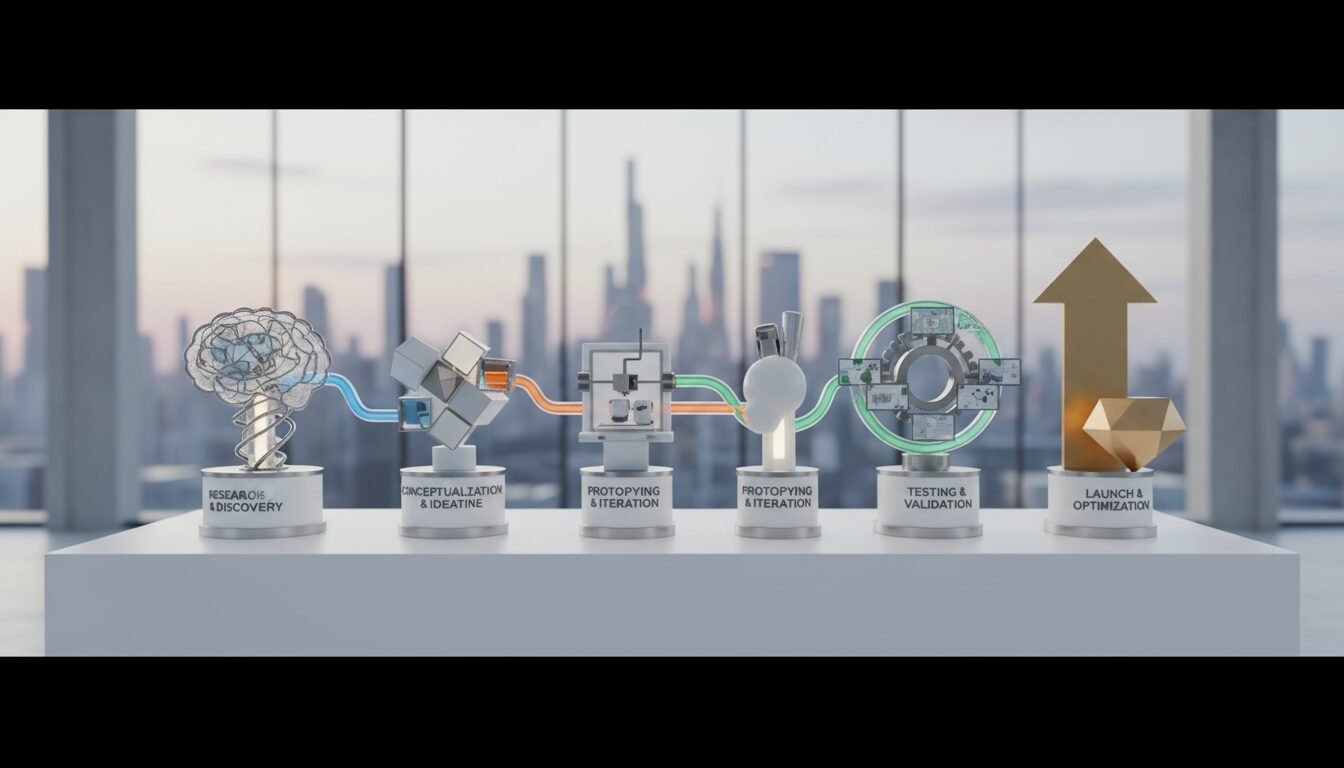
Every successful product design agency begins with a thorough discovery phase. The agency conducts stakeholder interviews, market analysis, and user research to define the problem space. This ensures the team builds the right product for the right audience. Expect outputs like user personas, journey maps, and a clear project brief.
Concept Development and Wireframing
Next, designers sketch low-fidelity wireframes to map user flows and information architecture. Rapid brainstorming sessions generate multiple concepts, which are then narrowed down based on feasibility and user needs. By the end of this stage, you’ll have a solid blueprint for the product’s structure.
Prototyping, Testing, and Handoff
The process continues through these structured steps:
Step 1: Create interactive prototypes using tools like Figma or Principle to simulate real user interactions.
Step 2: Conduct usability tests with 5–8 target users to identify friction points and validate design decisions.
Step 3: Iterate rapidly based on feedback, top agencies complete multiple feedback loops within days.
Step 4: Prepare final design assets and detailed specifications for the development team, often using design system documentation.
Step 5: Support developers during implementation, with regular check-ins to preserve design integrity and address technical constraints.
This disciplined approach reduces rework and keeps projects on schedule.
Top Product Design Agencies Compared: Specialties and Credentials
Agencies That Excel in Digital Product Design
Different firms cater to different needs. IDEO, with over 500 employees globally, is the heavyweight for human-centered innovation. MetaLab built its reputation on the interfaces of Slack and Coinbase, commanding projects starting at $100,000 or more (Excited Agency Rankings). Meanwhile, Phenomenon Studio focuses on rapid MVP development for venture-backed startups, helping them secure over $500 million in funding to date.
Comparison Table of Leading Product Design Agencies
| Agency | Specialty | Clutch Rating | Min. Project Size | Notable Clients |
|---|---|---|---|---|
| IDEO | Human-centered design, innovation | N/A | $100,000+ | Apple, Samsung |
| MetaLab | UX/UI for tech startups | N/A | $100,000+ | Slack, Coinbase |
| Phenomenon Studio | MVP development, scaling | 5.0 | $25,000+ | Nomupay, YC‑backed startups |
| Excited Agency | SaaS, fintech UX/UI | 5.0 | $10,000+ | Various |
| Speck Design | Industrial design, hardware | N/A | $25,000+ | YETI, Google |
Niche and Boutique Agencies for Specialized Needs
For highly specialized requirements, boutique firms often deliver focused expertise. MNML in Chicago, for instance, has designed award-winning consumer products like the Theragun family. Big Human, a digital product agency in New York, boasts almost 15 years of experience crafting interactive platforms. Evaluating these smaller but highly skilled teams can yield exceptional results when their niche aligns with your project’s core challenge.
Understanding Pricing Models for Product Design Services
Hourly Rates vs. Fixed-Price vs. Dedicated Teams
Pricing structures vary widely among agencies. Excited Agency offers hourly rates of $50–$60, while premium firms like MetaLab typically bill $150–$199 per hour (Excited Agency Rankings). Fixed-price engagements for well-defined projects start around $10,000 at mid-tier companies and climb to over $100,000 at elite firms. For long-term collaboration, dedicated team models, where you pay a monthly retainer for an embedded designer or full squad, offer predictability and deeper integration with your internal processes.
What Affects the Cost of Hiring a Product Design Agency?
Several factors influence final pricing: project complexity, the number of integrated services (e.g., user research + branding), geographic location, and the agency’s reputation. Additionally, specialized industrial design firms like Speck Design often charge a premium for hardware expertise. To avoid budget overruns, request detailed proposals that break down costs by phase and clearly define the scope of revisions.
Pros and Cons
Pros
- Access to specialized expertise and proven methodologies without hiring full-time staff
- Faster time-to-market through established processes and pre-built frameworks
- Fresh external perspective that challenges internal assumptions
- Scalable resources that can ramp up or down based on project needs
- Reduced risk through agencies’ experience with similar projects and industries
Cons
- Higher hourly costs compared to in-house designers in some markets
- Less control over day-to-day decisions and creative direction
- Potential knowledge transfer gaps when projects conclude
- Communication overhead and possible timezone challenges with remote teams
- Risk of cultural misalignment affecting project outcomes
Common Mistakes to Avoid When Hiring a Product Design Agency
Choosing Based on Price Alone
Going with the lowest bidder often leads to poor quality, missed deadlines, and a product that fails to engage users. Instead, weigh value: an agency that demonstrates a track record of increasing conversion rates understands ROI. Request case studies that show the direct business impact of their work.
Ignoring Cultural and Process Mismatches
Even the most talented product design agency will struggle if their working style clashes with your internal culture. During interviews, ask about their project management tools, feedback loops, and meeting cadences. A mismatch here can cause friction that derails progress.
Underestimating Post-Launch Support Needs
The launch is just the beginning. Continuous optimization, A/B testing, and feature iteration are critical. Ensure your contract includes post-launch support terms, many agencies offer team extension services to help scale products long after the initial release.
The Future of Product Design: AI, No-Code, and Beyond
How AI Design Tools Are Changing Agency Workflows
AI-assisted tools like Figma AI and ChatGPT plugins now automate routine design tasks, such as generating UI variations or writing microcopy. Leading product design agencies are using these to speed up wireframing and even conduct preliminary user research analysis. This shift allows human designers to focus more on strategy and creative problem-solving.
The Rise of No-Code and Low-Code Product Development
No-code platforms (Webflow, Bubble, FlutterFlow) and low-code frameworks enable rapid prototyping and even full product builds without deep engineering resources. Agencies that master these technologies can deliver functional MVPs in a fraction of the time, a significant competitive advantage for startups. Many forward-thinking firms now blend traditional design with no-code development to offer faster, more affordable solutions.
Connect with Amin to discuss AI strategy for your business.
Frequently Asked Questions
How much does it cost to hire a product designer?
The cost depends on experience and location. Hiring a freelance product designer in the US typically ranges from $75–$150+ per hour. Agencies bundle these skills with project management, often charging $50–$199 per hour depending on the firm’s tier.
What is a product design agency?
A product design agency is a specialized firm that combines research, design, and often development to create market-ready products. They guide ideas from concept to launch, focusing on user needs and business goals.
How much does it cost to have a product designed?
A basic MVP design from a mid-tier agency can start around $10,000–$25,000, while a comprehensive, multi-month engagement with a top-tier firm often exceeds $100,000. Total cost varies based on scope, complexity, and required deliverables.
What are the 4 pillars of product design?
While frameworks vary, the four essential pillars are: Functionality (the product must work reliably), Aesthetics (it must appeal visually), Usability (it must be intuitive and efficient), and Feasibility (it must be technically and financially viable to produce).
How long does product design take?
A typical engagement runs 3–6 months for an MVP, though more complex projects can span 9–12 months. The timeline depends heavily on the product’s complexity and the agency’s process.
Why choose a US-based product design agency?
US agencies often have deep expertise in high-demand sectors like SaaS and medical devices, with strong emphasis on intellectual property protection and compliance. Proximity also facilitates easier collaboration for domestic clients.
Enjoyed this article?
Connect with me for collaboration, ventures, or just a good conversation about building things.
Get in Touch